| недоноски |
[Jan. 8th, 2010|02:29 pm] |
вероятность не выносить беременность до нормального срока в зависимости от число плодов, одноплодные и многоплодные
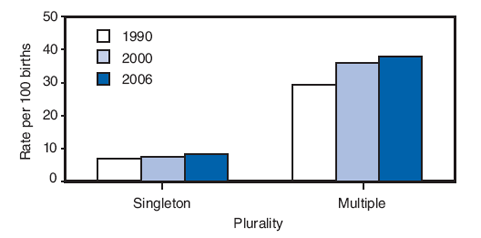
США за три года
The figure above shows late preterm birth rates, by plurality in the United States for the years: 1990, 2000, and 2006. During 1990-2006, most of the increase in overall preterm birth rates was attributed to late preterm births. During this period, the late preterm birth rate for singleton births increased 19%, from 6.8% to 8.1%; the late preterm birth rate for multiple births increased 30%, from 29.3% to 38.1%. In 2006, multiple births were nearly four times more likely to occur late preterm than singleton births. Although at less risk than infants born before 34 weeks' gestation, late preterm infants are at higher risk than those born at term (i.e., at 39-41 weeks' gestation) for complications at birth, long-term neurodevelopmental problems, and death in the first year of life.
Источник: Martin JA, Kirmeyer S, Osterman M, Sheperd RA. Born a bit too early: recent trends in late preterm births. NCHS data brief, no 24. Hyattsville, MD: US Department of Health and Human Services, National Center for Health Statistics; 2009. |
|
|


