[Most Recent Entries] [Calendar View]
Friday, July 14th, 2017
| Time | Event | |||||||||||||||||||||||||||||||||||||||||||||||||||||||||||||||||||||||||||||||||||||||||||||||||||||||||||||||||||||||||||||||||||||||||||||||||||||||||||||||||||||||||||||||||||||||||||||||||||||||||||||||||||||||||||||||||||
| 10:00a | ADATA Announces XPG Gammix S10: 3D TLC, SM2260, 1.7 GB/s Seq. Read, Radiator
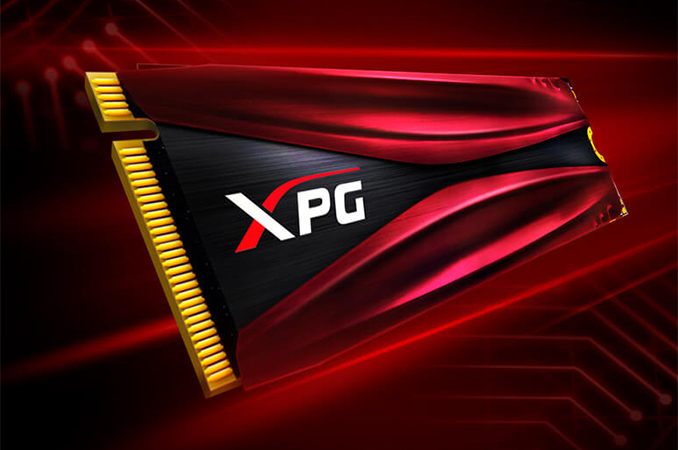
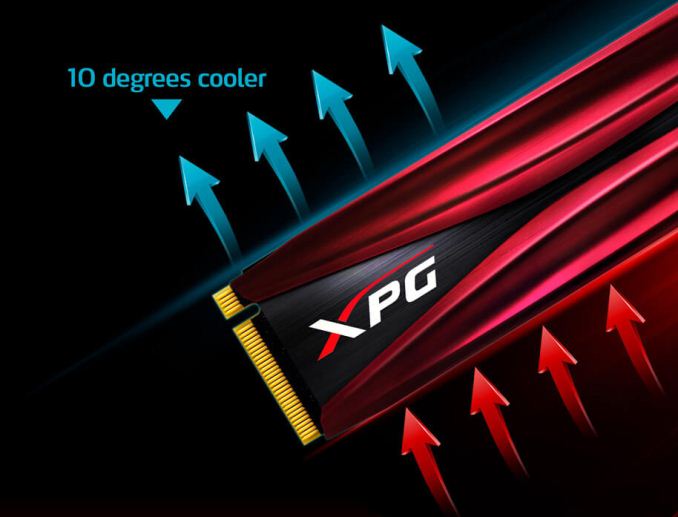
ADATA this week launched yet another family of midrange SSDs aimed at gamers. The XPG Gammix S10 products are based on a well-known controller from Silicon Motion and resemble the company’s XPG SX7000 series announced in April. The new drives are equipped with a radiator to avoid performance throttling, and while using the M.2 form factor, will only fit into desktops as a consequence. Over the past few quarters ADATA become one the largest independent vendors of 3D NAND-based SSDs due to the fact that it has managed to secure supply of 3D TLC and 3D MLC NAND flash from Micron. So far, the company has introduced multiple 3D NAND-based SSDs, including drives with SATA and PCIe/NVMe interfaces featuring different controllers from Silicon Motion and Maxiotek. The ADATA XPG SX7000-series drives powered by the SMI SM2260 controller and Micron’s 3D TLC NAND are among of the company’s recently launched drives aimed at performance mainstream PCs. As it appears, in the near future such SSDs will be joined by the new XPG Gammix S10 family, which use the same controller and 3D TLC NAND memory from Micron, but are equipped with a radiator to ensure lack of overheating and consistent performance. ADATA is not commenting on whether the XPG SX7000 and the XPG Gammix S10 are essentially the same SSDs, but they have exactly the same performance numbers and even their model numbers look similar (ASX7000NP-512GT-C => ASX7000NPC-512GT-C).
Speaking of performance, we know a lot what to expect from the SMI SM2260 in general and from the ADATA XPG SX7000/Gammix S10 in particular. As mentioned in the initial XPG SX7000 coverage, the drives are very different from each other due to the level of parallelism afforded by the controller/NAND combinations. The 512 GB models are rated for sequential read speeds up to 1750 MB/s, while sequential writes can reach up to 860 MB/s when pseudo-SLC caching is used. As for random performance, the 512 GB drive can offer up to 130K/140K 4 KB read/write IOPS. When it comes to the XPG SX7000/XPG Gammix S10 128 GB, the lowest capacity of the set, we are dealing with a drive capable of up to 660/450 MB/s sequential read/write performance as well as 35K/95K read/write IOPS. This drive is slightly faster than SATA SSDs based on TLC NAND, but it should offer higher endurance because 3D TLC NAND is made using larger process technologies and can account for voltage drift better. Keep in mind that the XPG Gammix S10 are equipped with a radiator and therefore their performance under load may be slightly higher when compared to the predecessor. In the meantime, the XPG Gammix S10 will hardly fit into laptops because of its dimensions. Meanwhile when it comes to endurance ratings, the ADATA XPG SX7000 and the XPG Gammix S10 are, again, exactly the same: the 128 GB SSD is rated for 80 TBW, the 512 GB version is capable of 320 TBW and the 1 TB model can handle 640 TBW (equals to around 0.3 DWPD (drive writes per day) across the warranty lifetime). Both SSD series come with a five-year limited warranty and are rated for 2 million hours MTBF.
ADATA did not announce MSRPs for the XPG Gammix S10 SSDs, but since the new drives are essentially the XPG SX7000 products equipped with radiators, do not expect their actual prices to be significantly different. Related Reading: | |||||||||||||||||||||||||||||||||||||||||||||||||||||||||||||||||||||||||||||||||||||||||||||||||||||||||||||||||||||||||||||||||||||||||||||||||||||||||||||||||||||||||||||||||||||||||||||||||||||||||||||||||||||||||||||||||||
| 12:00p | Logitech Acquires ASTRO Gaming, Strengthens Portfolio of Headsets for Consoles
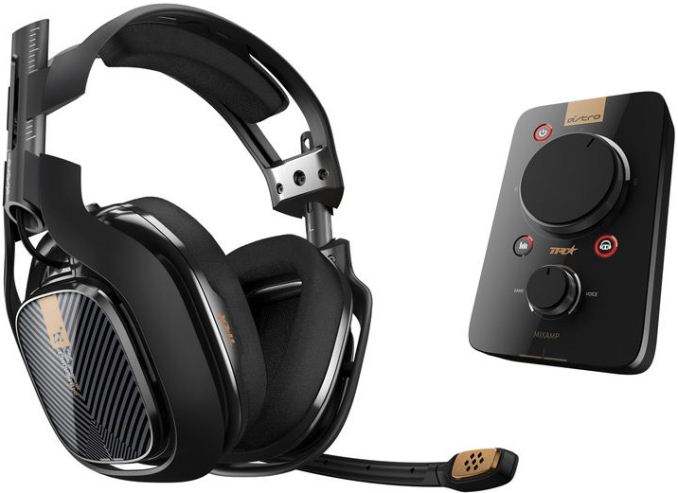
In a bid to expand its portfolio of products, Logitech this week acquired ASTRO Gaming, whom is primarily known for its high-end headsets for consoles and PCs. The move will help Logitech to address the console gaming market with high-margin products and strengthen its headset lineup in general. Logitech’s family of products includes tens of mice and keyboards, many of which are designed for gamers with different requirements and budgets. But when it comes to headsets, Logitech (only) offers eight models priced from $35 to $200. By acquiring ASTRO Gaming, the company gets a portfolio of headsets that includes dozens of SKUs with different accessories and designs, many of which retail for $200 – $300, thus expanding Logitech’s addressable market. For the Lausanne-based company it is particularly important that ASTRO’s products are tailored for game consoles and come with special MixAmp controllers for quick setup and adjustments. Besides headsets, special edition headsets, and accessories for them, ASTRO Gaming sells various accessories for gamers, including headset cases, bags, hats, jackets, and other items. While ASTRO has loads of product SKUs, there is a catch: ASTRO Gaming only has three base headset models (if previous-generation devices are not taken into account), which they mix and match with different designs and accessories to create a wide product portfolio to address different customers. This is a typical approach of small companies that do not have huge R&D budgets to expand their lineups. Moreover, at present, ASTRO Gaming’s products are only available in the U.S. As a result of the acquisition, ASTRO gains access to Logitech’s technologies and global distribution, enabling further growth for the brand.
Logitech is set to pay $85 million in cash for ASTRO Gaming and expects to close the deal next month. This is not the first time in the recent quarters where Logitech has expanded their products portfolio by acquiring other companies. In September 2016, the company acquired the Saitek brand and product lines, allowing them to enter the market for sim controllers. Just like in case of Saitek, ASTRO Gaming’s customers tend to be loyal and do not change their peripherals suppliers often. Meanwhile, given long upgrade cycles in the world of peripherals, it is not always easy to take advantage of customers’ loyalty. Instead, the more immediate play for Logitech will be to start capitalizing on ASTRO’s products by simply making them available in Asia and Europe. Related Reading: | |||||||||||||||||||||||||||||||||||||||||||||||||||||||||||||||||||||||||||||||||||||||||||||||||||||||||||||||||||||||||||||||||||||||||||||||||||||||||||||||||||||||||||||||||||||||||||||||||||||||||||||||||||||||||||||||||||
| 2:00p | Toshiba Weds 3D NAND and TSV: Up to 1 TB 3D TLC Chips with 1066 MT/s I/O Incoming
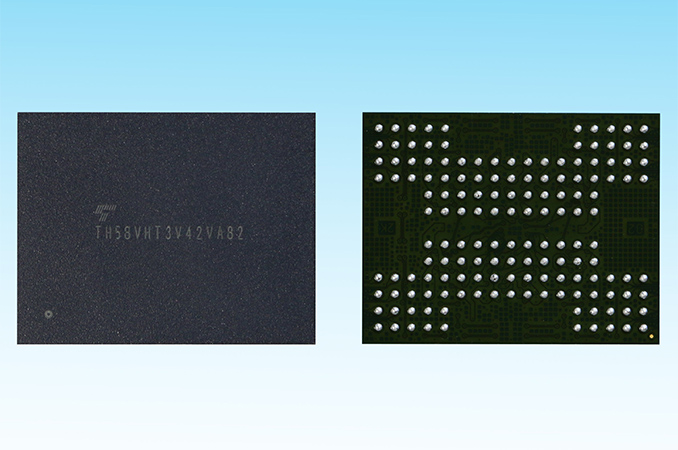
Toshiba on Wednesday introduced its first BiCS 3D TLC NAND flash chips with 512 GB and 1 TB capacities. . The new ICs stack 8 or 16 3D NAND devices using through silicon vias (TSVs) and are currently among the highest capacity non-volatile memory stacks available in the industry. Commercial products powered by the 512 GB and 1 TB packages are expected to hit the market in 2018, with an initial market focus on high-end enterprise SSDs Stacking NAND devices to build high capacity flash memory ICs has been used for years to maximize the capacities and performance of SSDs and other solid state storage devices. In many cases, NAND makers use wire-bonding technique to stack multiple memory devices, but it makes packages larger and requires a lot of power for reliable operation. However in more recent years, Toshiba has adopted TSV techniques previously used for ASIC and DRAM devices to stack its NAND ICs, which has enabled it to shrink size of its NAND packages and reduce their power consumption. TSVs are essentially electrodes that penetrate the entire thickness of a silicon die and connect the dies above and below it in the stack. A bus formed by TSVs can operate at a high data transfer rate, consume less power, and take up less space than a bus made using physical wires. Since 3D NAND is based on vertically stacked memory layers and has numerous vertical interconnects, so far Toshiba has not used TSVs to interconnect such devices. To wed TSV and 3D NAND, Toshiba had to develop a special 512 Gb BiCS NAND die featuring appropriate electrical conductors. It is noteworthy that the company used its 48-layer 2nd generation BiCS architecture instead of the 64-layer 3rd gen BiCS to design the 512 Gb 3D TLC NAND device. The reasons for such design decision are not obvious. On the one hand, 48-layers could minimize the height of the 8-high and 16-high stacks. On the other hand, Toshiba could opt for a lower number of layers because it is using a thicker process technology to build the 3D TLC NAND devices in a bid to improve their endurance (thus, a structure with fewer layers is meant to keep height in check). Toshiba’s 512 GB and 1 TB 3D TLC NAND ICs use a 1066 MT/s Toggle DDR interface, which is one of the advantages that the use of TSVs has enabled. Another advantage enabled by TSVs is a near doubling of Toshiba's data transfer energy efficiency relative to their existing BiCS2-based products that use wire bonding, according to the manufacturer.
The 512 GB and 1 TB 3D TLC NAND chips from Toshiba come in 14×18 mm packages and use the industry-standard dual x8 BGA-152 interface. The standard pinout is important because the ICs will be used primarily for high capacity SSDs used in servers. In fact, apart from their high density, the 1066 MT/s interface and overall energy efficiency will be the two significant benefits for datacenter-class drives. Further down the line, 512 GB and 1 TB 3D TLC NAND chips will also enable Toshiba and its partners to build 2.5" SSDs with 15 – 30 TB of usable capacity (Samsung uses 512 GB packages to build its flagship PM1633a) and go even higher with 3.5" drives. Toshiba has already started to ship prototypes of its 512 GB and 1 TB 3D TLC NAND chips for development purposes, and plans to start sampling the 8-high and 16-high flash memory ICs in the second half of 2017. It is hard to make precise predictions about the availability of actual SSDs based on the aforementioned chips, but it is logical to expect them in 2018. Related Reading: | |||||||||||||||||||||||||||||||||||||||||||||||||||||||||||||||||||||||||||||||||||||||||||||||||||||||||||||||||||||||||||||||||||||||||||||||||||||||||||||||||||||||||||||||||||||||||||||||||||||||||||||||||||||||||||||||||||
| 4:00p | New Intel Kaby Lake Core i3 Processors: i3-7340, i3-7320T, i3-7120T, i3-7120
Last week Intel recently updated its specifications for the 7th generation processors. In doing so, we can see several new Kaby Lake i3 SKUs coming to desktop, along with a few new KBL-U series SoCs for notebooks and a new Xeon E3-1285 v6 CPU, which matches the specification for Apples newest iMac. The full specification update from Intel is listed here. New Desktop Core i3 Kaby Lake CPUsThe existing lineup of Core i3 on the desktop has six models ranging from the i3-7100T to the Core i3-7350K. Like previous generations, all the parts have two cores and support hyperthreading, although Intel did shake things up with this generation by offering an overclockable Core i3, but also moving the lower-class Pentiums from plain dual core to dual-core with HT as competition. The main differences between the parts are core frequency (Core i3 has no Turbo), L3 cache, GPU Turbo and TDP.
According to the updated document, the new CPUs are the Core i3-7120, Core i3-7120T, Core i3-7320T, and the i3-7340. These parts do not have prices listed but are labeled as a new 'S-0' stepping compared to the previous B-0 stepping parts. Aside from this, they are either lower power parts (the T CPUs) or small MHz bumps.
New Laptop Kaby Lake-U 15W CPUsAside from the Desktop i3 parts, Intel is filling out some of the mobile SoCs as well. Intel's 15W line is commonly used in fast but thin notebooks, but typically needs an active fan to keep cool (unless you have a Huawei Matebook X). Intel uses its 15W moniker for Core i3, Core i5-U and Core i7-U parts, which are all dual-core with hyperthreading, but differ in base frequency, turbo frequency, L3 cache and GPU frequencies.
Here Intel is adding the Core i3-7007U, Core i3-7110U, Core i5-7210U and the Core i7-7510U - all respective frequency bumps over the models underneath them in the stack. New Intel E3-1200 v6 Series Xeon: The New iMac CPU?When Intel launched the E3-1200 series, we commented that the last CPU in the stack pushed the boundaries for price: The E3-1280 v6 was $612, and only a small bump in frequency over the E3-1275 v6. Now Intel is set to launch the E3-1285 v6, which again bumps up the frequency - becoming a mix of the top Core i7 parts.
The E3-1285 v6 has been earmarked as the new high-end processor in the iMac, and we expect that it would likely cost a pretty penny given the price of the E3-1280 v6 just underneath it. Related Reading | |||||||||||||||||||||||||||||||||||||||||||||||||||||||||||||||||||||||||||||||||||||||||||||||||||||||||||||||||||||||||||||||||||||||||||||||||||||||||||||||||||||||||||||||||||||||||||||||||||||||||||||||||||||||||||||||||||

| << Previous Day |
2017/07/14 [Calendar] |
Next Day >> |