[Most Recent Entries] [Calendar View]
Thursday, December 20th, 2018
- Naples, Rome, Milan, Zen 4: An Interview with AMD CTO, Mark Papermaster
- AMD Announces Q3 FY 2018 Earnings: Improving Margins, But Dogged By Crypto Decline
- AMD's CEO Dr. Lisa Su to Host a CES 2019 Keynote: 7nm CPUs and GPUs
- Mike Rayfield, General Manager of AMD’s RTG, to Resign by Year’s End
- AMD Previews EPYC ‘Rome’ Processor: Up to 64 Zen 2 Cores
- AMD Unveils ‘Chiplet’ Design Approach: 7nm Zen 2 Cores Meet 14 nm I/O Die
- AMD Announces Zen 4 Microarchitecture Under Development
- AMD’s EPYC CPUs Now Available on Amazon Web Services
- Oracle puts AMD EPYC in the Cloud
- The iPhone XS & XS Max Review: Unveiling the Silicon Secrets
- The 2018 Apple iPad Pro (11-Inch) Review: Doubling Down On Performance
- Apple Announces New 11" and 12.9" iPad Pros with A12X SoC
- Apple Announces 2018 MacBook Air: Entry-Level Laptop Gets Essential Refresh
- Apple Announces Q4 FY 2018 Earnings: Revenue Up, Sales Not
- Acer Unveils KG1 Displays with Sub-1ms Response Time
- AOC to Launch Curved QHD Displays with 0.5 ms Response Time in 2018
- Acer XZ1-Series Curved Gaming Displays: WQHD, 144 Hz, FreeSync, HDR10
- Acer Announces Nitro XV273K Monitor: 4Kp144, DisplayHDR 400, FreeSync
- Acer Unveils Predator XB273K 4Kp144 DisplayHDR 400 Gaming LCD
- LG’s 34UC89G 21:9 Curved Display with G-Sync, 144 to 166 Hz, Available for $999
- Dell U4919DW Curved Display Unveiled: 49 Inches, 5120x1440
- Philips Preps 499P9H Curved 49-Inch 5K Display with USB-C Docking & Webcam
- ASUS Demonstrates ProArt PA34V Professional Curved UWQHD Display with TB3
- Samsung Unveils CJ79 & CJ89 Curved LCDs: Quantum Dots, TB3 & USB-C
- MSI’s 49” Optix Curved Display and Oculux 25” High Refresh Monitors Announced
- HP 2018 Envy 34-Inch Curved All-in-One Gets Cozier
- Dell’s UltraSharp U3818DW Now Available: Curved 37.5”, 3840×1600, USB-C, $1499
| Time | Event | |||||||||||||||||||||||||||||||||||||||||||||||||||||||||||||||||||||||||||||||||||||||||||||||||||
| 8:00a | Gemini Lake SFF PC Showdown: Intel's June Canyon (NUC7PJYH) and ECS's LIVA Z2 Reviewed Small form-factor PCs have become a major growth segment in the PC market over the last decade. In particular, UCFF (ultra-compact form-factor) PCs have become a welcome and permanent fixture in the desktop PC market, all the while they've also seen a good bit of success in the embedded and industrial market segments. Further segmenting the UCFF market is the level of performance desired, and by proxy the CPU that gets used. Intel's two CPU architectures, Core and Atom, serve to split the market into premium and entry-level devices. And, even with the relatively lower performance of Atom-based SoCs, their aggressive prices make them an attractive proposition for economical desktop PCs as well as industrial motherboards and systems. Atom-based SoCs are long-life products, with Gemini Lake being the most recent SoC family in that product line. Today, we're taking a look at two contrasting Gemini Lake UCFF PCs - the fanless ECS LIVA Z2 and the actively-cooled Intel NUC7PJYH. | |||||||||||||||||||||||||||||||||||||||||||||||||||||||||||||||||||||||||||||||||||||||||||||||||||
| 11:25a | AMD Set to Be Added to NASDAQ 100 Index
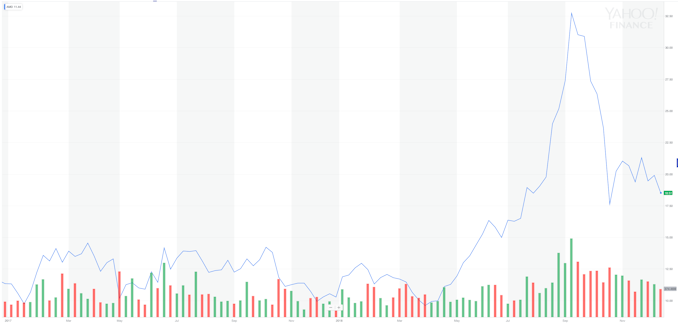
AMD on Thursday announced that it would be added to the NASDAQ 100 index of non-financial companies next week. The chip company will be added to the list due to its increased market capitalization, which is a result of successful launches of its Ryzen and EPYC processors as well as a regular product roadmap and cadence. The price of AMD’s stock has increased by nearly two times since mid-January 2017: from $9.75 per share to $18.49. As a result, AMD’s market capitalization at press time was $18.54 billion (based on data from Yahoo Finance). After reporting $1.653 billion in revenue and $102 million in net income for Q3 2018, the company has $1.06 billion in cash and has about $1.3 billion dollars in outstanding debts, gradually being paid back. What is perhaps more important than the most recent financial results is that AMD’s gross margins reached 40%. The company’s margins increased primarily because AMD can now compete against Intel in high-performance and high-margin desktops as well as servers. Virtually all leading suppliers of PCs and servers have introduced machines based on the Ryzen and EPYC CPUs. The latter are now offered by cloud providers, such as Amazon and Oracle. The company yet has to gain increased share inside notebooks, yet investors seem to be optimistic about its prospects.
AMD’s addition to the NASDAQ 100 index will become effective when the market opens on Monday, December 24, 2018. “2018 has been another exciting year for AMD as we delivered new high-performance computing and graphics products for the gaming, PC and datacenter markets,” said Ruth Cotter, senior vice president, Worldwide Marketing, Human Resources and Investor Relations. “Joining the NASDAQ-100 Index further demonstrates the progress we’ve made in recent years to transform the company, execute our long-term strategy and deliver a robust product and technology roadmap.” Related Reading: Source: AMD | |||||||||||||||||||||||||||||||||||||||||||||||||||||||||||||||||||||||||||||||||||||||||||||||||||
| 12:00p | Qualcomm Granted Injunction Against Apple In Germany: iPhone 7 & 8 Sales Suspended in Apple Stores
Today Qualcomm was granted an injunction against Apple, allowing for a ban of certain iPhone models in Germany. The announcement comes only a little over a week after a Chinese court ruled in a similar fashion against Apple, on the case that the company is infringing Qualcomm patents. The case in Germany is on the matter of infringing certain patents that cover the functioning of envelope tracking (ET). ET is a key component in the RF front-end of a cellular system, and its usage notably increases the power efficiency of the system by avoiding unnecessary losses on the side of the power amplifier. Qualcomm claims Apple’s implementation in certain devices infringes on their patents – in this case we’re talking about international models of the iPhone 7 and iPhone 8 which rely on Intel modems and a Qorvo ET chip. The ban is currently not yet active, as Qualcomm will need to post a bond of €668.4m before the order can be enforced. Meanwhile, Apple is naturally appealing the injunction. The interesting aspect here is that Apple is removing the iPhone 7 & 8 from its stores in Germany, although this doesn’t mean that the phones won’t be available anymore as they will remain on sale through their resellers. Apple’s statements, as quoted by Reuters:
Qorvo chief intellectual property counsel also disputes the court’s findings:
Related Reading: | |||||||||||||||||||||||||||||||||||||||||||||||||||||||||||||||||||||||||||||||||||||||||||||||||||
| 2:00p | IO Data Launches GigaCrysta 24-inch 1080p Monitors at 240 Hz with HDR10 Support
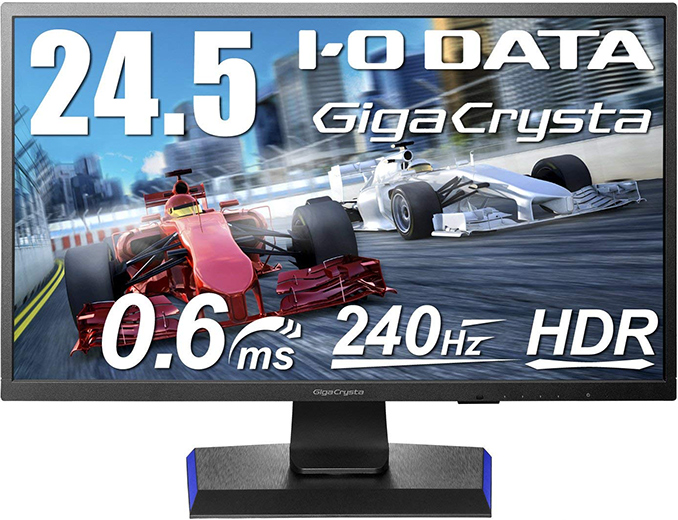
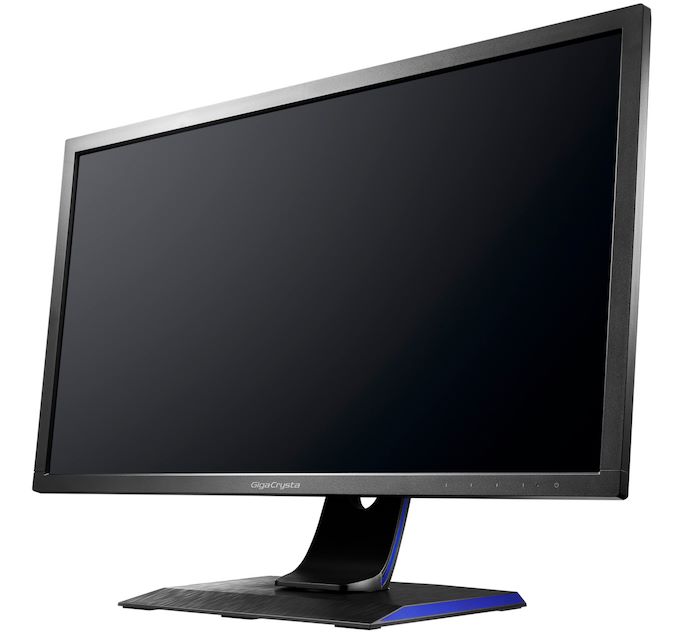
IO Data, a Japanese display vendor, has quietly started to sell gaming monitors featuring a sub-1 ms response time. The GigaCrysta family of displays are currently available only in Japan, but since the LCD panels used by IO Data are available to other monitors manufacturers as well, expect to see similar products arrive in other markets shortly. The IO Data GigaCrysta-series monitors in question are based on 24/24.5-inch TN panels featuring a Full-HD resolution, 60/144/240 Hz refresh rates, and as their main selling point, a 0.6 ms – 0.8 ms GtG response time when the overdrive function is activated (see exact specs in the table below). Other characteristics of the display are just what you come to expect from fast TN panels, including 250, 300 or 400 nits maximum brightness, a 1000:1 contrast ratio, 170°/160° horizontal/vertical viewing angles, and so on. The GigaCrysta monitors from IO Data are clearly aimed at gamers, so they support special modes that makes dark scenes look brighter, a mode that reduces response time by bypassing internal image processing as well as gamma settings for different genres. The LCDs also support HDR10 technology, though actual HDR experience on these devices can hardly be "full" considering their relatively low peak brightness. What is puzzling however is that neither of the displays supports a dynamic refresh rate technology, something that is expected from gaming LCDs by default these days.
As far as connectivity is concerned, all of IO Data’s GigaCrysta LCDs have a DisplayPort input to connect to a PC, at least two HDMI inputs to connect a couple of game consoles (PbP and PiP capabilities are also supported), and on two models, a D-Sub to maintain compatibility with legady systems. As an added bonus, the monitors come with bundled remotes that can be used to control TVs as well as multimedia playback via HDMI-CEC. When it comes to audio, the displays are outfitted with stereo speakers, audio line-in, as well as a line-out for headphones.
IO Data is not the first company to introduce monitors with sub-1 ms response time. Acer recently launched a lineup of ultra-fast LCDs for gamers with similar specs too. What is important is that neither Acer nor IO Data produce display panels themselves and therefore such panels will be eventually used by other monitor vendors as well. IO Data’s GigaCrysta-series displays with a sub-1 ms response time are currently available at Amazon.co.jp for $142 - $380 with VAT. Related Reading: Source: PC Watch | |||||||||||||||||||||||||||||||||||||||||||||||||||||||||||||||||||||||||||||||||||||||||||||||||||
| 4:00p | LG to Demo UltraWide 38-Inch 144Hz Gaming & 49-Inch Workstation Displays at CES
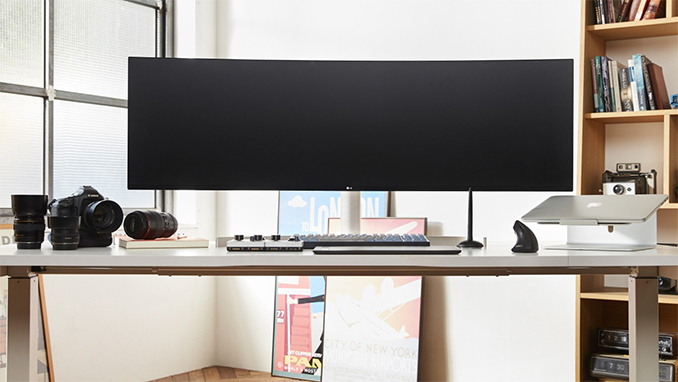
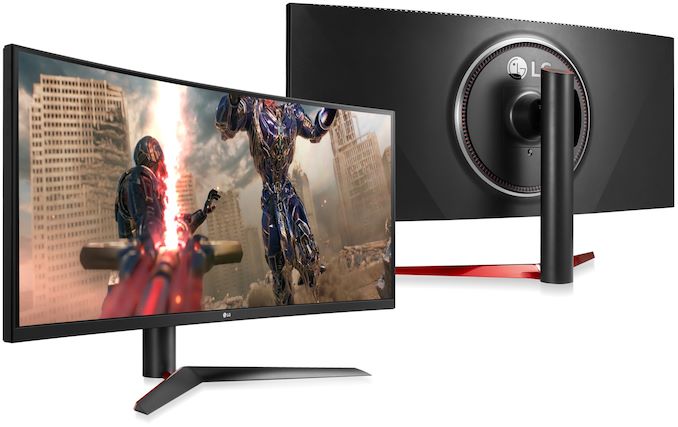
LG this week announced that it would demonstrate its next-generation ultra-wide curved displays at CES early next month. LG’s UltraGear 38GL950G will be one of the industry’s first 38-inch monitors with a 144 Hz refresh rate, whereas the UltraWide 49WL95C LCD will be the company’s largest monitor for prosumers and professionals. One of The First 38-Inch WQHD+ Monitors with a 144 Hz Refresh RateThe UltraGear 38GL950G is yet another addition to LG’s family of displays tailored for gamers. The LCD is based on a 38-inch curved panel featuring a 3840×1600 resolution (21:9 aspect ratio), 450 nits peak brightness, and a 144 Hz refresh rate. The display features LG’s Nano IPS treatment that fine-tunes the spectral output of the LED backlighting in a bid to absorb excess light wavelengths and improve the intensity, purity, as well as the accuracy of the on-screen colors. The display can reproduce 98% of the DCI-P3 gamut, which is in line with many professional-grade monitors.
Being aimed at gamers, the UltraGear 38GL950G supports NVIDIA’s G-Sync dynamic refresh rate technology, as well as LG’s proprietary gaming features (crosshair overlay, overdrive controls, gamma tuning on dark scenes, etc.). In addition, the new display supports LG’s Sphere Lighting that adds ambient lighting effects akin to Philips’ amBX and AmbiLight. As for connectivity, the display features one DisplayPort, one HDMI input, as well as a dual-port USB 3.0 hub. LG’s UltraGear 38GL950G will be one of the industry’s first 38-inch curved WQHD+ monitors featuring a 144 Hz refresh rate when it becomes available sometimes next year. At present, LG only offers 34-inch displays with such a high refresh rate. Meanwhile, typical gaming displays use 24 or 27-inch panels. Another 49-Inch MonitorLG was among the first to launch ultra-wide 37.5-inch LCDs for entertainment and productivity applications as well as 42.5-inch displays for prosumers. However, the company is a bit behind rivals with ultra-wide 49-inch monitors. This is going to change at CES, where LG intends to show its giant UltraWide 49WL95 LCD.
Specification wise, the UltraWide 49WL95 will be similar to its competitors with its 5120×1440 resolution, 350 nits peak brightness, 99% coverage of the sRGB color space, and so on. LG will position its 49-inch display as a replacement for two 27-inch QHD LCDs (a configuration often used by professionals and prosumers), so expect the product to be priced accordingly.
Among the key selling features of the monitor will be its USB Type-C docking capabilities with 85 W of USB power delivery (enough to feed most 15-inch laptops), an ambient light sensor to regulate brightness depending on the environmental brightness to keep power consumption in check, and two 10 W stereo speakers. As for general connectivity, the monitor will feature one DisplayPort, two HDMI inputs, and a quad-port USB 3.0 hub.
Related Reading: Source: LG | |||||||||||||||||||||||||||||||||||||||||||||||||||||||||||||||||||||||||||||||||||||||||||||||||||



| << Previous Day |
2018/12/20 [Calendar] |
Next Day >> |