
|
|


Пишет AnandTech (![[info]](http://lj.rossia.org/img/syndicated.gif) syn_anandtech) syn_anandtech)@ 2020-05-08 11:00:00 |
 |
|
 |
|
|
|
|
|
|
 |
|
 |


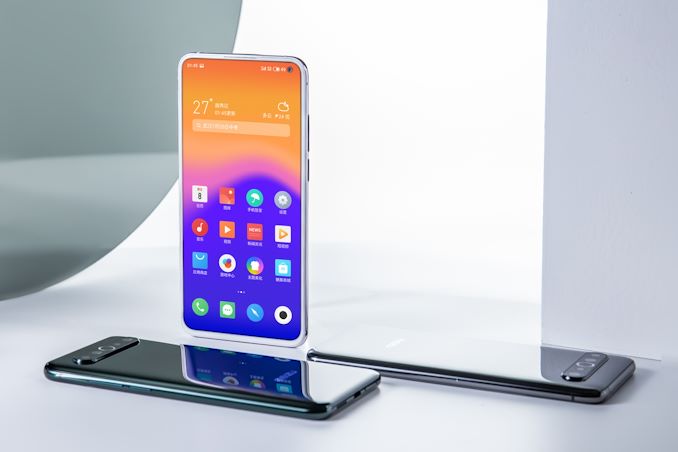
Today Meizu announced its 2020 flagship follow-up to the popular Meizu 16s: the new Meizu 17 and 17 Pro. The two new phones represent a design shift for the company as it moves to a new industrial design that’s a bit more unique. The new flagship phones are powered by the new Snapdragon 865 SoC and house Sony’s latest IMX686 64MP 1/1.72” main camera sensor.
Meizu is releasing two devices this year, both have the same form-factor with a 6.6” 90Hz OLED screen, but they differ in their other cameras and some other internal specifications, making for a slight price segmentation between the two units.
| Meizu 17 Series | ||
| Meizu 17 | Meizu 17 Pro | |
| SoC | Qualcomm Snapdragon 865 1x Cortex-A77 @ 2.84GHz 3x Cortex-A77 @ 2.42GHz 4x Cortex-A55 @ 1.80GHz Adreno 640 @ 587MHz |
|
| Display | 6.6" AMOLED 2340 x 1080 (19.5:1) 90Hz Refresh Rate 180Hz Touch Sampling |
|
| Dimensions | 160.0 x 77.2 x 8.5 mm | |
| 199 grams | 217 grams | |
| RAM | 8 LPDDR4X | 8/12GB LPDDR5 |
| NAND Storage |
128/256 GB UFS 3.1 | |
| Battery | 4500mAh (17.35Wh) typ. | |
| 30W Fast Charging | ||
| No wireless charging | 27W Fast Wireless Charging | |
| Front Camera | 20MP f/2.0 |
|
| Primary Rear Camera | 64MP 0.8µm 1/72" IMX686 (16MP 1.6µm 2x2 binning) f/1.8 26mm eq. |
|
| Secondary Rear Camera |
12MP 1.4µm IMX362 secondary main? f/1.9 ??mm eq. |
8MP 1.0µm OV 08A10 Telephoto f/2.4 79mm eq. |
| Tertiary Rear Camera |
8MP 1.12µm S5K4H7 Ultra-Wide f/2.2 118° / 16mm eq. |
32MP IMX616 Ultra-Wide f/2.2 129° / 15mm eq. |
| Extra Camera |
5MP 1.12µm S5K5E9 Macro Camera f/1.9 |
3D ToF |
| 4G / 5G Modem |
Snapdragon 5G - Snapdragon Modem X55 (Discrete) (LTE Category 24/22) DL = 2500 Mbps - 7x20MHz CA, 1024-QAM UL = 316 Mbps 3x20MHz CA, 256-QAM (5G NR Sub-6) DL = 7000 Mbps UL = 3000 Mbps |
|
| SIM Size | NanoSIM | |
| Wireless | 802.11a/b/g/n/ac/ax BT 5.1 LE, NFC, GPS/Glonass/Galileo/BDS |
|
| Connectivity | USB Type-C no 3.5mm jack |
|
| Special Features | On-screen fingerprint sensor, Stereo Speakers |
|
| Launch OS | Android 10 w/ FlymeOS | |
| Launch Prices | 8+128GB: RMB3699 (~$522) 8+256GB: RMB3999 (~$564) |
8+128GB: RMB4299 (~$606) 12+256GB: RMB4699 (~$663) |
Both phones are powered by the new Snapdragon 865 chipset by Qualcomm offering top of the line flagship performance. The two devices are 5G enabled and come with support with relevant sub-6GHz band support in their respective launch markets, starting with today’s China launch.
Meizu uses 128 or 256GB of UFS 3.1 storage capacities for both phones, while on the DRAM side the Meizu 17 comes with 8GB of LPDDR4X, and the 17 Pro offers either 8GB or 12GB of LPDDR5, marking Meizu as one of the rarer vendors who make use of the chipset’s hybrid memory controller.

The phone is actually quite large and a significant upsizing from past Meizu flagships, as the 17’s now come in a 160mm x 77.2mm (!!) footprint, making these one of the biggest phones out there. Thickness comes in at 8.5mm for both units.
In the bigger form-factor we find a 6.6” AMOLED display from Samsung which is said to have been designed in collaboration with Meizu to achieve smaller 3mm top and bottom bezels. The resolution is at 2340 x 1080p, so a 19.5:9 aspect ratio, and the screen support 90Hz refresh rate alongside 180Hz touch sampling.
The front camera module is a 20MP unit with f/2.0 optics and is a display hole cut-out design. The speciality here is that the cut-out radius is only 2.99mm which if we’re not mistaken is the smallest radius of its kind to date in a smartphone.
Whilst both variants feature the same 4500mAh battery capacity, the 17 Pro is heavier at 217 vs 199g because of the inclusion of different internal hardware. The one thing that is outright omitted from the regular version is wireless charging, whilst the Pro version supports 27W fast wireless charging, on top of the 30W wired charging for both units.
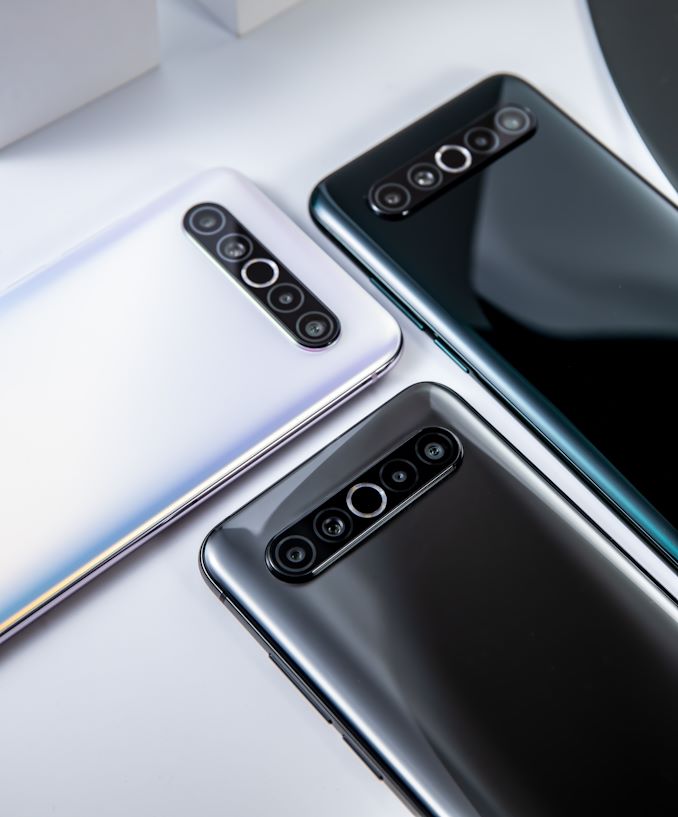
Both phones share the same main camera sensor with is a 64MP IMX686 – the successor to the widely popular IMX586 last year. The sensor features 0.8µm pixel pitches and is of a 1/1.72” diagonal which means it’s among the bigger sensors out there today. With 2x2 pixel binning it results in 16MP photos with an effective light gathering pixel-pitch of 1.6µm. The optics are a 26mm equivalent focal length with an f/1.8 aperture. Meizu seemingly doesn’t outright specify OIS so we do hope it’s present on the module.
The other camera modules differ completely between the two variants, starting off with the regular Meizu 17:
We find a 12MP secondary IMX362 module that in some PR materials is described as a telephoto module, although the company doesn’t exactly list the zoom or focal length. We find f/1.9 optics here.
There’s also a smaller Samsung S5K4H7 8MP ultra-wide angle module with a 118° field-of-view / 16mm equivalent focal length with f/2.2 optics, as well as a 5MP macro camera module.
The Meizu 17 Pro changes up the non-main camera modules. First of all, the telephoto module is now powered by an Omnivision 08A10 sensor with a 3x zoom capability to up to 79mm equivalent focal length, but it’s of a lower 8MP resolution with 1.0µm pixels.

Ultra-Wide Macro Shot
The ultra-wide angle on the 17 Pro is extremely interesting as it’s a 32MP IMX616, a very rare configuration. For some reason Meizu describes this as a 129° field of view module even though the focal length is only 15mm equivalent, narrower than some other devices we’ve seen out there, so the specs here are a bit conflicting. There’s f/2.2 optics on the unit. The speciality here is that Meizu dropped the macro module in favour of a 3D ToF (Time of flight) sensor, as the ultra-wide-angle unit has an auto-focus mechanism that allows it to focus as closely as 3cm and act both as a ultra-wide as well as a macro unit.
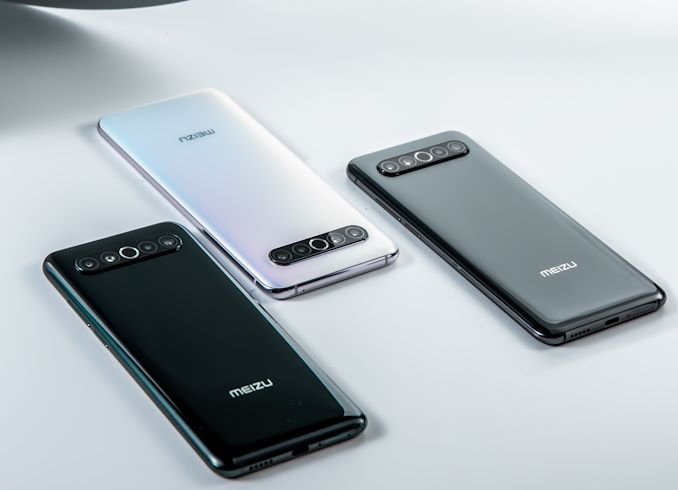
The Meizu 17 is available as 8+128 or 8+256GB configurations for RMB3699 (~$522) and RMB3999 (~$564), while the Meizu 17 Pro comes in either 8+128 or 12+256GB configs at RMB4299 (~$606) or RMB4699 (~$663), with pre-orders in China starting today and availability starting Monday the 11th. We expect Meizu to release the phones in other markets such as Europe later in a few months’ time, as they usually do.
Related Reading:

