
|
|


Пишет AnandTech (![[info]](http://lj.rossia.org/img/syndicated.gif) syn_anandtech) syn_anandtech)@ 2012-12-04 04:00:00 |
 |
|
 |
|
|
|
|
|
|
 |
|
 |


When we reviewed Intel's SSD DC S3700 I started looking at consistency of IO latency, an area that Intel's latest controller specifically targeted for significant improvement. In our review of OCZ's Vector I took the same methodology and applied it to the current crop of high-end consumer drives. As I believe improving IO consistency is a good optimization practice for all SSDs, the hope is that we'll see improvements in this area on both client and enterprise focused drives.
In the comments thread for the Vector review, jwilliams4200 posted some very interesting data. The S3700 has 264GiB of NAND on-board but only exposes 186GiB of it (200GB advertised capacity) as user accessible storage, the rest is used as spare area to improve performance, consistency and endurance. Most client drives on the other hand only feature about 7% of their total NAND capacity set aside as spare area (256GiB of NAND, 238GiB of user storage). The obvious hypothesis is that a big part (if not all?) of the S3700's advantage in performance consistency is due to the large amount of spare area.


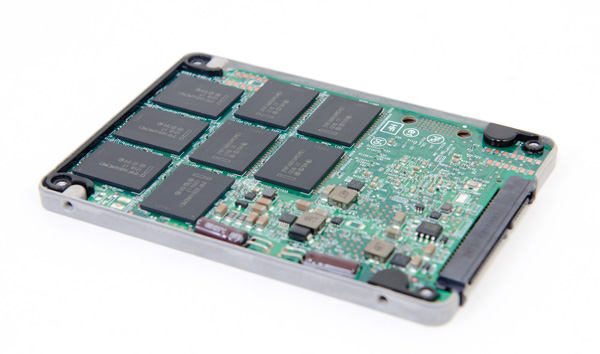
We've understood the relationship between spare area and write amplification for quite some time now. The real question is what's the relationship between spare area and IO latency/performance consistency.
To find out, I repeated jwilliams4200's tests. I took a bunch of 240/256GB drives and filled them to various percentages of their capacity, and performed our IO consistency test with an identical span of LBAs. The goal was to simulate worst case IO consistency while taking into account greater percentages of spare area. Read on for our analysis!

 |  |


