Add this feed to your friends list for news aggregation, or view this feed's syndication information.
LJ.Rossia.org makes no claim to the content supplied through this journal account. Articles are retrieved via a public feed supplied by the site for this purpose.
| Sunday, October 1st, 2017 | |
| LJ.Rossia.org makes no claim to the content supplied through this journal account. Articles are retrieved via a public feed supplied by the site for this purpose. | |
| 4:09 pm | Crackdown in Catalonia Spain uses force to suppress outbreaks of illegal voting, as Catalonia's secessionist government defies a ban on an independence referendum. Having failed to seize all ballot papers in the days running up to the election, Spain has ordered riot police to fire with rubber bullets on those defying the ban; currently, 460 people are said to have been injured. The optics, as they say in this age, are not good; meanwhile, somewhere in the circle of Hell reserved for tyrants, Generalissimo Franco is rubbing his hands with glee, knowing that his life's work has, in some way, endured. The optimistic liberal commentariat on Twitter, of course, is adamant that this is the day that Spain's right-of-centre anti-separatist government has lost all democratic legitimacy, and will suffer a crushing judgment from History and or Public Opinion; the corollary being that, however questionable Catalan independence may have been until now, it is as inevitable as, say, the Irish Free State became after the Easter Rising. Though that conclusion neglects a few things: firstly, can a government that uses force against its population automatically be said to have lost in the court of public opinion, in an age when the public looks to Dubai as a model of aspirational glamour and gets its news from the Daily Mail, FOXNews and the like? These days, the idea of “human rights” has fallen from favour somewhat, and is regarded with suspicion, if not outright contempt, by a large proportion of the public, whose rights are assumed to be assured by the natural order of things. (After all, if decent folks' rights are in no danger, the reasoning follows, then “human rights” can only be a scam to take from us and give to those people. If you hear some nice well-meaning liberal talking about “human rights”, check your wallet.) Would your typical person, who's relaxed and comfortable with wearing clothes made by slave labour and holidaying in locations where uppity minorities are kept in their place by the threat of deadly force, judge Mariano Rajoy's Spain to have overstepped the mark? As long as any future settlement ensures that Spain remains a sunny holiday and/or retirement destination, this is fine. Secondly, Turkey has set a precedent for how a member in good standing of the club of free democracies (which Turkey remains, and will remain as long as it keeps the threatened tidal wave of Islamic refugees from entering Europe) may deal with internal dissent. Turkey, as you will recall, was faced with its own ethnic/linguistic minority—the Kurds, who had been left without a homeland by the Sykes-Picot treaty—who had their own party (the HDP), held mayorships in Kurdish-majority towns, and at the last election, won a large number of seats in the parliament, becoming a de facto liberal opposition to Erdoǧan's authoritarian rule. Erdoǧan responded by escalating tensions, jailing most HDP politicians, dissolving Kurdish-run regional governments and replacing them with non-Kurdish administrators, and, in places, using military force against resistant populations. This, too, was judged to be fine, and in no way inconsistent with Turkey's good standing in the democratic world. And in doing so, it set the baseline for what any other free democracy faced with secessionist dissent may freely do. There seems to be no way back; the Catalans will not surrender unconditionally and forever rule out independence, as would be the minimum required. Therefore, the only option Madrid has is to decisively crush the secessionist movement and salt the ground to ensure it does not return. In the short term, Madrid will probably impose martial law, possibly backed with a shoot-to-kill curfew, which will be in force until immediate tension dissipates. Voting materials will be seized and destroyed, and any ringleaders still at large and within Spain arrested. (Whether neighbours will honour extradition requests for Catalan nationalist activists remains to be seen; Germany, for one, has been refusing to hand over Turkish dissidents.) In the longer term, there are likely to be sweeping Turkish-style purges of the public service, media and universities, with anyone who liked any Catalan independence materials on Twitter/Facebook likely to face dismissal. Which leaves the longer term, and the whole question of “Catalonia” in the first place. Does (or should) it exist in any way that, say, “Kurdistan“ or “Palestine” officially don't? Does allowing a regional government to exist, to maintain its own laws and mandate that signage must be in Catalan, undermine national cohesion and sovereignty? A Spanish government seeking to eliminate the possibility of future secession might take a number of courses of action, from demoting Catalan from a first-class language to a vulgar dialect, removing it from place names and official materials and school curricula, up to eliminating the region of Catalonia altogether, subsuming its component parts into neighbouring regions for administrative purposes. (This would also serve as a warning to the Basques not to get any ideas; you have a lot of privileges, it would say; this is what happens to those who abuse them.) Of course, this is assuming that Spain does prevail. A strategy of raising tensions could escalate into an actual civil war, or if not, then into a guerilla conflict like the Basque one, which could fester on for decades, and interact unpredictably with events abroad (if, say, France goes fascist after the next election, or Russia decides that a frozen conflict in western Europe serves its geopolitical ambitions, or post-Brexit Britain turns it into some kind of jingoistic proxy war over Gibraltar or something, anything could happen). |
| Wednesday, July 19th, 2017 | |
| LJ.Rossia.org makes no claim to the content supplied through this journal account. Articles are retrieved via a public feed supplied by the site for this purpose. | |
| 10:59 pm | RIP Simon Holmes Today I heard the sad news that Simon Holmes, frontman and songwriter of 1990s Australian alternative/indiepop band The Hummingbirds passed away over the weekend.
I met him once, about a decade ago, at his record shop in Sydney. There was a copy of The Hummingbirds' debut album loveBUZZ there,
A few years earlier, not long after I had moved, on a whim, to the northern hemisphere, I was catching a sleeper train from Paris to Zurich. I remember listening to the Hummingbirds MP3s which I had on my MP3 player, sometime around midnight, somewhere near the French-Swiss border, and feeling a little less disconnected from the home I had left behind. And some years later, I heard that The Hummingbirds were reuniting to play a one-off show at Big Day Out in Sydney. I had been thinking of visiting Australia again, and brought forward my visit, timing it to catch them. They were well worth the airfare and the jetlag. And now Simon's suddenly gone, which sucks, and the only Hummingbirds that exist are some Mumford-alikes from Liverpool, which sucks even more. Simon's friend and sometime collaborator Tim Byron has written a fine memorial to him. |
| Monday, July 17th, 2017 | |
| LJ.Rossia.org makes no claim to the content supplied through this journal account. Articles are retrieved via a public feed supplied by the site for this purpose. | |
| 10:32 am | The Thirteenth Doctor As the plume of white smoke emerged from the chimneys of Broadcasting House, the BBC announced that the thirteenth Doctor Who will be played by a woman, namely Jodie Whittaker. (Tilda Swinton, presumably, already had her hands full being the new Bowie.) That sound you hear in the distance is the sad puppies of the “Mens' Rights” movement whining about their childhoods being ruined, irrevocably contaminated with girl cooties. Pity them; first they lost Ghostbusters, and now this. “It's Doctor Who, not Nurse Who!”, they rant, and “nobody wants to see a TARDIS full of bras”, before adding that feminism is a cancer and the realism of a story about an alien who travels through time in a wooden phone booth and defeats alien villains with a screwdriver would be completely compromised by said alien being played by a woman rather than a man. In any case, it looks like the new Doctor already has an entire legion of Cybermen set against her. If Whittaker's Doctor has a long run, and possibly is followed by another non-white-male Doctor (Richard Ayoade was mentioned as one candidate), I wonder whether this will create the myth that the old Doctor Who was more of an old-fashioned manly man than he actually was; that before the BBC bowed to Political Correctness and Cultural Marxism, the original, real Doctor Who was a manly man of the first water, a two-fisted, hairy-chested swashbuckler, going mano a mano with the scum of the universe, between swiving wenches (to which his assistants—whom, of course, he was shagging as well—didn't object, as they knew their place), drinking robustly and making off-colour remarks about minorities. Much in the way that William Shatner's Captain Kirk is (inaccurately) remembered as much more of a Don Draperesque lothario than was on the actual shows, Tom Baker's stripy-scarved Doctor may morph in the popular imagination into some kind of hybrid of James Bond, Gene Hunt and Duke Nukem, with a bit of Jeremy Clarkson. |
| Friday, June 9th, 2017 | |
| LJ.Rossia.org makes no claim to the content supplied through this journal account. Articles are retrieved via a public feed supplied by the site for this purpose. | |
| 11:43 am | Sinister, in a state of hope Well, that was interesting. It was an unnecessary election, called by a brittle authoritarian Prime Minister, hoping to take advantage of an unpopular and discombobulated opposition to get a sweeping mandate to remake the country. Aware of the near certainty of victory, they packed their manifesto with far-reaching ambit claims: force the NHS to sell off its land; replace Britain's segment of the internet with an Iranian-style censored, filtered national intranet and ban strong encryption; replace local election voting systems with first-past-the-post, killing off minor parties, abolish the Serious Fraud Office (which had an unfortunate habit of picking on Tory MPs); they even included ending a ban on the ivory trade, because, why not. And it looked like it would win; all the polls showed commanding leads. Britain would vote Conservative, because it believed it deserved to be punished. Or perhaps, however unpalatable the Tories' programme was, the alternative was unthinkable, so bitter medicine it would have to be. Things tightened during the election. (It didn't help that Theresa May didn't cope all that well when things weren't under her control, and tended to freeze up like a broken Dalek when confronted with questions from members of the public; empty warehouses and squads of pre-vetted party volunteers were soon found to mitigate this.) Things, however, could be expected to tighten. It's all part of the pantomime of the great carnival that is a general election: the old order is temporarily inverted and those who govern are briefly at the mercy of their subjects. Still, the vast majority of polls pointed to an increased Tory majority, if not quite the epic landslide promised, but still a healthy mandate. It didn't work out that way. As soon as the polls closed, the exit poll (which has a much higher sample size and resolution) indicated a hung parliament. As the night went on, this bore out in results: Tory seats falling to a Labour party buoyed by an unusually high turnout, especially of young people traditionally written off as apathetic. (Somehow enough millennials took a break from Snapchatting selfies or eating avocado toast in pastel-coloured onesies or whatever it is the snake people reportedly spend all their time doing and got out to vote, swinging entire seats. One can probably add neoliberalism to the list of things millennials are ruining.) By the morning, a hung parliament was confirmed. May didn't waste any time, and secured a minority-government deal with the Democratic Unionist Party, a far-right religious-fundamentalist party from Northern Ireland with shadowy links to Protestant paramilitary groups; together, they have a working majority of one or two seats. Things get interesting when one considers that the DUP are opposed to the restoration of a hard border in Ireland (making leaving the customs union much more complicated), but also opposed to Northern Ireland having any special status within the EU (as that'd be caving in to the papists south of the border). They get even more interesting factoring in the fact that a significant number of the Tories' MPs are in Scotland (where the SNP had a very bad night), and thus prohibited by the English Votes for English Laws convention from voting on purely England-and-Wales matters (such as anything to do with the NHS or education). If this holds (and, in the ad hoc world of Westminster, especially under the reality distortion field of a right-wing press, nothing is certain), it means that the government will not have a majority to pass much of its programme; and even that which isn't covered could fall prey to dissent within the party. A further question is that of Theresa May's career. She may have reasserted her authority over her party for the time being, but she did gamble on an unnecessary election, and the Conservatives' losses are at least partly due to her performance. History's judgment of May will not be favourable; as Charlie Brooker put it, “the history books will say Theresa May poured her legacy into an upturned crash helmet and shat in it.”) Meanwhile, Boris Johnson (the classically eloquent yet buffoonish Bullingdonian partly responsible for the whole Brexit omnishambles thast led us here) is said to be preparing for a challenge. Which could mean that, soon, both sides of the pond will be ruled by the hosts of a species of hirsute parasitic brain slug. If there is a winner of the night, it is the Labour leader Jeremy Corbyn. Previously written off as unelectable, Corbyn has galvanised the party base and the voting public, and achieved the highest vote count for Labour since Tony Blair swept to power 20 years ago. And it's Blair's legacy—a focus-grouped managerialism, bedded on the certainty of Margaret Thatcher's neoliberal axiom, “there is no alternative”—that Corbyn has put to rest. It will be a long time until we see a bland, well-scrubbed Labour politician announcing that the party has the value of “having strong values” or some similarly content-free pabulum. And given the Tory minority government's tiny working minority, and the certainty of byelections, Corbyn may yet be Prime Minister sooner rather than later. In summary: strap in. This ride's just beginning. |
| Saturday, May 13th, 2017 | |
| LJ.Rossia.org makes no claim to the content supplied through this journal account. Articles are retrieved via a public feed supplied by the site for this purpose. | |
| 7:19 pm | Eurovision 2017 liveblog The Eurovision final is once again upon us, this time from Kiev. The Ukrainians are making the most of their geopolitical situation, from the slogan, “Celebrate Diversity”, with its dig against its enemy's homophobia. Russia is, of course, absent because of its contender's connections with the annexation of Crimea. Once again, I'll be blogging this until the end, or the commencement of Russian bombardment, whichever comes first. First up is Israel, represented by a buff dude singing a stomping piece of EDM-pop with more than a slight debt to the recently departed Robert Miles, replete with the standard pyrotechnics. Pretty much par for the course, and could do decently. And Poland brings the big minor-key torch song, performed by a blonde lady with a mighty, soaring voice, accompanied by her brother on fiddle. And Belarus brings the evening's first dose of oddity. A pair dressed in white (he in a white cloché hat and a medicated-looking grin, she with vaguely Leia-esque buns), doing an upbeat ballad in Belarussian, on a tiny boat in a lake of smoke-machine fog, and finishing it off with a vigorous snog. Slightly odd, but a catchy, upbeat number. Austria has a dude in white singing a sort of generic folk-meets-soul ballad beside a disco-ball moon. The set decoration is actually pretty good. The song doesn't shy away from clichés, right down to the early-90s synth-string chord stabs at the end. Armenia's entry is the first Eurovision Goth of the night. Eastern scales, purple flames, and three women in black, singing and dancing. They could go well. The Netherlands has brought Wilson Phillips out of retirement, it seems. They're over-egging the pudding a bit with the key changes. Still, Eurovision is Eurovision. Moldova has three chaps in suits who call themselves Sunstroke Project, doing a sparse, reggaeton-inspired number named Hey Mamma. One of them has a saxophone and is also wearing sunglasses, which with his haircut makes him look a bit like Max Headroom. Slightly silly dancing, but a competent number. Hungary gets points for traditional hairstyles, for the singer's topknot. There's a milk churn on the stage, which the singer uses as a percussion instrument. It started as a melancholic ballad, combining eastern scales with understated Eurodance electronics, but then broke into a rap in the middle. Italy keeps with the reggaeton influence, bringing it into an upbeat song with anthemic choruses. There's a chap dancing in a gorilla suit on stage for some reason; I think the song's theme has to do with evolution, judging by the visual projections. Denmark's entry is one of the two Australians competing, a young woman named Anja (who, I'm guessing, goes by Anna or Annie or something back home). 90s R&B vocals over Eurodance backings. Competent and somewhat hyggelig, though not all that memorable. Portugal: a chap with ornate facial hair, animated facial expressions and a songbird-sweet voice, singing a rather lovely understated ballad over piano and strings, in a virtual woodland setting. Subtle, but rather nice. Could do well. Azerbaijan has a lady in a silver-white trenchcoat in front of a blackboard with all sorts of darkly evocative words like EXTREME, SKELETON and THORNS written on it. And there's a guy in a horse-head mask sitting atop a stepladder. The pounding drums say Eurovision Goth. Croatia's entry, a goateed chap in a hybrid dinner/biker jacket, alternates between soprano and Pavarotti-esque tenor, accompanied by a string trio. It started off with an inspirational monologue. Croatia seem to be embracing the ridiculousness of Eurovision and running with it for all it's worth. I expect them to get the UK's douze points, just because they represent the Platonic ideal of what the UK expects Eurovision to be about. And here's Australia, represented by a teenage boy in a long coat. Quite competent, again, but doesn't really stand out. They might not come within a hair's breadth of winning this year. Greece has an E'd-up rave stomper, sung by a lady in a long dress, as two half-naked men splash around in a paddling pool, with the usual pyrotechnics. Spain ramps up the kitsch, with three surfer dudes in Hawaiian shirts miming with guitars, as a computer-animated VW Kombi van boogies on its suspension in the background. The song, titled “Do It For Your Lover”, is cod-reggae over a drum loop. Norway has a guy in a rural hat singing, and another guy in a Daft-Punk-meets-Hellraiser mask doing something vigorous with electronics. The drummer is wearing a hooded robe, which makes one wonder whether he was borrowed from a black-metal band. Either the transmission is breaking up or they are inserting digital glitch effects into the video. They've adopted the EDM trick of demoting the chorus to a pre-chorus and having its place taken by a few bars of chopped-up vocal samples. Technically, pretty good. And here comes the UK, with Never Give Up On EU, sorry, Never Give Up On You, as if in preemptive apology for her country. It has the elements: minor-key piano and subtle electronic beats. The singer sings decently, and the visuals provide Eurovision-grade pyrotechnics on a par with Eastern Europe's finest. That was actually quite good; better than any UK entry I remember, and better than Australia's entry. Perhaps she'll get a pity vote and end up in the top 5; perhaps the UK, having taken Russia's place as the villains, will get its geopolitically anticipated kicking; time will tell. Cyprus has a chap in black singing heartily. The visuals appear to be lifted from the Groove Coaster iPhone game. Romania has taken Eurovision weirdness as a prompt and run with it; their song is a rap about yodelling. Which sounds kitschy and naff, but they pull it off. And then they brought out some old-fashioned cannon, for no reason, just to avoid not being weird enough. Germany is living up to being the world's premier manufacturer of electronic music software, bringing in a piece that's essentially a sequence. This could have been the demo track shipped with Cubase or Ableton Live. And here comes the home team, Ukraine; they're bringing a rock band, whose promo video has them looking sullen in black leather. “The style is rock”, the announcer said, but it's really a more rock-flavoured Eurovision-pop, with some U2-style guitars in the verses, and some crunchy power chords under the soaring vocals in the chorus. Then comes the bridge, and it goes Metallica for 16 bars and then back to U2-meets-Muse. Not bad, but nobody's going to mistake these guys for Lordi any time soon. Belgium returns to the singing-lady-in-a-gown formula; their lady, though, seems frozen as if struck by stagefright. I really hope she's alright. Sweden brings the electro-funk, with a song seemingly made for H&M changing rooms. Very slick, but that's to be expected. Bulgaria has a teenager singing soaringly over melodramatic minor-key piano chords and glitchy beats. They seem to have the Eurovision formula down pat. And finally, here comes France. A young woman in a mini-dress singing, half in English, half in French, as computer-animated panoramas of Paris swirl in the background, Inception-fashion. And, after the interval acts (Ukrainian Fake Kraftwerk weren't half bad), the voting is over, and here come the tallies: Sweden gave their 12 to Portugal, and 10 to Australia. San Marino, Latvia and Israel also gave 12 to Portugal, who are building up quite a sizeable early lead. Meanwhile, the UK is near the top of the second quarter of the chart, an uncommonly good position. Of course, it's still early days. With half of the votes in: Portugal has a clear lead, with 186 points; second is Bulgaria, with 132. Australia, meanwhile, is at #5 with 70 points. The UK is near the bottom of the second half, with 39 points, which, by British standards, is an exceptionally good result. And here comes the UK's first douze points, delivered by Lee Lin Chin from Australia, elevating it to near the middle of the first half. At this stage, it's probably safe to say that Portugal's got the jury vote. Spain, meanwhile, is doing very poorly, being the only country stuck with nul points, on the opposite end of the table from its neighbour. The second-last is Germany. The jury votes are in, with Portugal winning. But the audience vote is yet to come; last year, Australia won the jury vote, but Ukraine beat them on the popular vote. And the winner is: Portugal (758 points), followed by Bulgaria (615) then Moldova, Belgium and Sweden. Australia came 9th. Meanwhile, the UK dropped to 15, second from the top of the bottom half, which is still an extraordinarily good result for the UK. (The country I voted for, Norway, came 10th.) |
| Tuesday, April 18th, 2017 | |
| LJ.Rossia.org makes no claim to the content supplied through this journal account. Articles are retrieved via a public feed supplied by the site for this purpose. | |
| 1:40 pm | 8 June Seemingly inspired by Turkish strongman Erdoğan's resounding 52-48% victory over the weekend, UK Prime Minister Theresa May has called a snap general election for 8 June, calling a vote to overturn the 2011 Fixed Parliaments Act in the process. With Labour in disarray, the election will almost certainly result in a Conservative landslide and an Erdoğan-sized mandate to reshape the United Kingdom as it leaves the European Union to become a sort of Singapore of the Atlantic; undercutting the decadent vino-drinking continentals with lower taxes, wages and regulations, and a workforce that knows its place (because any other places it could have gone for a better deal have forever been closed off) and making common cause with the world's tyrants, no longer shackled by politically-correct notions of “human rights”. The Labour Party would nominally be the opposition to the Tories, as they were throughout much of the 20th century, though are not providing much of an opposition. Under the leadership of Jeremy Corbyn, a pre-Blairite socialist once written off as a relic of a bygone era, they have swung firmly in favour of Britain leaving the European Union, whipping their MPs to support Article 50. This is either in an attempt to win back the xenophobic vote or out of some delusional belief in the myth of “Lexit” (left-wing Brexit): the delusion that, having cut its ties with the neoliberal free-marketeers of the European Union, Britain will be free to become a sort of rainy Cuba, a pre-Thatcherite socialist arcadia where the coal mines never closed, the state-run supermarkets only stock one variety of tea, and we're all somewhat poorer and shabbier but equal and happy, all watched over by a cadre of shop stewards in ill-fitting brown suits. On the issue of leaving the EU, there is no difference between the two parties; only on the mythology and teleology of what doing so will signify. It wasn't always like this, but it was for longer than many would think. When Corbyn ran for the Labour leadership, he was an outsider candidate, put forward half-jokingly next to a field of focus-grouped Blair-manqués struggling to find a selling point for Labour. (One of them actually said that one of Labour's values is “having strong values”; the mutability of those values, presumably, making it easier to respond to polling and market research.) A candidate who actually believed in something—not to mention something as radical as socialism (but not to worry, democratic socialism)—was quite exciting. Corbyn prevailed by a broad margin and saw off several leadership coups (attributed to either traitorous neoliberal Blairites or ordinary Labour MPs questioning their new leader's ability to actually lead, depending on whom one listens to); he is currently presiding over the “regeneration” (and, inevitably, downsizing) of Labour into a more traditionally leftist direction, albeit without the benefit of shipyards, steelworks and mines full of dues-paying industrial workers to provide a natural constituency for a party of labour. (Labour, of course, started as an offshoot of the union movement, a parliamentary party for those whose stake in the system was their labour, rather than property or pedigree. This raison d'être began to diminish with the shift away from heavy industry, which started in the 70s but accelerated under Thatcher; by the 90s, it was a ghost of its former self. It was mostly Britpop-fuelled euphoria and/or Tony Blair's Bonoesque charisma that kept Labour going, with New Labour's Tory-lite policies attracting a critical mass of centrist careerists who wouldn't have touched socialism with a bargepole, and whom Corbyn is now doing his best to purge. That and Thatcher having tested the hated Poll Tax in Scotland, delivering virtually that entire country to Labour, in time for it to shore up Blair's successive administrations; though the Tories shrewdly wiped this out by convincing Labour to lead the No campaign against Scottish independence, and so deliver their entire base there to the Scottish National Party, effectively holing Labour below the waterline. So, in summary, the revival of Labour in the 90s was about as substantial as the revival of Swinging Sixties cool that the music journalists of the time were going on about the latest Blur/Oasis/Elastica single being the epitome of.)
The problem with this new direction for Labour is that it jettisons many of the tenets of liberalism and openness. Corbyn made only the most half-hearted and token attempts at campaigining to remain in the EU, and once the result was in, enthusiastically jumped to the victorious side. Protectionism trumps openness; nationalism trumps solidarity. I currently live in the electorate of Islington North. Jeremy Corbyn is my constituency MP, and I voted for him in the last general election, as he was a fine constituency MP. However, he has not shown himself to be a plausible party leader, and after his betrayal on Brexit, I will not be able to vote for him in the upcoming election. I am thinking of voting for the Lib Dems; they are the largest party standing against Brexit and its attendant xenophobic isolationism, and the most likely to unseat Corbyn in liberal, cosmopolitan Islington North. Ordinarily, I would consider the Green Party, or the Pirate Party if they ran here, but in this election, and under the first-past-the-post system, it is important to vote for the lesser evil rather than treating electoral choice as a litmus test of purity of convictions. (See also: Jill Stein, the US Green Party candidate whose electoral messaging seemed almost precisely calculated to undermine Clinton and get Trump into power.) And right now, with the two largest parties offering two different variants on the same Scarfolk-meets-Royston-Vasey dystopia, the role of opposition and/or lesser evil has fallen on the Liberal Democrats. |
| Thursday, March 23rd, 2017 | |
| LJ.Rossia.org makes no claim to the content supplied through this journal account. Articles are retrieved via a public feed supplied by the site for this purpose. | |
| 12:06 pm | Things found in Japanese capsule machines
One ubiquitous aspect of contemporary Japan is capsule machines. They're everywhere—outside and inside shops, at railway stations, in clusters in the street. Insert a few ¥100 coins (each being worth somewhere in the magnitude of a dollar/pound/euro) and turn the handle and the machine will disgorge, with a satisfyingly mechanical clunk, a small plastic capsule containing a small vinyl figurine. There is a hall full of these machines, arrayed in rows in the arrivals section of Tokyo Narita Airport; a sign next to them reads “welcome to deep Japanese culture”; which, at first, sounds preposterously hyperbolic, though, in retrospect, one could see the figurines in these capsules as a mass-production-age equivalent of the carved netsuke figurines of bygone days. (There are, of course, capsule vending machines at supermarkets and shopping centres in the west, but not at the same scale, and the flimsy, shoddily made plastic trinkets they dispense are a far cry from the Japanese figurines, which seem put together with considerably more thought and attention to detail.) Anyway, without further ado, here are some things found in Japanese capsule machines: 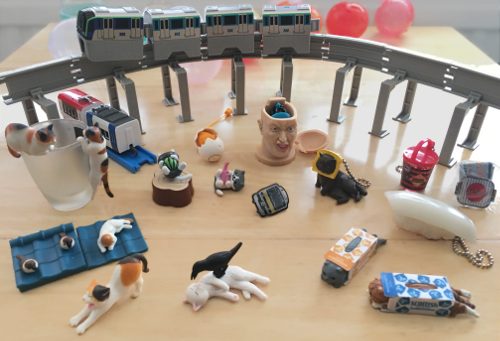
These items were all obtained from capusle machines in the Tokyo area, in March, 2017; some of them are more self-evident than others; a few will be described further below: 
“Scottish Tissues”, a series of figurines of Scottish Fold cats climbing through tissue boxes; probably an off-brand attempt to cash in on the celebrity of Maru the box-jumping Scottish Fold. 

There is an entire category of figurines designed to balance on the rims of drinking glasses, including two series of cats. 
Things found on roofs, including, inevitably, cats 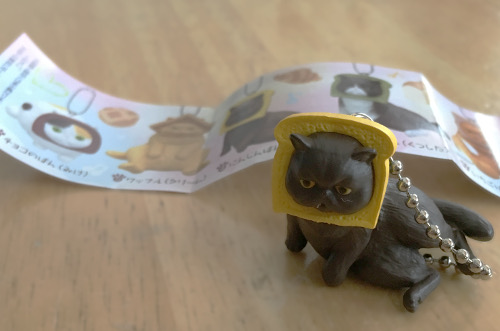
More cats, this time in keyring format, and with their heads through slices of bread. 
This one, Cat And Crow, struck me as rather morbid. Notice the expression of morose resignation on the face of the doomed cat; the black crow is its inescapable companion, going where it goes throughout the rest of its life; in due time, the cat will die, and the crow will feast on its eyeballs. Cat And Crow appears to be a memento mori, an allegory to the inevitability of death. 
There are, of course, also figures from the hit mobile game, Neko Atsume. 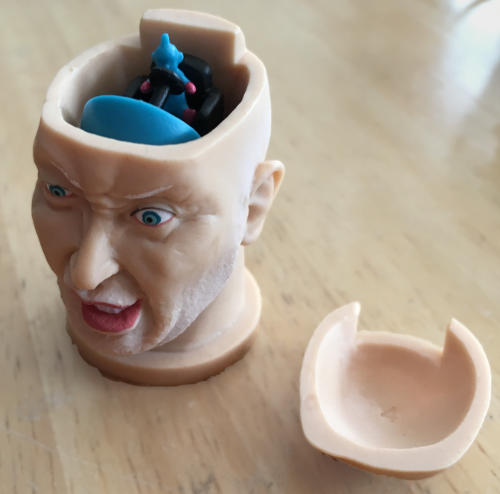
Parasite Creature, a series of deranged-looking vinyl heads which open up, revealing homunculi in the driving seat. 
These came from a smaller, gumball-style machine in a store in Akihabara; one represents one of JR East's railway lines in Tokyo, and the other, I believe, Japanese restaurants. 
Model railways in instalments. Each capsule contains either a carriage and a length of track or several lengths of track. Annoyingly enough, that machine contains several systems: a monorail, and conventional trains in several liveries. A bit over ¥1000 yielded a small monorail system and two orphan carriages. |
| Thursday, March 9th, 2017 | |
| LJ.Rossia.org makes no claim to the content supplied through this journal account. Articles are retrieved via a public feed supplied by the site for this purpose. | |
| 12:59 pm | Melbourne, 2017 I have just spent a little over two weeks in Melbourne; I arrived on occasion of a conference on iOS development, but stayed longer to give me time to catch up with friends. It was my first visit to my old hometown in almost five years.
Melbourne is, I am relieved to say, still here. Just about. Some things are new, some things are gone, and some things remain constant.
Gentrification keeps pushing the virtual Yarra that divides bourgeois and grungy Melbourne northward; it'd now be somewhere around Merri Creek and Brunswick Road.
Fitzroy feels a bit more like South Yarra, a bit brasher and less bohemian. Hip-hop, laptop R&B and house music have largely displaced skronky/jangly indie-rock as its soundtrack. Brunswick Street is now is also a destination for stag/hen-party buses.
Melbourne feels increasingly connected to Asia. In particular, the CBD has become a destination for a combination of property buyers and students from Asia, from bubble-tea bars and a surfeit of Chinese and south-east Asian eateries aiming outside the westernised market to real-estate dealerships aiming at the Chinese market. While there are fewer Japanese migrants and students, the cultural and commercial influence of Japan has been increasing. Japanese food is everywhere; there are increasingly many establishments festooned with red lanterns and purporting to be izakayas, some of which are more authentic than others (Wabi Sabi on Smith St. was excellent), ramen restaurants are popping up, as are Japanese ice cream shops; and then, of course, is the several-decades-old Melburnian institution of takeaway sushi rolls, served in a paper bag with a piscule of soy sauce, as unpretentious fast food. Japanese retail is also making inroads; Uniqlo and Muji have opened shops in Melbourne and the T-shirt label Graniph have a small shop in the CBD. But perhaps most impressive is the Japanese take on the $2 shop, Daiso, a veritable Aladdin's cave of the useful and nifty, each item costing a flat $2.80. (European readers: imagine the Danish chain Tiger/TGR, only distinctly Japanese, with the scale and systemacity that implies.) Some things remain the same. The trams keep trundling along, with minor route adjustments. The radio station 3RRR, now 40 years old, is going strong as an institution of the alternative Melbourne; an exhibition on its history just finished at the State Library of Victoria, and its stickers are ubiquitous, particularly in the inner north. The live music scene continues apace, in venues such as the Old Bar, Bar Open and the Northcote Social Club. (I saw three gigs in the latter: Lowtide, Pikelet and my favourite band from when I lived in Melbourne, Ninetynine, who are still going strong.) Street art remains an institution in Melbourne, a city where aerosol-art-festooned laneways swarm with tourists and wedding photo shoots and businesses hire “writers“ to decorate their walls with thematic pieces. And the arrival of H&M, in one oddly laid out shop occupying the former General Post Office, doesn't seem to have put Dangerfield out of business.
There are also signs of progress.
|
| Saturday, February 4th, 2017 | |
| LJ.Rossia.org makes no claim to the content supplied through this journal account. Articles are retrieved via a public feed supplied by the site for this purpose. | |
| 6:17 pm | Last train to Europe A few days ago, I travelled from London to Amsterdam by train. I caught the Eurostar from St. Pancras International to Brussels-Midi, and then caught a Thalys high-speed train, along the Belgian/Dutch coast with its grey concrete flatness, to my final destination. The journey went smoothly; check-in was quick, the trains were on time, and everything went to plan. Two days later, the British Parliament voted, as expected, to unconditionally authorise leaving the EU. There was dissent (Corbyn's fragile authority over the Labour Party eroded further, with many MPs defying the whip to vote nay), but it meant little; an overwhelming majority voted aye, with a good proportion preceding their votes with speeches on why leaving the EU is a catastrophically bad idea and the action they're about to vote in favour of is stupid and/or undemocratic. Three cheers for the Westminster parliamentary system! I have travelled by Eurostar before, but now it did feel a bit like the last days of an era. I can't help but think that, in five years' time, a journey such as mine will be more like a trip on the Trans-Siberian Railway, down to the onerous visa paperwork and customs checks required by the granite-hard Brexit we're now inevitably spiralling to, and the sense of exoticism of being among foreigners whose ways are not like ours. Indeed, it's not clear whether the Eurostar will still be running then; a lot of its business is contingent on both political and economic relations with the continent, and if steep tariff barriers go up and Britain reorients towards its former Empire, or perhaps towards a coalition of nations like Turkey and Saudi Arabia it shares a disdain for politically-correct notions like “human rights” with, there'll be far less demand for travel across the Channel. (On the other hand, we just might need another runway or two at Heathrow.) Progress is not a one-way ratchet; it can slip back. Just as there were serfs in feudal Europe who were descended from the free citizens of Greece and Rome, today's world, with all its mundane annoyances, may be an unfathomable, quasi-mythical golden age to our descendants. For example, in ten years' time in Russia, there will be a generation of young people who have no awareness of LGBT issues; they will, of course, know from playground whispers and insulting graffiti that homosexuality exists, but it will be either associated with child molesters or else be something disgusting and unnatural that happens in seedy places alongside crime and squalor; meanwhile, the very idea of transgenderedness will be the stuff of circus sideshows. (The young Russians who happen to be gay or transgendered will not have a pleasant time.) By the same token, the generation of British young adults some ten years later will, for the most part, have never travelled to Europe or associated with Europeans, in much the way that the typical young Briton today has never spent time in China and knows little about contemporary Chinese culture. To them, and to whom tales of Easyjetting to a weekender at Berghain, spending a semester studying on Erasmus in Lisbon or Leuven, or hanging out or going out with people whose first language isn't English and whose cultural assumptions differ subtly from one's own in a thousand ways will seem as exotic as the world of pre-war travelogues. Few of them will have met an European, and the image of Europeans will converge onto outlandish stereotypes: half berets and baguettes, half tabloid slights about garlic and vino, loose sexual morés and poor personal hygiene, and the odd bit of weirdly displaced Islamophobia or reheated red-baiting (“I heard that Belgium is an ISIS rape camp/all the supermarket shelves in Denmark are empty and people are fighting like rats over canned food because their economy has been ruined by socialism!”). |
| Thursday, January 19th, 2017 | |
| LJ.Rossia.org makes no claim to the content supplied through this journal account. Articles are retrieved via a public feed supplied by the site for this purpose. | |
| 12:57 pm | Manning to walk As one of his final official acts, US President Obama has commuted the prison sentence of Chelsea Manning, the former intelligence analyst who leaked classified video of drone pilots massacring civilians, to time served. Now all that Manning has to do is survive the next four months in prison under the total control of a fundamentally hostile administration and she'll be free. The usual hawks are apoplectic. Of course, we have the selfless Julian Assange to thank for this; were it not for his pledge to surrender to extradition to the US in exchange for clemency for Manning, this may or may not have happened. Though now, Assange seems to be backing away from his commitments, saying that Obama's offer of clemency does not meet the conditions of his offer, in that Manning will not be released immediately. Perhaps he'll surrender in May, when Manning is scheduled to walk free; in which case, his sentence may be to play Robin to Rudolph Giuliani's Batman in the Trump administration's Department of Cyber; the job may involve taking orders from an 11-year-old “special advisor”. Pointedly left out of any option of clemency is, of course, Edward Snowden, the NSA leaker/hero-and/or-traitor currently holed up in Moscow. Russia has apparently extended his visa for another three years, though that could well be a feint, and he could be in restraints on a light plane to the US as an inauguration present. If he is convicted and the timings of the Julius and Ethel Rosenberg case are anything to go by, he would be likely to be executed in 2020, as the monster-truck-rally spectacle of Trump's second-term campaign cranks up, and as much heat and noise as possible is called for. Assange may find himself guest of honour at Snowden's execution, an invitation without the option of refusal, whose purpose will be to underscore the fact that he is not relieved of his obligations to his handlers, and that bad things happen to you if you cross Trump/Putin. (Later, rumours will emerge that the firing squad was ordered to aim at the wrong side of Snowden's chest, a death traditionally reserved for particularly unpopular deposed dictators in Latin America.) |
| Saturday, December 31st, 2016 | |
| LJ.Rossia.org makes no claim to the content supplied through this journal account. Articles are retrieved via a public feed supplied by the site for this purpose. | |
| 3:17 pm | Records of 2016 It's the last day of another year, and time to take stock of the year's musical releases once again:
With honourable mentions going to: Asher Levitas — Lit Harness (immersive ambient/industrial/noise soundscapes; uneasy listening about tranquility amidst chaos) ¶ Factory Floor — 25 25 (more minimal, x0x-driven electro-house music(k), going on as their debut started) ¶ Fatima al-Qadiri — Brute (the Kuwaiti-born New York electronica artist's latest release, a concept album about protests and their heavy-handed suppression, following stylistically from the arabesque dubstep of Asiatisch, only more, you know, 2016) ¶ The Fireworks — Black And Blue (skronky post-C86 garage indie from London with attitude) ¶ Goat — Requiem (the latest from the northern-Swedish masked “tribal” psychedelia combo, equal parts Rousseau and Amon Düül II) ¶ Hana Maru — Hana Maru (nice indie chamber-pop from Melbourne, with piano and violins) ¶ Steve Hauschildt — Strands (kosmische analogue electronic ambience, in a post-Tangerine Dream vein) ¶ I Monster — Bright Sparks (a concept album, with booklet, about the history of analogue synthesizers, featuring the Moog, Buchla, ARP and Mellotron among others, and done rather well), Jenny Hval — Blood Bitch (the follow-up to Apocalypse, Girl mixes deceptively nice-sounding electronic pop with themes of vampirism, menstruation, fraught romance and capitalism) ¶ Josefin Öhrn and the Liberation — Mirage (10 tracks of propulsive, motorik krautrock/psychedelia done better than most) ¶ The Julie Ruin — Hit Reset (Kathleen Hanna's back with some righteously skronky garage-punk-pop) ¶ Ladyhawke — Wild Things (the LA-based Kiwi songwriter/producer turning her golden ear to late-80s FM-radio pop à la Diane Warren, with the electronic gloss cranked up and the occasional Millennial Whoop to remind us that it is 2016; somewhere between Taylor Dayne and Taylor Swift) ¶ The Leaf Library — Nightlight Versions and Versions (two variations on their last year's album, Daylight Versions; the former is drony instrumental takes; the latter, remixes by artists including Cavern Of Anti-Matter and Greeen Linez) ¶ Memoryhouse — Soft Hate (the Canadian dreampoppers second full-length album goes bigger, with a more expansive sound, though keeping the understatedness at its core) ¶ Momus — Scobberlotchers (sonically leaning on samples of old Japanese records, as his recent albums have done, Momus engages with the rise of populist xenophobia and personal responses to it; titles include Neo-Weimar, Year Zero and What Are Facts?) ¶ Pascal Pinon — Sundur (languid, minimal Icelandic folk-pop from two sisters, one of whom also is in Samaris) ¶ Penny Orchids — No Maps (the London klezmerbilly quartet bow out in style) ¶ Pikelet — Tronc (Surprising, comparison-defying songs crafted from wonky loops, improvised electronics, pianos and layers of voice) ¶ Samaris — Black Lights (the Icelandic chilled electronica trio's third album, and their first in English) ¶ She-Devils — She-Devils EP (loop-based rockabilly-styled pop from two women in Montreal) ¶ ₩€$€₦ - ₩ALL OF PAI₦ (a boy-girl duo from Reykjavík, making an understated autumnal indiepop with electronic loops, keyboards and the odd acoustic guitar, sounding in places like Pipas, had they signed to a Berlin glitch label) Were I to choose an album of the year, it would probably be The Radio Dept.'s Running Out Of Love, with Cavern Of Anti-Matter, Kero Kero Bonito and Lush as runners-up. And then there were the 2015 albums I unfortunately only discovered this year, but which should have otherwise featured on a record: Josefin Öhrn's metronomic psych juggernaut Horse Dance was one such revelation, as is the indiepop yé-yé of Iko Chérie's Dreaming On and I was late in picking up The Spook School's rambunctious queer tweexcore opus Try To Be Hopeful and the darkly luminous Subcontinental dubstep of Aisha Devi's Of Matter And Spirit. But the most poignant member of this list would be Remain, from Californian duo Them Are Us Too. Their sound is somewhere between The Sundays and early-1990s American swirlygoth bands like Love Spirals Downwards, with maybe a bit of The Cure circa Disintegration; drum machines and synthesizers, immaculate processed guitars, the singer's powerful soprano voice and plenty of reverb, making for a work of ethereal beauty. Tragically, I only heard about them because one of them was one of the victims of the Ghost Ship fire in Oakland. Rest in peace. There is now a mix of tracks from these releases on Spotify, here. |
| Wednesday, December 14th, 2016 | |
| LJ.Rossia.org makes no claim to the content supplied through this journal account. Articles are retrieved via a public feed supplied by the site for this purpose. | |
| 12:15 pm | As Aleppo dies Terrible reports from Aleppo as the forces of the tyrant Assad, backed by Russia, take the last pockets of resistance and exact a terrible vengeance on the resisting population. Mass executions of civilians (or, in the official parlance, “terrorists”) ensue, some shot by firing squads, some burnt alive. (The executed “terrorists” include terrorist children, but as the Bolshevik who bayoneted the Romanovs reportedly said, “nits grow up to be lice”.) On Twitter, accounts that have posted from the besieged, bombed city send their desperate last dispatches. If you ever wondered what it would have been like had they had social media during, say, the Warsaw Ghetto uprising, it'd probably have been something like this. Meanwhile, in the West, we look on, appalled but not surprised, and then, bummed out by the constant torrent of misery coming from those parts of the world, change the channel. How about that Kanye West, right? What a legend/card/asshole/(insert your own assessment). Here in the liberal-democratic world, with its ideals of universal human rights and general tolerance, we are aghast; not in our name, we say. Though this very world seems to be in the process of being swept away, replaced by something more brutish and atavistically Hobbesian. From 20 January, the massacre of Aleppo, and any similar actions which follow, will have been in our name. The United States will officially approve of Assad's ancient right as sovereign to crush rebellions, and to lay waste to their cities, making examples of entire populations that harbour rebels to deter future rebellions (mercifully preventing more bloodshed in the future!). And as satellites of the Trumpreich, so will the UK (which increasingly rejects the idea of human rights) and Australia (with its own gulag system for brown and/or Islamic refugees) and others. France will almost certainly join the new consensus after the election of their next President, who is tipped to be either an actual fascist or a Catholic reactionary aching to roll back the Enlightenment, but in either case a follower of Putin's ideology of strength. They will join Hungary, Turkey and Poland, already in the growing post-liberal consensus. And so, as the world starts to look more like Russia at any point in history, a place where life is cheap, power is all, and any words that contradict this are lies, the relative stability of what came before (roughly the world from the years after World War 2 to 2016) will recede into myth; part fantastically bright Star Trek utopia, part naïve Weimar-style idealism, and part decadent lie that deserved to die. Indeed, the last citadel of liberalism and human rights may well be Germany, having had totalitarianism and genocide sufficiently close in its past, and sufficient memorials to its terrible toll, to resist desperately. |
| Monday, November 14th, 2016 | |
| LJ.Rossia.org makes no claim to the content supplied through this journal account. Articles are retrieved via a public feed supplied by the site for this purpose. | |
| 12:15 am | Trumping end-to-end encryption As the US counts down the days to the inauguration of President Trump, some voices in the technology industry are calling for the industry to start scrubbing user data, before the new government's surveillance apparatus lays claim to it. Currently, the NSA can tap into a broad range of communications, but have no means to compel communications to be in a form they can monitor. This is likely to change; after all, they will need to be able to hunt down those involved in, or providing support to, terrorist groups like Black Lives Matter and Friends Of The Earth, not to mention the President's extensive list of enemies. As such, it is quite likely that, at some point during Trump's first year, end-to-end encrypted messaging systems will be required to provide real-time plaintext to the security services. (Things have already been moving slowly in this direction, and will only accelerate under a president who has expressed admiration for autocrats and a brutishly Hobbesian view of how power works.) Similar laws are already in force in more established autocracies such as Russia and Turkey. The difference is that American companies, subject to American law, provide many of the communications systems used worldwide, such as Apple iMessage, WhatsApp and Signal. These are likely to be compelled to provide the US homeland-security authorities with the plaintext of all messages coming through them, in real time, and to make whatever changes are necessary to their architecture to achieve this. With iMessage, this would be theoretically easy to do. iMessage messages are encrypted from end to end, so Apple have no means of reading them, but each message is encrypted several times with the public keys of each of the recipients' devices (i.e., if you're sending one to someone with an iPhone and an iPad, your iMessage client will encrypt it with the public keys of both of their devices). Once they are legally compelled to do so, Apple could just quietly add an extra key, whose private key is held by the NSA iMessage ingestion gateway. Given that the entire iMessage system is closed-source and completely under Apple's control, Apple could push this to all users, without worrying about rogue clients that feed the NSA junk. WhatsApp, Facebook Messenger Google Allo and so on are also proprietary systems, and could be made compliant in a similar fashion. Granted, WhatsApp and Messenger use the open-source Signal protocol for end-to-end-encrypted messages, but this algorithm sits entirely embedded within the app; there is no guarantee that the app actually uses it, or that it doesn't send a carbon copy of the message to a machine in Utah, in compliance with the law. The fine print could be amended on the website to not actually promise that your message is secret from everyone, including the authorities. The Signal app itself appears to be a somewhat tougher nut to crack in practice; it's open-source and publicly documented, to the point where any third party could download the source code, examine it minutely, and then, once satisfied, build their own client and use that to communicate securely. However, the creator, Open Whisper Systems is a US company, subject to US laws. Legally, Giuliani or Arpaio or whoever ends up in charge of Homeland Security could billet a team of NSA engineers at their office, with the authority to dictate changes to code and architecture, all covered by a blanket gag order. The question now is how they could go about this:
Were Open Whisper Systems to preemptively move abroad to a more privacy-friendly jurisdiction (and Germany is a good one, for obvious reasons) before Trump's inauguration, it may complicate things more. Forcing an established app with a large user-base out of the App Store would be a lot harder than forcing an underground fork of an app out. This would involve all officers involved in running the company moving out of US jurisdiction, and potentially avoiding flights going to the US, UK or Russia. |
| Wednesday, October 12th, 2016 | |
| LJ.Rossia.org makes no claim to the content supplied through this journal account. Articles are retrieved via a public feed supplied by the site for this purpose. | |
| 5:02 pm | The Greatest Generation Standing In recent social psychology news, a team of US researchers has debunked the myth of the Baby Boomers' strong work ethic: The economic success of the United States and Europe around the turn of the 20th to the 21st century is often ascribed to the so-called Protestant work ethic of members of the baby boomer generation born between 1946 and 1964. They are said to place work central in their lives, to avoid wasting time and to be ethical in their dealings with others. Their work ethic is also associated with greater job satisfaction and performance, conscientiousness, greater commitment to the organization they belong to and little time for social loafing.Hang on, I hear you say: the stereotypical Baby Boomer work ethic? The generation born between 1946 and 1964, that of Beatlemania and Woodstock, long hair, Free Love, anti-Vietnam-War protests and recreational drug use (and, at its younger end, shading into the fuck-the-system nihilism of punk), being associated specifically with duty, discipline and delayed gratification? That can't be so. Perhaps whoever came up with that idea skipped a decade or two, and was instead thinking of a slightly earlier cohort; perhaps their older half-siblings, the neatly groomed beige-suited Eddie Haskells who addressed their parents as “sir” and “ma'am”, or even the “Greatest Generation” who sacrificed everything in World War 2, only to watch their kids grow their hair, listen to that godawful racket, and generally not exemplify a particularly strong work ethic. The other possibility is, of course, that the stereotype of the “Baby Boomer work ethic” is not so much about the Woodstock generation but about old people. Which is to say, that it reflects survivor bias; the likelihood that the ones left standing into advanced age either had their shit together from the outset or got it together. Presumably, of the generation that came of age in the heady Sixeventies, some will have fallen by the wayside (and, of course, Reaganism, AIDS and punk rock were just around the corner), some will have grown up and gotten with the programme (this was in the day before emoji and executive hoodies, when adulthood was a one-way transformation into a stolid mortgage-paying lump of joyless responsibility), and some, seeing that they had survived and succeeded, would have rationalised that they had been hard-working and responsible (and, thus, deserving of their success) all along. Which, of course, vacated the space of feckless irresponsibility for the younger generation, to whom it always belongs. Of course, what this means is that, in some 20 years' time, we can look forward to a paper debunking the widely held stereotype that Generation X—the one most recently associated with MTV, “alternative rock”, Nintendo and the “slacker” stereotype—are inherently more moral, virtuous and upstanding than their shabby, feckless descendants. And then, eventually, it will be the millennials, the generation of selfies, Taylor Swift and crushing debt. And, in turn, every generation will, shortly before its death, briefly be the Greatest Generation standing. |
| Friday, September 9th, 2016 | |
| LJ.Rossia.org makes no claim to the content supplied through this journal account. Articles are retrieved via a public feed supplied by the site for this purpose. | |
| 2:50 pm | Hit the road, jack So the Apple Event revealed what everybody feared: the headphone socket is dead. The connector is being removed from future iPhones, because “courage”. In its stead, Apple will start shipping wired headphones with their proprietary Lightning connector, and (for the time being, at least) adaptors for your existing headphones (which just became “legacy” headphones). The adapters are as you'd expect: a longish cable with a socket on one end, just cumbersome enough to encourage you to dump yesteryear's technology and get with the programme; they also prevent you from charging your phone whilst using the headphone socket, but there's a $40 double adapter from Belkin you can buy that will let you do this. Meanwhile, William Gibson has noted that, soon, his early cyberpunk novels may sound slightly more anachronistic, with the phrase “jacked in” having a ring of almost Victorian archaism. It is not clear how long the headphone socket has a future on Apple's other product lines; it'll be interesting to see whether the iPad (which is not as constrained for space) retains it. (They could argue that losing the socket would make it more likely to survive poolside spills, and if that fails, fall back to “because we said so, that's why”.) The MacBook series might retain headphone sockets for longer (even Apple's stripped-down new MacBook has two ports: the headphone port and a USB-C port for everything else), though perhaps its days are numbered even there. For those with older iPhones missing out on this new development there are Apple Plugs to stop up those unsightly old-fashioned headphone sockets; whereas, if you want a phone that has a proper headphone socket, you can always switch to Android. (Correction: if you want a phone that has a proper headphone socket and don't particularly care about audio performance, you can switch to Android.) (Another theory about Apple's antipathy to analogue audio connections has to do with DRM; that, in order to do deals with all-powerful record labels, demanding more end-to-end control over their precious intellectual property, Apple are moving to do what the recording industry had failed to achieve before: to close the analogue hole, making possible restricted audio formats which not only cannot be made into perfect digital copies, but can't be played into anything producing a clean analogue audio signal. Tim Cook has dismissed this rumour as a “conspiracy theory”, and said that Apple have no such plans. If there's any truth in such a theory, there would have to be several telltale indicators. For such a system to work, firstly Apple's system would have to distinguish between secure audio devices (presumably the sealed end-to-end digital headphones) and insecure ones (which include Apple's headphone adapter). Secondly, the licensing specification for Apple's Lightning technology when applied to headphones would have to specify that there cannot be a tappable signal path between the Lightning circuitry which decodes (and presumably decrypts) and the speaker drivers that convert it into sound. The headphones would have to be designed to literally fail to decode an audio signal if dismantled or tampered with, so that a pirate couldn't tap the voltages going to the speaker drivers. If the specification goes into such details, then perhaps it's time to worry. The other announcement was that, as well as the proprietary Lightning wired headphones, Apple are selling a new set of wireless headphones named the AirBuds, which are probably more interesting than what they sound like. They charge by induction in a special container, fit in the ear, and connect to iPhones (or other devices) by Bluetooth, along with a proprietary Apple pairing protocol. They also contain microphones (for voice calling) and accelerometers, and have a few subtle features, like the ability to call up Siri on a connected phone by tapping the earpiece. The technology powering them is a new Apple chip named the W1, whose exact capabilities and specifications are unknown. At the moment, the AirBuds are superficially uninteresting; they're essentially a nicely-designed, semi-proprietary Bluetooth headset. However, they are a trojan horse for something potentially more interesting. With their array of sensors (microphones and accelerometers) and signal processing and communications capabilities, they are clearly not a simple audio converter (like the chip in the Lightning cable on Apple's new wired headphones) but a small wearable computer running some kind of firmware; sort of like an Apple Watch for the ears. Both the hardware and the firmware are at the very first version, and so are limited in scope, but the potential's there. It's quite likely that a firmware upgrade at some point may add more functions, and a hardware revision may expand its capabilities even further. By version 3, AirBuds may be running something named airOS, with a third-party app store; there will be apps that run entirely on a set of earphones. One can imagine early standalone apps being things from talking clocks and ambient music/sound generators to self-contained versions of Zombies, Run!; if the AirBuds end up getting other capabilities, such as GPS, of course, the possibilities expand considerably. And then there is the possibility that they may eventually have their own mobile data connection, independent of a tethered iPhone; the main bottleneck is the requirement for a SIM card, and Apple have been pushing for the SIM card's replacement with a data-based credential of some sort, something that would allow far smaller devices to connect to phone networks. Perhaps eventually, the pocket-sized iPhone itself could end up going the way of the PalmPilot, replaced by a body-area network of ear- and wrist-based devices, communicating with each other by Bluetooth and sharing a mobile data plan. |
| Monday, September 5th, 2016 | |
| LJ.Rossia.org makes no claim to the content supplied through this journal account. Articles are retrieved via a public feed supplied by the site for this purpose. | |
| 5:38 pm | The Gordian Knot Delusion Observing political debate, I have noticed a trope that keeps recurring, particularly (these days) on the Right. I'll call it the Gordian Knot Delusion. It says, in essence, “the so-called experts/eggheads/‘intellectuals’ keep going on about how complex things are, but they're liars. When you get down to it, things really are simple.” (There is an implicit “Watch this!” after that, as the speaker purports to bulldoze their way through some issue that namby-pamby liberals and ivory-tower boffins have been wringing their hands ineffectually over, like the two-fisted, lantern-jawed hero of one of those old sci-fi paperbacks the Sad Puppies lament aren't being written any more.) An example of the Gordian Knot Delusion, on that favourite subject of taxes/economics, recently manifested itself in the following tweet from Conservative commentator Daniel Hannan: It does not need to be pointed out that this is an extremely simplistic argument, more an act of trolling (in its original sense of seeking to provoke a pile-on of responses) than a serious inquiry in good faith, at least, if one assumes that the author is not a simpleton. It achieved its aim, in that others piled on with rebuttals on the same level, along the lines of “if olive oil is made of olives, what is baby oil made of?”. But if one takes the premise beneath it at face value, or at least treats it as something more meaningful than wordplay, the Gordian Knot Delusion comes through. Taxes disincentivise prosperity, it implies, unqualifyingly; cut taxes to the bone and watch prosperity take off like a rocket. And ignore the tweedy, elbow-patched fellow there saying that it's more complicated than that; the man looks like a commie, and is probably after your piece of the pie. </p> The Gordian Knot Delusion, the idea that things are simpler than they are claimed to be, is trotted out by amateur spectators in a lot of fields. Economics is a big one: witness the “common-sense” idea that national economies work like household budgets, with a largely fixed income that is unaffected by the level of spending. By this token, one can believe that deficit spending is inherently irresponsible and austerity is, in itself, good economic housekeeping. (This, of course, falls apart when one considers that economic activity generates wealth, and that savings at rest have no economic impact, but it feels enough like common sense that one can persuade oneself that these objections are sophistry by ivory-tower eggheads, Marxists and moochers.) Ecology and the environment are another area; nobody can see global warming, or when they can, one can believe that the evidence is still out, (or once it isn't, it's too late to do anything so crank your air conditioning up and enjoy the ride); and as for that habitat of endangered newts the hippies are protesting about, let's just drive a motorway through it and see what happens; betcha that everything will be alright. The bees are dying off? Who cares about a buncha dumb bugs! The coral reefs are too? The tabloids say they're not. And if they are, so what? And then there's modern society in general: gender-neutral job titles and ladies wearing trousers and lactose-free milk in the supermarket, oh my! Your son, who used to be your daughter, is taking medication for ADHD, your other daughter has a girlfriend, your boss wears a nose ring, and the golliwog doll from your childhood is now a potential hate crime. In the good old days, these things didn't exist, or if they did, they were hammered flat like a lump under the rug; people accepted their lot in life, and, as the refrain goes, everything was alright. (One part of this is the myth that these complex conditions, from gluten intolerance to gender dysphoria, don't actually exist, but are made up by an unholy alliance of bureaucrats, drug companies, the liberal media and people who want to feel like special snowflakes; the corollary: were it not for the conspiracy, a sharp clip around the ear would sort them out just as well.) At its core, the Gordian Knot Delusion is an application of the 80/20 rule to the modern world at large; the belief that complexity is superfluous, and that rather than fretting over it, one should just stride over and cut the knot, deciding that the world is actually simple; witnessing the lack of an immediate catastrophe, one will find one's common sense and derring-do vindicated. (The original Gordian Knot was cut by that gung-ho man of action, Alexander the Great, which is always a flattering comparison.) The other part of the Gordian Knot Delusion is the stab-in-the-back narrative of how the world started to look deceptively complex. As the paranoiac's dictum goes, shit doesn't just happen, but is caused by assholes; in this case, all that talk about how complex things are is the work of a conspiracy; a motley crew of commie traitors, ivory-tower academics, so-called “intellectuals” corrupted by book-learning, miscellaneous perverts, Satanic cultists and out-and-out crooks and thieves out to keep the gravy-train of complexity going, all the better to steal from the simple honest folks. (The trope about climate change being a massive fraud for the purpose of maintaining funding for otherwise worthless research is a classic of the genre.) It is, as conspiracy theories tend to be, a compelling story, especially those who feel themselves bewildered or victimised by the world. Whilst ostensibly associated with the Right these days, the Gordian Knot Delusion is actually the very antithesis of Edmund Burke's Conservatism, formulated in the wake of that catastrophic leftist severing of this knot, the French Revolution. Burke's argument (framing Conservatism for a world where the divine right of kings was no longer accepted and the University of Chicago School of Economics had yet to come into being and coin its modern analogue, trickle-down economics) was that things are much more complicated than one can comprehend, that bold attempts to destroy ancient injustices are also likely to have countless unintended consequences, and that one should stick to gradual, tentative reforms at best, if not to just give up and learn to live with the world as it is in all its richness and iniquity. Today, one might expect to hear that sort of argument, but only from a hair-shirted greenie warning against tampering with Mother Gaia's blessings. The Robespierres of the Right are all too happy to break things and observe that, on a macro level, everything is alright (whilst circularly classifying those for whom they are not alright as bums and sore losers). These radicals are in alliance with a growing number of people who are anything but radical in temperament, but who have been radicalised by the rapid pace of change, and for whom the idea of turning back the clock to (what in retrospect seems like) a simpler time has appeal. The shift of the Gordian Knot from the Left to the Right could be a result of the increasingly rapid pace of social and technological change. |
| Saturday, August 20th, 2016 | |
| LJ.Rossia.org makes no claim to the content supplied through this journal account. Articles are retrieved via a public feed supplied by the site for this purpose. | |
| 7:02 pm | Washing detergent... FOR MEN The world moves one step closer to gender equality, with the announcement of a washing detergent specially formulated for fragile-masculinity sufferers. Named Frey, and packed in a tactical-black bottle reminiscent of engine oils, it allows those afflicted to do their own washing without feeling emasculated by the pastel-blue packaging or the sheer unmanliness of the activity of putting clothes into a washing machine like a little lady. It's also musk-scented, so, upon putting on the freshly-washed clothes*, one can smell like an alpha-masculine sexbeast, and not some domesticated house-husband. Still, assuming that they have done their market research and there are people who would buy this sort of thing, one shouldn't laugh at those people; after all, they are suffering from a very real, and very debilitating, condition. Also, they might punch you. * Presumably the target market would only be washing their own clothes, either because they live alone in a state of primal, untamed masculinity, or because their partner is understanding enough to accommodate their needs. |
| Thursday, August 18th, 2016 | |
| LJ.Rossia.org makes no claim to the content supplied through this journal account. Articles are retrieved via a public feed supplied by the site for this purpose. | |
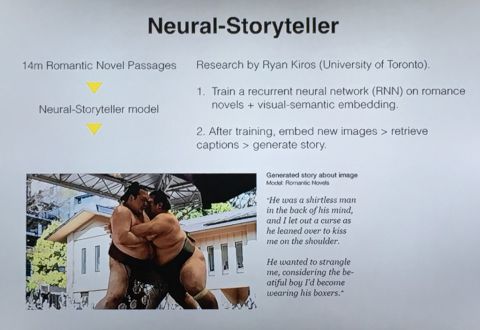
| 12:04 pm | Takeaways from The Conference 2016 This week I was at The Conference in Malmö; here are a few of the things I learned:
|
| Sunday, June 26th, 2016 | |
| LJ.Rossia.org makes no claim to the content supplied through this journal account. Articles are retrieved via a public feed supplied by the site for this purpose. | |
| 10:53 pm | Regrexit As of Friday morning, all hell has broken loose in the UK. As nobody predicted*, the British voting public voted to leave the EU, 52% to 48%. Well, the English and Welsh voting public, mostly; Scotland and Northern Ireland voted strongly to remain. Immediately, things started going tits-up. The pound cratered, experiencing its largest drop in value since the Major government's withdrawal from the European exchange rate mechanism. Meanwhile, Google reported a surge in searches for “what is the EU” and “what happens if we leave the EU”, and the media began filling with reports of sheepish voters saying that they voted Leave because they expected Remain to win and just wanted to show their anger at the political class. Meanwhile, as soon as the result was safely in, the anti-EU politicians who backed the Leave campaign started to walk back their promises. There would be no £350 million for the NHS, no sudden end to the rights of foreigners to breathe our precious British air, no abolition of the VAT on power bills. Cornwall, which voted strongly to leave, nervously demanded reassurance that the hefty EU funding it gets would be replaced, pound for pound, from all the money not being sent to the garlic-eating crooks in Brussels; the silence with which its inquiries were answered must have done little to reassure it. A petition to have a second referendum (which, it turns out ironically, had been started before the result by a Leave supporter wanting to keep his anti-EU crusade alive in the event of a defeat) has, to date, received three and a half million signatures; this figure is still climbing. The only people who did well out of this were the far right, who found themselves legitimised and emboldened. No longer was xenophobia something to deny, or tenuously rationalise, but a natural part of the order of Man; loathing and disgust for those unlike ourselves are nothing to be ashamed of, the message said, but perfectly natural and normal; indeed, perhaps it's those who don't feel visceral revulsion of the Other that are abnormal or sick. The far right and various bigots lost no time in taking this lesson to heart and intimidating foreign-looking people; all over Britain, Polish families found threatening letters in their letterboxes, a community centre was vandalised, and dark-skinned people found themselves being told by strangers (who, presumably, lacked the intellectual nous to know that they were probably not EU passport holders) that they're next. Even Laurie Penny, the (white, London-born) cyber-Rosa Luxembourg of this age, was told to go home by a man wearing a St. George's flag as a cape, because she looked like an art student, and thus wasn't, in his opinion, really English. I must say that, to an Australian, all this sounds uncomfortably familiar, right down to the wearing of flags as capes and/or markers of belligerent idiocy. (Incidentally, Penny's analysis of Brexit is well worth reading.) Having realised that they had set the country on a course for economic, if not political, devastation, politicians in Westminster started to panic. A defeated David Cameron resigned tearfully, undoubtedly freighted with the complicatedly mixed feelings that he'd no longer be remembered primarily for having sexually interfered with a pig's head, but for something far, far worse. In doing so, he stated that it would not be him but his successor on whom the responsibility for pushing down the detonator and starting Britain's irrevocable exit from the EU would fall. All the obvious candidates in the Conservative Party hastily demurred; now now, they said, there's no need to be hasty. Britain had climbed out onto the ledge and announced its intention to jump, but upon seeing the distance to the hard ground below, was having second thoughts. This wasn't good enough for EU officials, who insisted that Britain had chosen to jump, and must now jump quickly, before the uncertainty upsets their markets (and also, so that the big gory splat serves as a warning to their own domestic Euro-refuseniks, now agitating for the chance to leave), and if it doesn't, they'll consult with lawyers to see if they can give it a helpful push. Meanwhile, in staunchly pro-EU Scotland and Northern Ireland, things started to get interesting. Scotland's First Minister Nicola Sturgeon wasted no time, announcing that legislation for a second Scottish independence referendum was being drawn up, and that EU consuls would be invited to a summit in Edinburgh within two weeks to discuss ways of keeping Scotland in the EU. There was also the possibility that Scotland and Northern Ireland's legislatures may be able to veto the process of secession; this is disputed by some constitutional experts, though given the labyrinthine complexity of Britain's constitution (which is actually a collection of many documents), it may inject some doubt into the equation, or at least compel Whitehall to let Scotland have its referendum and leave. (After the last Scottish referendum, the issue was declared resolved for all time; theoretically, if Whitehall forbade a second referendum and the Scottish government went ahead with it, those involved could possibly be charged with treason. Much as the rebels of the Irish Easter Rising, a hundred years ago, were; that, of course, didn't end well for the unity of the Kingdom.) So the pound is tanking, financial companies based in London (who comprise a big part of Britain's economy) are scoping out office space in Frankfurt and Dublin, and our elected leaders are falling on their swords, knifing each other in the back, or playing hot-potato with a live grenade, whilst those who pulled the pin out wonder whether it would be possible to, somehow, find it and put it back in; meanwhile, neo-Nazis are using this as official sanction to attack anyone they regard as not belonging. Welcome to Britain, 2016. Oh, and in the time it took to write this article, an additional 18,000 or so people have signed the petition. * YouGov came closest to predicting it, but got the sides the other way around, predicting a 52% win for Remain. |
| Thursday, June 23rd, 2016 | |
| LJ.Rossia.org makes no claim to the content supplied through this journal account. Articles are retrieved via a public feed supplied by the site for this purpose. | |
| 3:06 pm | Now for the reckoning Polls have opened in Britain's membership referendum; despite heavy rain (and in some areas, flooding), attendance is reportedly high, which is probably a factor in the rising fortunes of Remain in polls and on the betting markets (though there are rumours that part of the latter is manipulation by hedge funds). Having said that, the result is still very much up in the air; the closest to a confident statement anybody has made about it is that it will be close, though a recent poll has predicted a 51%-49% victory for Remain; a victory in name, but not really a victory. In my opinion, there are three ways this could turn out:
I'm hoping for the third scenario. It could still happen, though, if polls are to be believed, is unlikely. If the polls are to be believed, the second scenario is the most likely, which means that things will fester on, albeit in a less acute state. Though recent history has shown that polls aren't what they used to be; perhaps we're entering a chaotic period of history, where assumptions no longer hold. In any case, we'll probably know between 2am and 7am. |
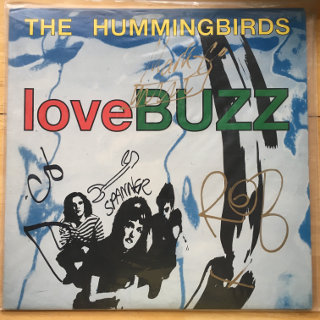 which the band had all autographed back in the day, and which I ended up buying. Simon demonstrated his signature on a piece of paper to show that it was genuine; with his characteristic humility, he didn't know how much to ask for it. I think I gave him $30. We also talked briefly about Sarah Records. I got the impression that, as well as being a fine songwriter and musician, he was also a genuine, decent fellow, of considerable thoughtfulness and sensitivity.
 The traditional anglosocialist utopia of Labour looks a lot like the traditional Little England of UKIP, with its distrust of all things foreign; the only difference is, in one case, there is a strict hierarchy, with everyone knowing his or her place, whereas in the other, everybody's equal (though some are more equal than others; every socialist utopia needs its cadres and vanguard party, after all). As neoliberalism dies, it's the “liberalism” part that is jettisoned; the hierarchies of oppressive power continue, as they always have. (Similarly, across the centre-right parties and think tanks of the world, the dry, bloodless academic writings of Hayek and Friedman are quietly being bumped from reading lists, replaced with Julius Evola and translations of Aleksandr Dugin; Ayn Rand, however, retains her popularity, her message of the inherent rightness of power and privilege, predating the Mont Pélerin Society, will outlive the myth of the tide that lifts all boats.) That Labour is facing electoral slaughter is not much comfort, given that the result will be the coronation of an authoritarian unelected leader into a position of unassailable power to remake the United Kingdom in her image; our own Lee Kwan Yew, or perhaps a British Erdoğan.
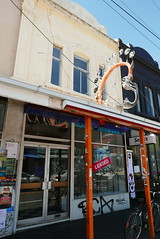
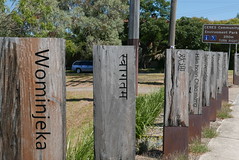
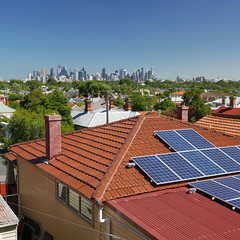
LJ.Rossia.org makes no claim to the content supplied through this journal account. Articles are retrieved via a public feed supplied by the site for this purpose.