Add this feed to your friends list for news aggregation, or view this feed's syndication information.
LJ.Rossia.org makes no claim to the content supplied through this journal account. Articles are retrieved via a public feed supplied by the site for this purpose.
| Monday, June 20th, 2016 | |
| LJ.Rossia.org makes no claim to the content supplied through this journal account. Articles are retrieved via a public feed supplied by the site for this purpose. | |
| 9:32 am | From farce to tragedy Britain's tantrum about whether to remain a member of the EU has been burbling on malevolently, like some kind of grotesque pantomime. The Leave side has been advancing spectacularly, given largely a free ride by the right-leaning tabloids, and has emerged from the depths of absurdity to within grasp of victory. Leave has been fronted mainly by a disingenuous Boris Johnson, using all his Oxford debating society skills, Telegraph editorial experience and classically-educated raconteurial eloquence to posit an argument he is on record as not believing in, buttressed by a Gish Gallop of trivially debunkable urban legends and outright untruths about overbearing EU regulations. it is clear that for him, the prize is not the UK, free at last of the tethers of Brussels and sailing the high seas like a mighty Elizabethan galleon, once again regaining its world-spanning empire due to the innate British genius for free trade, but Boris Johnson moving into 10 Downing St., perhaps even before the next general election. To his right is Nigel Farage, the affable (if you're an older white Englishman, at least) reactionary, pint in hand, telling it like it is and pouring scorn on left-wing metropolitan-elite bullshit, from global warming and finite natural resources to ladies in the workplace and smoking being harmful. The past week started as a victory lap for the Leave campaign, buoyed by polls giving them a commanding 6-10% lead over Remain (also likely to be inflated by the asymmetry of engagement between the two sides; it is hard to imagine someone who loves the EU with the passion with which the hardcore Europhobes despise it). Remain seemed to be flailing desperately, the chancellor even resorting to threatening voters with punitive tax hikes if Leave won. Leave, meanwhile, stopped pretending that their argument is about bloodless economic calculation and got to the real (red) meat of the argument: the Bloody Foreigners. A poster was produced, showing vast queues of brown-skinned, scarily Islamic-looking refugees befouling England's green and pleasant land with their presence, its framing (wittingly or otherwise) lifted from a Nazi propaganda film from the 1940s. Then there was the flotilla: Farage (the champion of the British fisherman, who sat on the EU Fisheries Committee but declined to attend most of the meetings) leading a group of fishing boats up the Thames in protest, with a counterprotest led by Bob Geldof. And then there was the murder. Jo Cox, a Labour MP and human rights campaigner, had been on the Remain flotilla. The following day, she was back in her seat in northern England, holding an electoral surgery, when a man stabbed and shot her, shouting “Britain first”. She did not survive, and became the first sitting British politician murdered since Spencer Perceval in 1812. The right-wing pro-Leave press moved swiftly to disavow any suggestion that the murder was in any way political, let alone connected to an interpretation of their side's arguments, trying to spin the killer as a random lunatic, as likely to have been motivated by, say, the ghost of Freddie Mercury talking to him through his toaster as anything else. That interpretation was not helped when he was found to have had connections with neo-Nazi groups (including Britain First, if a photograph of him at one of their events is authentic), nor when, in court, he gave his name as “Death To Traitors Freedom For Britain” (though Louise Mensch, that reliably south-pointing compass of the British Torysphere, did make a heroic attempt to claim his words as semantically meaningless gibberish, or in her words, “wibble wibble I'm a hatstand”). By now, pretty much everyone has conceded that the murder was politically motivated, which leaves Leave with the bind of trying to dissociate themselves from extremists further up the continuum of xenophobic opinion from them; meanwhile, polls show that some voters have started deserting Leave (though not in droves; the two sides are now polling neck and neck). Perhaps they're asking themselves about some of the people they've discovered themselves sharing a side in the debate with. It's three days until the referendum itself, and the result is still very much up in the air. Polling suggests that Leave still have the edge, while the betting markets predict a Remain victory. If Britain votes to leave the EU, it will, in my opinion, be a catastrophically bad decision for reasons too numerous to go into here. If Remain ekes out a narrow victory, though, the sense of relief will be tinged by the awareness that, were it not for the brutal murder of a fundamentally decent human being, our ancestral hatred of the Frogs and Krauts and fear of a brown-skinned Other would almost certainly have shifted it to Leave. And it does make one wonder what proportion of the 40%+ of the population expected to vote Leave would agree with Mr. Death To Traitors Freedom For Britain that Jo Cox, MP was, if not a traitor to Britain, part of an enemy elite hostile to the “silent majority”. |
| Friday, June 10th, 2016 | |
| LJ.Rossia.org makes no claim to the content supplied through this journal account. Articles are retrieved via a public feed supplied by the site for this purpose. | |
| 2:56 pm | Private-sector parole for tenants Being a tenant in the free-market Anglosphere is likely to get a lot worse soon; a new British start-up has created a system offering landlords' continuous deep surveillance of their tenants' online lives to determine whether they are likely to be asset risks. The system, named Tenant Assured, involves requiring tenants, as a condition of tenancy, to link all their social media accounts to a system that data-mines their posts and messages, looking for keywords and metadata and feeding them into an algorithmic model for determining the tenant's personality type and the risk of them defaulting on rent or otherwise adversely affecting the landlord's assets. Tenant Assured appears to greedily harvest a lot of data for its model; when the landlord looks at the report on one of their tenants, status updates or messages mentioning loans, lack of money or phrases suggestive of penury like “staying in” show up under “financial stress”, and words like “prison”, “steal” or “justice” show up under “crime”, while histograms of the tenants' activity times on weekdays and weekends are shown (do they throw parties/lead a chaotic lifestyle, or are they responsible hard-working serfs who get up at six and are in bed by 11, and thus a good financial risk?) Among the behaviors that count against your Tenant Assured “credit” percentage — i.e., how confident the company is that you’ll pay rent — are “online retail social logins and frequency of social logins used for leisure activities.” In other words, Tenant Assured draws conclusions about your credit-worthiness based on things such as whether you post about shopping or going out on the weekends.Tenant Assured is in operation in the UK, and is being launched in the US soon; it is likely to be welcomed with equally open arms in free-market anglocapitalist strongholds like Australia, where tenants are not deemed to need any rights beyond those naturally trickling down from the invisible hand of the market. The system is said to be opt-in, which means that one always has the choice of telling the landlord who insists on using it where to stick it and find another one who does not insist on it (which may involve anything from paying a human-dignity premium to the Sartrean radical freedom of starving to death under a bridge, emaciated but unbowed). Of course, there is a chance that such an intrusive system would be found to be in violation of human-rights laws (like the ones Britain's Tory government wants to pull Britain out of); if it isn't, the chances of parliament, which is dominated by buy-to-let landlords (who comprise 40% of MPs, compared to 4% of the general population) passing any laws to restrict it are vanishingly slim at best. After all, we're a free-market society, something something light-touch dynamic self-regulation something, and heavy-handed regulation would destroy the wealth that (mumble mumble) trickles down to the very tenants it's meant to protect; also, personal responsibility. In Australia, there is no bill of rights and nothing like the European Convention of Human Rights, so there'd be fewer impediments to such a system being imposed. In the United States, the Constitution would offer little protection, as it only restricts the government from oppressive measures, making room for a vibrant market in free-enterprise oppression. The system currently requires tenants to provide access to their social media profiles (presumably the tenancy contract would be drafted as to make withholding accounts grounds for eviction and/or forfeiture of the deposit, if not further legal sanctions); what happens to the data is opaque and could be updated. If, for example, the operators train a neural network to determine probability of drug use from selfies, or emotional stress from changes in music consumption, such capabilities could be added later. But why stop there? It's almost certain that the tenant would own a smartphone, running either iOS or Android. And legally there is no reason why a rental contract could not require them to install and run an app on their phone which tracks their location, flagging up whether they're spending time in dive bars, visiting pawn shops or have started sleeping in until noon on weekdays rather than travelling to an office by 9:30am. (The app could be styled with a nice-looking interface allowing the tenant to contact the landlord and flag fixtures in need of repair; if it looks like it's meant to help the tenant, they may not recognise that it's there to control them.) And so, the relationship between landlord and tenant starts looking like the ancient feudal relationship between a lord and one of his peasants passed through Jeremy Bentham's panopticon; the subtext is: those who don't own property or significant wealth are, at best, on parole. If this takes off, and becomes the norm for non-wealthy tenants, the social implications could be interesting. For one, it will make all the services, like Facebook, which it touches useless for casually socialising. (In a Free Market, where all tenants are competing against each other to get and keep desirable flats—or, indeed, to win desirable tenancies from the sucker who let their game slip and got logged showing poor impulse control one time too many—maintaining a profile optimised to avoid whatever the algorithm's looking for will become paramount, and there'll be no slack for posting anything off-message.) In such a system, posting to Facebook (or Instagram, or Twitter, or whatever) will be a bureaucratic chore, an act of reporting to one's unseen overseers framed as casually socialising with one's semi-fictitious clean-living friends. (Not posting anything may also get one flagged, so shrugging it off may work against one's interests.) Perhaps an underground industry of social profile doctors will show up; they'll keep up on the latest news and gossip about the surveillance capabilities and profiling algorithms, and for a monthly fee, will provide you with enough traffic to keep your tenant-credit score up. Meanwhile, actual socialising, hedonism, self-indulgence and discussion of worries will take place on encrypted channels and pseudonymous underground social networks, or other profiles, and people will start to carry two phones: the one the landlord knows about, and one which doesn't snitch. (At some point, a tenant will be evicted without deposit for failing to declare such an account or phone, as required in the tenancy contract; if they're lucky, it may form the basis of a court case.) |
| Sunday, May 15th, 2016 | |
| LJ.Rossia.org makes no claim to the content supplied through this journal account. Articles are retrieved via a public feed supplied by the site for this purpose. | |
| 2:36 pm | Eurovision 2016 Eurovision 2016 has been and gone. This time, much of the weirdness apparently fell by the wayside in the semifinals, thus arguably making watching the finals even more essential for fans of the Old Weird Eurovision. Further weirdness was lost when Romania failed to pay its EBU bill and was unceremoniously disqualified, depriving audiences of a few minutes of dependable gothic oddity (to their credit, Poland tried to fill that gap, though they didn't quite manage it; Poland, after all, is not Romania). And, for the second time ever, Australia was invited to compete; this time, they almost ended up winning. Also for the first time ever, the event was broadcast to the United States, undoubtedly causing mass confusion there, though perhaps not as much as it would have some years earlier. Also, this year, the voting system was split: first came in the votes of the nations' juries of experts, and then the aggregated public phone votes, a system apparently designed to maximise suspense, something in which it succeeded. As for the songs themselves: Sweden appeared to walk the tightrope of showing competence whilst avoiding the risk of having to host it twice in a row (something that almost bankrupted Ireland in the 1990s), and sent in a hair-gelled teenager singing something unmemorable. Cyprus brought the hard rock, or at least hard-rock-flavoured dance music, and Georgia went landfill-indie (and got douze points from the UK, the spiritual home of landfill-indie, for their efforts). France, I thought, were decent, and the two Baltic states that made it through were as well. Australia entered with a very competent minor-key electropop ballad about intimacy at a distance, with lyrics about FaceTime and cyberpunk-style visual projections, and for a while, looked like it would win, running away with a commanding lead in the jury vote; but it was not to be: the night belonged to the geopolitical faultline between Russia and Ukraine: Russia, it seems, tried very hard to win, throwing vast amounts of resources at it, as if it were a matter of national prestige. Their song was, by Eurovision standards, first-rate, and the setting was helped with some impressive projection-mapping effects. It was as if Putin himself gave the directive that Eurovision 2017 was to be in Moscow, and instructed everybody to do whatever it took to make it happen, up to and including having the performer, Sergey Lazarev, butter up the decadent liberals of Euro-Sodom by having gone on record criticising Russia's anti-gay laws and the annexation of Crimea. As such Russia had been the bookmakers' favourite to win, geopolitics notwithstanding. When the votes came in, though, the juries largely snubbed Russia, with them getting nul points from 21 juries. Even the torrent of phone votes, which overwhelmingly favoured Russia (and again, that could be anything between overwhelming apolitical approval of the song and/or Russia's formidable internet spammers taking time out from bank fraud to do their patriotic duty) couldn't reverse this; Russia only made it up to third place, coming behind Australia. To add insult to injury, the winner was Ukraine, whose song, 1944, was a sombre, harrowing and pointedly political number about the genocide and expulsion of Crimea's Tartars by Stalin (and, indirectly, alluding to Putin's annexation of Crimea, sailing close to the EBU's rules against political gestures). Set to skittering dubstep beats à la Burial, it was a decent song, though standing on its own, not overwhelmingly the best in the show. Had it not also served as a middle finger raised at Putin's Russia, it might have languished in the middle of the rankings; but geopolitics is geopolitics. (See also: the Israeli entry, which should probably have also done better. Their song wasn't bad, but voting it down was a chance for the cosmopolitan liberals of Europe to signal virtue and tell Netanyahu where to stick his security wall, so it was doomed from the outset. I imagine Dana International had the benefit of a period of relative calm and optimism when she won.) Geopolitics may also have a little, though probably not a lot, to say about Britain's dismal result. Their song was not abysmal (the UK has done worse in previous years; there was the jaunty number performed by a crew of saucy flight attendants, or the middle-aged bloke playing a teenage hip-hop gangsta-wannabe, or various times when they barely made the minimum effort. Perhaps Britain lost points because the Frogs and Krauts and their wine-drinking garlic-eating buddies are sick of our ongoing national tantrum about wanting to leave the EU. Perhaps they don't like our aloofness and smug sense or superiority (though, were that the case, how does that explain Sweden consistently doing so well?) Or perhaps we just don't get it; when everybody else does minor-key anguish soaring to triumphantly defiant choruses on a wave of synth arpeggios and key changes, we remain terribly British and aloof, tossing off a cheery singalong, all the better to shrug off as no big deal when we inevitably end up in the bottom five. After all the contestants had performed and the votes were coming in, there was the usual entertainment. This year, they had Justin Timberlake to perform a medley of his hits, in an event referred to by some as Justin Toiletbreak; this was done either to welcome the Americans tuning in for the first time, or as a showcase for the Swedish pop songwriting and production industry that powered Timberlake's musical career. Sweden's musical history was also showcased in a medley of international Swedish pop hits since the days of ABBA (I had forgotten, for one, that synth-led hair-metallers Europe were Swedish; for some reason I thought they were German). The highlight of the break, though, was this deconstruction of the formula for a Eurovision hit, bringing in everything from bare-chested drummers to little old ladies baking bread and incomprehensible folk instruments. So: Eurovision 2017 will, it seems, be in Kiev. It'll be interesting to see what happens: will Australia (which, not being in the EBU, has been there on suffrance, though managed to do impressively well) come back for a third time, or take its seat as the Sweden-equivalent of the Asia-Pacific song contest being planned? (Will Eurovision itself, in a few years, pivot away from being merely Europe-plus-a-few-neighbours and become a set of regional contests, culminating in a global final?) Will the Russians compete in front of what can only be expected to be a hostile away crowd in Kiev, or will this strengthen calls in Russia to turn their backs on it set up their own “Eurasian” song contest, one without all that problematic gayness? And if Britain, by then, has voted to leave the EU, will it also take its ball and go home? |
| Wednesday, May 11th, 2016 | |
| LJ.Rossia.org makes no claim to the content supplied through this journal account. Articles are retrieved via a public feed supplied by the site for this purpose. | |
| 11:57 pm | On YACHT, exploitation and complicity A few days ago, the hipster-electropop duo YACHT posted a plaintive note to their Twitter feed; the note announced, in a sombre, contrite tone, that, some years ago, the duo (Jona Bechtolt and Claire Evans, who are also a couple) had made a sex tape for their own use; now, apparently, someone had stolen it and posted it online. The note ended, imploring YACHT's fans to respect their privacy and not look at it. Only there was no sex tape; or rather, there was a contrived promotional video for the latest single, “I Want To Fuck You Till I'm Dead”, from their last album. The whole exercise was a publicity stunt; the following day, they were to, with feigned resignation, put up a website supposedly selling their homemade sex video, though one which always gave an error at the time of payment; ultimately the truth would come out, and fans would push the album to the top of the Spotify charts, all the while praising the artists' clever, subversive conceit. It was to be, in their own words, “a slowly-unveiling conspiracy”, referencing The X-Files and The KLF*. Unfortunately, they miscalculated. What they weren't counting on was the mass outpourings of public sympathy at them apparently having had the privacy of their intimate lives violated. It turned out that the public, by and large, weren't grabby jerks hungry for celebrity skin; they were strongly susceptible to what millennials call “the feels”, and almost painfully empathetic with their sorry heroes. Which was a problem, as, all of a sudden, YACHT had committed the offence of obtaining sympathy under false pretences. Not quite in fake-cancer-blogger territory, but the difference is a quantitative, rather than a qualitative, one. As the truth emerged, they issued a weaselly non-apology, followed a day later by a genuine apology, for both the stunt and the non-apology. But the damage was done. Perhaps ironically, the exercise has left YACHT revealing a bit more of themselves than is entirely flattering. While this is the most problematic of YACHT's public projects so far, it didn't come from nowhere; they have form taking hot-button issues and using them as superficial aesthetic elements, much like extreme violence in a Quentin Tarantino film. Witness their most recent album, I Thought The Future Would Be Cooler; it was in this blog's records of 2015, and it is a finely crafted piece of infectiously fun chopped'n'screwed electropop, albeit with pretentions above its station. As its title suggests, it is somewhat of a concept album about technological ennui; the actual execution involves taking a number of ideas about how our high-tech world, you know, kinda sucks, and mashing them together, like a selfie-stick-era We Didn't Start The Fire; thus, the Snowden revelations and extrajudicial executions by drone are mentioned within a breath of crappy ads on the web, corny Internet-of-things gadgets and Tinder being a bit lame, like a focus-group brainstorming exercise of some sort. (Needless to say, there is no time to discuss, say, the issues of privacy or trust in the digital age, the potential implications of data mining, or whether, say, the internet's convergence into corporate-run proprietary silos is bad for human development, democracy or civil society; this is pop music, not a Cory Doctorow blog post. Onto the next snappy soundbite!) The whole point of the song is that our technological age kinda sucks, in a nonspecific way that anyone can agree with. It's pretty close to content-free and a brilliant piece of marketing. And marketing is YACHT's stock-in-trade. They appear to be relentless self-marketers, classic Frommian Marketing Characters, chameleonically superficial, as sexy, edgy or profound as you read into them. To the Marketing Character, depth is a liability that compromises one's ability to self-promote. This superficial engagement with the world in the mode of marketing also jettisons any distinction between critique and complicity; we have seen this with their marketing tie-in with Uber, making their then-unreleased album streamable when surge pricing was in effect; which is on one level a criticism of Uber's exploitative business model, and yet isn't, any potential critique being defanged into mere “edginess” of the sort ad agencies have thrived on since the days of OK Soda in the grunge era. Yeah, Uber, surge pricing, it says, with an affected vocal-fry of exaggerated ennui: but hey, have a listen to this awesome album! And I'm sure the edgily back-handed endorsement didn't hurt Uber. From surge pricing to leaked sex tapes may seem like a leap, but it's not a huge one; in both cases, newsworthy exploitation is used as a vehicle for self-promotion; in the latter, YACHT don't merely reference the exploitation, with an edgy ambiguity that is well SugaRAPE, but actively concoct it, leaping onto a topical issue (revenge porn) and using it as a marketing gimmick. But hey, there's no such thing as bad publicity, right?
* Let's see: The KLF came up with a formula for gaming the pop industry, used it to score a hit, then when invited to |
| Saturday, May 7th, 2016 | |
| LJ.Rossia.org makes no claim to the content supplied through this journal account. Articles are retrieved via a public feed supplied by the site for this purpose. | |
| 2:46 pm | UK elections 2016 The results are in from Thursday's outbreaks of voting across the United Kingdom, and this is how the picture looks: Labour's results are looking somewhat mixed; in the Scottish parliament, they lost many seats, placing them behind the Conservative Party for the first time since Thatcher's catastrophic Poll Tax (which, actually, was about a generation ago). A lot of this is undoubtedly due to them having been used as a cat's paw by the government-led anti-independence campaign, and thus becoming the Westminster absentee landlords' good cop; they were caned harder than the Tories because it's hard for voters to punish a party who have next to no seats. In England, they lost councils, which is either due to the public being wary of the possibility of Jeremy Corbyn turning Britain into Chavez-era Venezuela, the Labour Party being riddled with cranks who, ominously, really don't like Jews, or to Labour's local representation being at a high water mark since the last elections (when the Lib Dems got a kicking for selling out to the Tories), depending on whom you ask. Having said that, the Tories lost slightly more than Labour did, though given that they're in the middle of a term, presiding over a harsh regime of austerity and soaring inequality, one could argue that anything short of the decimation of Tory councils is, all things considered, a good result for them. What this bodes for Labour, and its new, stridently left-wing direction under Corbyn, is very much open to interpretation. On one hand, some are hailing not being wiped out south of the border (despite the antisemitism crisis, Lynton Crosby's barrage of dead cats, and everyone but the Guardian urging the public to vote Tory) as a resounding vindication for Corbyn; on the other hand, others are pointing out that the result is comparable to Labour's local-government results in the middle of its Thatcher-era period in the wilderness. Though it appears that the knives are not yet out for Labour leader Jeremy Corbyn. For one, the Labour centre-right does not have a new Tony Blair or similarly charismatic figure to present as an alternative; and indeed, Corbyn the old weirdy-beardy socialist won partly because the slate of “serious”, “respectable” candidates he ran against was an eminently forgettable one. The choice for a potential Labour putsch, at this stage, would be Anyone But Corbyn, and Labour's fortunes have not sunk so low as to necessitate that. The outcome is also a mixed one for the Conservatives. Their campaign for London was led by Zac Goldsmith; youngish, fabulously wealthy and with a history of environmental campaigning behind him. Which could have boded for a hearts-and-minds campaign: promote Goldsmith as a liberal, a broad-minded unifier who cares about progressive causes, winning over the metropolitan cosmopolitan types who don't care much for right-wing red meat, and he could have spent the next four years alternately having photo opportunities with minority groups, making motherhood statements about diversity and the environment, and quietly promoting the transformation of everywhere inside the M25 into an enclave for global wealth. However, the Tories appear to have been seduced by the siren song of roving ratfucking consultant Lynton Crosby. Crosby's dirty tricks did win them the last general election, so presumably early in Goldsmith's campaign the order came down from on high to play the man, not the ball: keep pointing at Labour's candidate, Sadiq Khan, and mumbling darkly about Islamic terrorism, in the hope that the mud would stick. It didn't; Khan won handsomely, and now the political career of Goldsmith, the former golden boy of progressive conservatism, lies in ruins. Perhaps he wasn't actually a bigot, but merely too weak-willed to have pushed back against the bigots, though the result is the same; in any case, it's now his role to serve as an example to other political hopefuls who might be tempted to huff the intoxicating jenkem of bigotry. In other news, the Green Party did well in London; their mayoral candidate, Siân Berry, came third (overtaking the Liberal Democrats), and they kept their two seats on the council. Labour fell short of a majority on this council, which stands the Greens in good stead to hold their feet to the fire on, say, diesel emissions or cycling infrastructure. As for the hapless Lib Dems, they seem to be gradually clawing their way back from their abyss. Ominously, the hard-right UKIP party seems to have picked up some two dozen seats. |
| Wednesday, April 27th, 2016 | |
| LJ.Rossia.org makes no claim to the content supplied through this journal account. Articles are retrieved via a public feed supplied by the site for this purpose. | |
| 11:06 am | The ABC's all new typeface The Australian Broadcasting Corporation, Australia's national broadcaster, is in the process of developing a unified visual identity for its properties; and in doing so, has commissioned a new typeface for use across its online properties; it's named OneABC, is a modern sans-serif , and this is what it looks like with a selection of headlines reflecting the Australian zeitgeist circa 2016: The ABC stresses OneABC's true-blue dinky-di Aussie pedigree and characteristics; it was developed locally, by an outfit named the Australian Type Foundry, and is said to be characteristically Australian in its design: First was the connection to the land with a coastal and outback feel. The open spaces of a wide brown land played a significant role. A sense of contrast that is simultaneously austere and rich. A true sense of inclusiveness that celebrates diversity and multiculturalism. And finally that special larrikin mentality that does not take itself too seriously. Which are some fine words, though I'm not sure how they relate to the actual typeface, which looks as if it could have just as easily emerged from Berlin or Amsterdam; I can see a bit of FF DIN and Erik Spiekermann's Meta in its heritage; meanwhile, the distended 'k' resembles earlier versions of Google's Roboto. Perhaps, at a stretch, the rounded tail of the ‘y’ could count as “Australian”, feeling a bit more casual than the sharp angles of more geometric typefaces. As for “special larrikin mentality”, I'm not sure I see it, but that may not be a bad thing: the idea brings to mind some kind of Ken Done-themed Comic Sans, with serifs modelled on Dame Edna's glasses or something. Could one make OneABC look more distinctly “Australian”, rather than generically modern? Perhaps increasing the x-height to be equal to the height of capitals would embody the spirit of “mateship” and the “fair go” (and prompt the typical accusations from the Liberal Party and the Murdoch press of being subliminal Marxist propaganda, thus keeping with the ABC's reputation). Other than that, short of having boomerang-shaped descenders or other tourist-shop kitsch, I can't think of how one would design an “Australian” typeface. |
| Monday, April 11th, 2016 | |
| LJ.Rossia.org makes no claim to the content supplied through this journal account. Articles are retrieved via a public feed supplied by the site for this purpose. | |
| 11:52 pm | Lush v2 Late last year, the indie-music world was surprised by the announcement that Lush, one of the better-known lost bands of the 1990s shoegaze/ethereal/dreampop zeitgeist, were reuniting, and were not only planning to play gigs but were working on an EP of new material. On one hand, it made sense; with My Bloody Valentine having played sold-out gigs and finally released the Shoegaze Chinese Democracy, The Jesus and Mary Chain having played successful reunion gigs for a few years and talking about recording again, and Slowdive's expectation-bustingly successful comeback (and, again, an album in the works), if ever the time was right, it is now; though on the other hand, the fact that the end of Lush came after the suicide of their original drummer, Chris Acland, always seemed to rule out a reunion. Yet, after almost two decades, it was officially on the cards. A gig was announced at the Roundhouse in Camden for May; it sold out rapidly, and another was arranged for the following night. I managed to pick up tickets to one of the May gigs, and have been looking forward to finally seeing Lush play live, even if doing so was from a distance in a large venue. So imagine my surprise when, flicking through upcoming gigs on Songkick just over a week ago, I found a new Lush gig on Monday week at Oslo Hackney, a much smaller venue, and that, even more mysteriously, it was not sold out. I, of course, grabbed a ticket to this gig. Tonight, I went to it, and I must say it was great. The band went on a little after 20:30 (“No red hair, get over it”, said the now-brunette Miki, before they launched into their first song), and were in fine form, playing tightly and with energy for an hour and a half, doing mostly songs from between Gala and Split, with a cursory nod to their final Britpop-tinged album Lovelife. Above the driving bass lines, propulsive drums and the swirl and crunch of interlocking guitars (each through its own array of pedals), Miki and Emma's voices floated, as melodic and forceful as a quarter-century earlier. Anyway, the audience loved it, applauding rapturously; the band came on not just for the standard scheduled encore (3 songs, including Desire Lines), but for another subsequent unscheduled one. There was, of course, a merch table, and alongside the usual T-shirts and a zine (Thoughtforms, glossier than the indie fanzines of old but the same concept) containing interviews, there was the new Lush EP, Blind Spot; a flat, oversized card package designed by V23 designer Chris Bigg, containing a semitransparent CD. I bought a copy and listened to it upon getting home, and it is very good indeed. Some are calling it a more mature version of Lush (which it is), though to me, it sounds most like a timeslip; an anomalous artefact from a parallel timeline, which somehow mysteriously appeared in this one. In its home timeline, Lovelife and the foray onto the Britpop bandwagon never happened; instead, Lush kept honing and refining their ethereal/dreampop sound, with Blind Spot, or something very much like it, coming out a few years down the track. That timeline is, of course, a very different world to the one we know. In any case, I'm looking forward to seeing them again in a month or so, and hoping that this is the start of the second chapter of the Lush story. |
| Wednesday, March 30th, 2016 | |
| LJ.Rossia.org makes no claim to the content supplied through this journal account. Articles are retrieved via a public feed supplied by the site for this purpose. | |
| 12:40 am | The chilling effect of (perceived) mass surveillance A new study (PDF) has shown that revelations on the extent of mass surveillance has created a chilling effect on unpopular opinions, as people with such opinions self-censor their expression to avoid the unsympathetic eye of an omniscient, automated bureaucracy: For the remainder—and majority—of participants, being primed of government surveillance significantly reduced the likelihood of speaking out in hostile opinion climates. These findings introduce important theoretical and normative consequences. Theoretically, it adds a new layer of chilling effects to the spiral of silence. This is the first study to provide empirical evidence that the government’s online surveillance programs may threaten the disclosure of minority views and contribute to the reinforcement of majority opinion. Noelle-Neumann (1974) and the scholars who have followed her have relied on an individual’s fear of social isolation as the underlying mechanism to explain silencing effects. But the results from this study suggest there may be an additional mechanism that contributes to this process: one’s fear of isolation from authority or government. Fear of isolation, as traditionally measured, taps an individual’s concern of being alienated from other members of society, but does not address fear of alienation or prosecution from the government. Csikszentmihalyi (1991) argues that social isolation is a minimal concern compared to material sanctions that government is capable of enacting, like losing one’s job or instigating legal consequences. Further research is needed to explore other potential theoretical mechanisms for why individuals fail to disclose minority views now that perceived surveillance has been identified as a moderating agent.Which is all pretty grim news, if one believes in democracy and civil society. A system of enforcing the status quo with the illusion of being sufficiently efficient to render resistance not only useless but probably punishable enough that most well-adjusted individuals will steer clear of it can only suppress the sorts of protest and inquiry that have historically moved progress forward. Had the authorities had this sort of capability at the time of, say, Martin Luther King or the suffragette movement, would enough ordinary people, with jobs and families to support and the opinions of their neighbours to worry about, have risked supporting these dangerous subversives, rather than keeping their heads down and hoping to stay out of it? Of course, for those depending on a manageable democracy and a stable status quo, this is not necessarily a bad thing. There is one sector of society which seems to be immune to this chilling effect; unfortunately for society, that sector is, predictably, sociopathic jerks, like the ones who fill the hate forums that a handful of trolls succeeded in directing Microsoft's experimental hip-millennial chatbot Tay to, turning it instantly into a neo-Nazi. The sorts of people already known online as sadistic griefers for whom racial epithets are almost punctuation are not going to be deterred by the prospect of being denied employment because of the huge swastikas self-tattooed crudely on their metaphorical foreheads. So, in the age of mass surveillance (both by the security state in the age of the Long Siege, and increasingly leaking from the secretive spooks to local cops and minor government officials, and by their free-market equivalents: free data-aggregating social networks, online advertising networks and credit rating agencies), we may be facing a psychological retreat from modernity towards the mediaeval mindset; only instead of the omniscient God and His recording angels seeing every sinful thought in our fallible souls and recording it for the final judgment, it is the temporal powers with their intercepts and algorithms, and the judgment is potentially a lot closer. Most sinners will hope that, if they keep their heads down, they can squeeze through purgatory relatively quickly, while a hard core who know they are already damned will raise hell. |
| Tuesday, February 23rd, 2016 | |
| LJ.Rossia.org makes no claim to the content supplied through this journal account. Articles are retrieved via a public feed supplied by the site for this purpose. | |
| 12:36 pm | Gender and the Australian culture war Australia's ongoing, rolling culture war has recently converged on the idea of gender and sexual orientation; this is perhaps inevitable, after the previous iteration of the country's conservative (“Liberal”) government used the threat of gay people being able to marry as a political football, and committed the country to a vaguely-defined plebiscite at some time in the future on how much of that sort of thing should be acceptable (possible question: “Do you hate poofters: ☐ Yes ☐ Maybe a little ☐ No, but they make me uncomfortable ☐ They're OK as long as they don't hold hands in public or anything ☐ Not at all, I live in Newtown/Brunswick"). In the Liberals' defence, the country needs a scapegoat to unite against, and with death-cult Islamist jihadists being a bit thin on the ground there and the public starting to feel awkward about sending babies to gulags, it'll have to be the gays, and the transgendered people, and boys who wear their hair long, and girls who play football, and trendy-lefty parents who let their daughters play football and their sons play with dolls, and other such deviants and transgressives. Now the culture war has moved into the schools, with the Liberals' new “moderate” Prime Minister Malcolm Turnbull ordering a review of an anti-bullying initiative after MP Cory Bernardi (a star of the Liberals' Putinist wing, who had previously compared homosexuality to bestiality) raised concerns that the program, by teaching that non-heterosexual/non-cisgendered identities exist and are valid, “indoctrinates kids with Marxist cultural relativism”. (Bernardi was referring to the trope of “Cultural Marxism”, emerging from a McCarthy-era anti-Semitic dog whistle, once confined to badly laid-out flyers from the swivel-eyed fringe of the far right, but now gaining mainstream acceptance, not least of all in Rupert Murdoch's Australian flagship, The Australian.) The programme Bernardi is attacking, Safe Schools, was brought in by the previous Labor government in response to the plight of LGBTI teenagers in an environment where being anything other than heterosexual and cisgendered was to be a legitimate target; the result of this is that LGBTI kids in Australia are six times more likely to commit suicide than their straight peers. And anti-gay bullying is not an isolated phenomenon in today's Australia: domestic violence is rampant, and heterosexual gender relations are defined by an almost Victorian paradigm of male forcefulness versus female resistance, where women who let on to enjoying sex on their own terms are “sluts” who “deserve what they get”. Australia has a long way to go, and it's not clear which direction it's heading in.
Anyway, it looks like Australia will now have an inquiry into this programme, and whether the poofters have it too good in Australia. At best, it'll turn out like the inquiry into “wind turbine syndrome” (a peculiar culture-bound syndrome affecting only conservative Australians), pissing taxpayers' money up a wall to come to the conclusion that, no, the Communists aren't Meanwhile in Newtown, one of the pockets of a bizarro-world progressive Australia, a school has allowed students to wear the uniforms of either sex without seeking permission to do so, much to the condemnation of religious bigots. I wonder how long it will be until the Christian Fundamentalist-dominated Baird government (which has recently strangled Sydney's nightlife with onerous regulation) tables a law mandating distinct male and female uniforms in all New South Wales schools. |
| Wednesday, January 27th, 2016 | |
| LJ.Rossia.org makes no claim to the content supplied through this journal account. Articles are retrieved via a public feed supplied by the site for this purpose. | |
| 2:47 am | Paint Drying (2016) Recently, the filmmaker Charlie Lyne organised a crowdfunding campaign to submit a film of paint drying to the British Board of Film Classification, the organisation which must approve all films before they may be publicly exhibited in the UK. The campaign raised £5,936, which was long enough to submit a 607-minute film of, well, paint drying; the hardworking censors would be obliged to sit through all 36,240 seconds of it, paying attention, before deciding its classification. Today, the BBFC issued its ruling; Paint Drying was given a U rating, clearing it for universal exhibition, concluding that the film, a documentary with an unknown cast, contained no material likely to offend or harm. Which is good conceptual art, up there with Andy Warhol's sleeping man and Marcel Duchamp's urinal. However, Lyne's stated purpose in making the film was not conceptual art but as an act of protest, to highlight the arbitrariness of film censorship and bring the BBFC's hitherto unchallenged role into question. It certainly has provided the Twittersphere with a whimsical anecdote, a nice downward-punching gotcha to the armchair anarchists of the world, a safe, symbolic act of Sticking It To The Man like the narrative equivalent of a Banksy stencil about war or capitalism or something. Though whether this goes beyond the punchline into actual hard questioning of the film censor's purpose and fitness for purpose is another matter. In my opinion, to attain this goal, this campaign would have to be approached not as a one-off stunt, as much fun as that can be, but as an ongoing guerilla testing operation. Rather than one 6-hour film of paint drying, it would require a steady stream of such films to be produced and submitted to the BBFC for classification. Each film would be long (at least three hours long, ideally longer), consisting of a single shot of something mundane; paint drying, leaves of grass blowing in the wind, a blank wall, a shot of a grey sky. Some proportion of the films, however, would contain, somewhere, offensive content. Perhaps in the fifth hour, a few frames of a naked breast or a gory knife would appear, cut into the picture. Or perhaps a long shot of an apartment building would show a split second of a nude figure in a window. This offensive content would vary in length, position and type (and, indeed, the majority of submissions would contain no offensive content; a few might even contain completely innocent things that, on first glimpse, look potentially pornographic or horrific). When the resulting films were approved or rejected, the BBFC's verdict would be correlated with the (hitherto secret) nature of the test, producing empirical data on what is and isn't picked up by the censors; data which would be much more meaningful in criticising the functioning of the system than Paint Drying was. A precedent for this would be an experiment in which data loggers with accelerometers were sent through courier services, revealing that the packages labelled “Fragile” were subjected to more abuse than otherwise unlabelled ones. Perhaps guerilla fuzzing of the censorship system would similarly point out failures and inconsistencies, which could be used to raise the question of whether the system fulfils its stated purpose, and whether it does so proportionately. Of course, that still leaves the question of who would pay for this. I imagine the source of largesse would be either a wealthy libertarian eccentric who's pig-biting mad about the very idea of legally mandated film classification, or else someone who just sold a start-up to Google/Microsoft/Uber for a few billion and would otherwise be blowing that money on flying to parties and making art cars for Burning Man. |
| Sunday, January 17th, 2016 | |
| LJ.Rossia.org makes no claim to the content supplied through this journal account. Articles are retrieved via a public feed supplied by the site for this purpose. | |
| 2:01 am | Henry Rollins at the Barbican Tonight I saw Henry Rollins at the Barbican, on one of the two London dates on his current speaking tour of the UK (titled “Charmingly Obstinate”). Rollins went on stage at half past seven, attired in his trademark black, and for just under three hours, held forth. There were, of course, anecdotes about his interactions with the two recently departed titans of rock, David Bowie and Lemmy (the latter of whom he had had more to do with, from having had his mind blown as a young punk that a bunch of long-haired hippie-looking types could make such compelling rock music to working with him on the West Memphis Three benefit and other encounters at events), as well as his story of the liberating force of punk rock in early-1980s Washington DC, stories about his acting roles (which he takes up mostly out of a dislike of being idle) and being recognised by scary-looking gearheads from them, and anecdotes from recent adventures, including a story of lying in a sleeping bag outdoors in Antarctica, listening to The Stooges' Raw Power on his iPod, as large numbers of gentoo penguins noisily rutted in their own guano in the distance, and various music-piracy mercy missions, sending mind-blowing jazz MP3s to a gay 17-year-old trapped in Utah and smuggling P-Funk into Iran, and such. This is the second time I have seen Rollins speak; the last time was in Melbourne in April 2001. Going into this show, I had a recollection of him as being a righteously angry tough guy, of him having gone on stage at the Melbourne Town Hall as if electrified and spent two and a half hours kicking ass and taking names, leaving the audience exhilarated (and more than a little relieved) that he's on the same side. After this show, I had gotten the impression that either my memory of his angry-dude act had been exaggerated or he had mellowed over the past 15 years. There were few fireballs cast at desperately deserving targets; he queried what time Donald Trump could possibly be referring to when he talks about “making America great again” and took a few swipes at ignorant rightwingers who ranted about “socialism” and “the Kenyan trickster president”, but didn't dwell on them. I got the impression that, these days, Rollins doesn't like to waste time on negativity, but prefers to praise the praiseworthy (other than the likes of Bowie and Lemmy whom he mentioned, he cited as his “heroes” various brave young people he corresponded with as they worked through their issues) and focussing on the endangered wonders of this world. (Indeed, many of the comedic moment in the show came from Rollins, this mellow, thoughtful person, having been typecast as playing neo-Nazis and psychotic sports coaches in his film and TV roles, and being recognised by fans as such a character.) The gig ended on a note of optimism: while the ecological situation is indeed fraught, Rollins has met too many good people to give up hope altogether. |
| Monday, January 11th, 2016 | |
| LJ.Rossia.org makes no claim to the content supplied through this journal account. Articles are retrieved via a public feed supplied by the site for this purpose. | |
| 6:56 pm | David Bowie was... The buzz of my phone cut through the remnants of a fading dream this morning, a notification of something happening in the waking world. I picked up the handset and saw on its screen two items, from two different media outlets on opposite sides of the Atlantic, announcing the seemingly preposterous: two days after having released his new album (on his 69th birthday), David Bowie had suddenly died of cancer. Surely this cannot be the waking world? It turned out to be real enough. In the minutes that followed, the trickle of incredulous queries turned into a torrential flood of mourning, commemoration and sombre celebration of an epic life. MetaFilter got its usual river of mournful .s. Facebook and Twitter were wall-to-wall Bowie all day. The Guardian ran a liveblog and a surfeit of articles and thinkpieces, with seemingly everybody other than George Monbiot giving their take on Bowie's significance. My Spotify sidebar was almost entirely Bowie (the sole outlier being someone in the habit of listening to their algorithmic playlists). I had been meaning to listen to the new Bowie album, ★ (or Blackstar), today on Spotify, before probably buying a copy. It was officially a mere two days old, though had been completed months earlier. Much like his previous album, 2013's The Next Day, it had been made in secret, its release synchronised to Bowie's birthday. Though while The Next Day was perhaps necessarily backward-looking, from the Heroes-sampling artwork to its 1970s rock stylings, to the nostalgic melancholia of Where Are We Now?, Blackstar couldn't be more different. Recorded with entirely new musicians, from a jazz background, a shifting assemblage of sounds; a Middle Eastern scale here, some drum'n'bass-style beats there, the mood shifting between skilfully crafted pop and the ominous and unsettling; oblique references to executions, hospitals, being in heaven with invisible scars and never seeing the trees of England again, and a final track titled I Can't Give Everything Away. In the handful of days and weeks various people had to hear it before the truth came out, there was much speculation; was it a response to atrocities in the Middle East? Did it signify the dawn of a new late period of intense creativity on Bowie's part? If anybody had put the pieces together, they kept their mouth shut. After the news got out, Bowie's long-time producer Tony Visconti, who had spent the past year working secretly on the album, revealed that it had been intended all along as a parting gift; Bowie, diagnosed with cancer and knowing that his time was limited, had recruited him and a few musicians and worked on it for a year. He had played fair, creating something that would be seen for what it is only in retrospect. David Bowie's final artistic work was the presentation of his death and transition to history. Even the title is a clue: in astrophysics, a black star may be a transitional phase between a collapsing star and a singularity; and the artwork, being the only album to lack Bowie's image on its cover; perhaps alluding to his imminent absence from the world. (I wonder whether the designer, Jonathan Barnbrook, knew the full story behind his brief.) I was a little too young for David Bowie's music have been directly part of my formative experiences (my adolescence coinciding with the forgettable Tin Machine, rather than his liberatingly transgressive Ziggy Stardust/Aladdin Sane era, the monochromatic artistic explorations of his Berlin period, or even his early-1980s pop breakthrough), but Bowie was in the background, directly and indirectly. His big hit Let's Dance, angular and night-coloured, is a fixed memory, overheard in fragments hundreds of times in my childhood—in my fragmentary child's-eye perceptions, its staccato horns and woodblocks merge with punk plumage and rudeboy checks into a tapestry of edgy, transgressive early-1980s youth counterculture, vaguely forbidden with admonitions about drugs and criminality—and immediately taking me back (a honour it shares with Roxy Music's More Than This); other songs, from Rebel Rebel to Ashes To Ashes, also were familiar before I ever knew whom they were by. I would pick up the thread many years later, with the 1969-1974 singles compilation. I went to parties where his 1970s albums played in the background, put on by people who were older than me or who had inherited older siblings' record collections. (The influence of David Bowie was a constant in Melbourne from the late 1970s onward; see also: Dogs In Space.) The music I would end up listening to myself (and the first record I ever bought was a New Order 7") was influenced by him, (even though it generally emerged on the other side of that notional Year Zero known as punk; in reality, there is no such thing as Year Zero). With Bowie gone, the memories his music brings up suddenly feel a lot more distant, as if a thread holding them closer had snapped. My feelings at the moment are a roughly equal mixture of shock (and reflection on the passing of time and the inevitable end of everything) and admiration for a person who died as he lived, using his own imminent death as art material. This week, I will stop by at Rough Trade and pick up a copy of Blackstar. For one, they are donating the proceeds from their sales of David Bowie records to Cancer Research this month. |
| Thursday, December 31st, 2015 | |
| LJ.Rossia.org makes no claim to the content supplied through this journal account. Articles are retrieved via a public feed supplied by the site for this purpose. | |
| 2:47 pm | Records of 2015 With 2015 drawing to a close, it's once again time for a list of the records of the year, so here it is:
Honourable mentions include: Alpine — Yuck (the Melbourne band move from the Scandinavian-Balearic sounds of their earlier work towards a more laptop-R&B vibe), Beach House - Depression Cherry (lush and enveloping; a fine successor to Bloom; BandCamp), Björk — Vulnicura (an exorcism of the sundering of her relationship with her long-time partner, from the first doubts to the terrible, numb aftermath—the whole Kübler-Ross; lush yet harrowing), The Catenary Wires — Red Red Skies (Amelia Fletcher and her husband and long-time bandmate Rob Pursey's latest project eschews the indiepop shimmy and skronk for a more understated and (dare one say) mature vibe, somewhere between old country 78s and the Go-Betweens; Throw Another Love Song On The Fire would be the standout track), Courtney Barnett — Sometimes I Sit And Think And Sometimes I Just Sit (wordy indie songwriting in a distinctly Australian voice over real rock riffs, somewhere between The Lucksmiths, Pavement, Sonic Youth and a coolsie Chisel), Cuushe — Night Lines (an EP of tastefully chilled electropop grooves from Japan's Cuushe; BandCamp), Desperate Journalist — Desperate Journalist (taut new-wavey indie-rock by numbers; reminiscent of early My Favorite in places), East India Youth — Culture Of Volume (a bit more pop than his debut; Carousel stands out as the highlight), Fever Dream — Moyamoya (some fine shoegaze à la Chapterhouse/MBV from a young London band to watch), Four Tet — Morning/Evening (a 40-minute 2-track EP/album, combining Indian vocals with kosmische analogue synthesizer pulses and making an entrancing work; BandCamp), Grimes — Art Angels (interesting and idiosyncratic hook-laden electronic pop; highlights include Flesh Without Blood and REALiTi), Gwenno — Y Dydd Olaf (Welsh-language haunto-pop, not too far from Broadcast), Haiku Salut — Etch And Etch Deep (the Haikus go on as they started, only (perhaps appropriately) a shade deeper, more intricate and more expansive), Jean-Michel Jarre — Electronica 1: The Time Machine (get your arpeggiator/sequencer/modular-synth fix here), The Leaf Library — Daylight Versions (more languid and contemplative than their previous albums, eschewing (most of) the Stereolabesque motorik buildups of their earlier work in favour of a more pastoral, cozy feeling, with a warm, pre-used sound palette), Martin L. Gore — MG (an instrumental affair, following on from his Vince Clarke collaboration, VCMG, only without the Clarke's dancefloor-friendly influences; i.e., 55 minutes of frosty, vaguely post-Depechey noodling with synths, beats and electronic effects; pairs well with ambiguous footage, ideally in black and white), Pinkshinyultrablast — Everything Else Matters (another good shoegaze record, this time from Russia), Purity Ring — Another Eternity (more witch-house-tinged electropop from the Canadian duo), Sleater-Kinney — No Cities To Love (the riot grrrl pioneers return in fine form), Stealing Sheep — Not Real (playful electropop from Liverpool; the title track is my favourite), Teeth Of The Sea — Highly Deadly Black Tarantula (not too far from Ben Frost, with its post-industrial drones, ominous moods and (perhaps scenery-chewing) obsession with the Burkean sublime that's evident in song titles like Field Punishment and Have You Ever Held A Bird Of Prey; the album closer, Love Theme From 1984, is rather lovely, somewhat reminiscent of New Order's Elegia; BandCamp). Were I to choose an album of the year, it'd probably be Holly Herndon's Platform, with Briana Marela's All Around Us as a runner-up. There should probably also be a special mention for Björk; while her album didn't finish in the top this year, her influence is on at least three of the albums that did. Anyway, here is a companion mix on 8tracks. |
| Monday, December 21st, 2015 | |
| LJ.Rossia.org makes no claim to the content supplied through this journal account. Articles are retrieved via a public feed supplied by the site for this purpose. | |
| 7:01 pm | The Revolutionary Losers' League In Japan, Christmas is associated with romance, and regarded as a Valentines'-style event for couples. Which, of course, doesn't play well with bitter singletons, and so, there is a group of lonely single men, calling itself Kakumeiteki Hi-mote Domei (“Revolutionary Losers’ League”), which protests against Christmas, and as such, seeks to strike a blow against romance-capitalism itself: “In this world, money is extracted from people in love, and happy people support capitalism,” the group’s leader, who goes by the moniker “MarkWater,” told AFP. “Christmas is the most symbolic event for this.” He added: “Unpopular men, who don’t have a girlfriend or are not married, are overly discriminated. We want to break this barrier.”The group, unsurprisingly, also condemns Valentine's Day (which it calls a “blood-soaked conspiracy” of “oppressive chocolate capitalists”). Its ideology is vaguely Marxist (or perhaps pseudo-Marxist, appearing to be somewhat light on the cultish jargon and references to historical materialism and the works of German philosophers that proper Marxists might adorn their communiqués with), having been founded by a young man who, after having been dumped, found solace in a copy of the Communist Manifesto. It's interesting to contrast the Revolutionary Losers' League with their American equivalents (which one may be tempted to dub the Reactionary Losers' League). In both cases, there are young men who are not getting the attention from women they feel entitled to, and they consider as a socially-ordained baseline for not being a loser. In America and the West, they blame feminism and “Cultural Marxism” (a buzzword unrelated to the Frankfurt School of Marxist philosophy, but instead meaning anything a self-identified conservative finds objectionable, from feminism to Beatlemania to brown people not knowing their place) for having brainwashed women out of their natural subservience to alpha-males; the ideology of this movement varies from the rugged-loner libertarianism one could absorb from reading a lot of Robert Heinlein to actual neoreactionary ideology, calling for a rolling back of the Enlightenment and a settling of scores, to psychotic argumentation in favour of rape and murder on principle. In Japan, it seems, they blame capitalism, and embrace actual Marxism (to each according to his sexual and romantic needs, I guess). I wonder how much of this is due to Japanese culture being more collectivist, perhaps due to the Confucian influence, and/or to Western gender roles and capitalism being seen as having been introduced by Commodore Perry and/or General MacArthur. In either case, the pattern seems to go: Problem (a) ⇒ Cause (b) ⇒ Reaction (c)The problem, in both cases, is the same: “Women Don't Dig Me, So I'm A Loser”. The main difference is the inferred cause of this: in America, feminism, liberalism or “Cultural Marxism”, and in Japan, capitalism. The Reaction is, in either case, to embrace the opposite of (b) and hold on. The Revolutionary Losers' League could also be seen as a romantic equivalent of the Sozialistisches Patientenkollektiv, a West German Marxist group from the 1970s, comprised of mental patients and psychiatrists. Both groups take an issue seen as an individual failing (in the SPK's case, mental illness; in the Revolutionary Losers' League's, romantic rejection) and exonerate the individual, instead placing the blame squarely on capitalism. |
| Monday, December 14th, 2015 | |
| LJ.Rossia.org makes no claim to the content supplied through this journal account. Articles are retrieved via a public feed supplied by the site for this purpose. | |
| 12:56 am | Gentrification eats Power Lunches This week, the culturally-capitalised twentysomethings of Dalston got a rude shock, discovering that acclaimed basement music venue Power Lunches was suddenly closing, citing the increasing difficulty of operating in a wealthy, expensive city such as London: Hi everyone and thanks for your kind messages. Yes I'm afraid we are closing, in the last year it has become financially unviable for us to carry on without compromising the integrity of what power lunches is known and loved for. We all know it it has become increasingly difficult to do good stuff in a city that is so focused on making a profit without much concern for anything else but we've had 4 great years and we hope everyone will remember us fondly knowing we did our best to support independent bands and promoters in London. Power Lunches currently occupies a shop front and its basement on Kingsland Road, the stretch of the A10 that goes north from Shoreditch and Hoxton, through Dalston, and on to Stoke Newington and beyond. In Dalston, it is not yet the ritziest stretch of road; there, low-end restaurants compete with thrift shops, off-licences and the headquarters of religious groups. Power Lunches itself occupies what looks like it used to be a greasy-spoon caff, and its name is a hipster-ironic nod to this authentically insalubrious background. The space has a bar, with a fridge full of Red Stripe and Swedish cider, and some cafeteria tables; a staircase by the door leads downwards to a cramped, sweaty black-painted box, which is where the gigs, ranging from twee pop to hardcore to various permutations of drone, psych, electro, *wave, *core, hard-* and so on, have taken place. The capacity isn't great, and in the summer it can be almost insufferable, though in its four years, the venue has made a name for itself. Dalston itself, sometimes referred to as “Dalliamsburg”, has become a hipster colony of sorts, once Shoreditch (the place that held this title at the time of Nathan Barley) was given over to luxury apartments, designer hotels, exclusive bars and/or stag parties from Essex. Still showing signs of grunginess, and having been dangerous in living memory, it gradually got colonised by waves of twentysomethings with arty haircuts and social rituals involving obscure tastes in music, the production of art, and the consumption of pulled pork. Bars playing subgenres of house music opened beneath ocakbasi restaurants; then Jamaican old-man's pubs were taken over and started laying out the craft beer and putting on gigs that definitely weren't lovers'-rock; obtaining a decent flat white became a lot easier; and before long, cult films had displaced Turkish films at the Rio Cinema and, just up the road, a pizza joint themed around 1980s electronic music opened. A billboard around the corner shows gig listings, festivals and the occasional full-sized ad for the new album from a critically-acclaimed underground band. Meanwhile, nestled in the side streets, the Berlinesque concrete space of Café Oto hosts chin-strokingly experimental gigs, from free jazz to electroacoustic minimalism to ; above it, a roof garden screens cult movies in the summer. Of course, the days of any such a milieu would be numbered, and in rapidly gentrifying London, even more so. The borough of Hackney, in which Dalston and various other trendy areas are located, boasted the fastest rising property prices in London (which is itself a high bar), year over year. As the area's cheap rents disappeared, the typical Hackney hipster became considerably wealthier, as a result of the less wealthy having been selected out. The area still had its cachet, and the free market provided; former family homes were converted by cowboy landlords into sets of subminiature one-bedroom flats (the bedroom slightly larger than a double bed, the kitchen barely big enough for a microwave and a bar fridge, and the “living room” being a slightly bulbous corridor), rented out at a premium to young people, their actual bulky possessions safely in storage in their parental home in Bromley or Cheam or somewhere, wanting to spend a few years living the Hackney Hipster Experience; being in staggering distance of cool bars, arty parties and engaging experiences, before eventually coupling up with someone who started off as a particularly successful Tinder date and buying somewhere together near Leyton. For the richer cool kids with the hefty parental trust funds, there's the chance to buy and ride this thing all the way to the top. Fast forward by a few years, and luxury apartment complexes start going up, the marketing material has lost the hipster angle and no longer pretends that there's anything “arty”, “funky” or “bohemian” about Dalston; the model aspirational Dalstonite of tomorrow being more Patrick Bateman than Nathan Barley: 
These flat developments are being sold to buy-to-let investors in Singapore, with soaring rents and the lack of affordable flats for the poors as selling points. In a sense, it was inevitable. With the centre of London being bought out by sheikhs and oligarchs, the merely ordinary rich move further out. Elsewhere, the super-rich are knocking down the Arts & Crafts mansions of liberal Highgate and replacing them with tacky palaces behind security gates, changing the character of the area to another enclave of paranoid global wealth. Dalston, the former no-go zone, now home of indie buzz bands, concept bars and greasy late-night kebabs, has caught the eye of the Canary Wharf financial alpha-males, and any semblance of life is likely to be squeezed out of it over the next decade, the grease shops becoming upmarket chain bistros and gallery spaces luxury car showrooms. (In their valedictory message, Power Lunches recommended that patrons cross the Thames and go to a members-only art space in Peckham.) The eventual outcome looks to be the centre becoming wealthy and inert, a sort of Zurich-on-Thames, with a number of fragmentary subscenes existing on the periphery, perhaps in Walthamstow, Watford, Croydon and such, spaced too far apart for much cross-pollination to occur. And Dalliamsburg will be as distant a memory as Swingin' Carnaby Street, and perhaps just as subject to mythologisation into a hipster Eden. |
| Monday, October 26th, 2015 | |
| LJ.Rossia.org makes no claim to the content supplied through this journal account. Articles are retrieved via a public feed supplied by the site for this purpose. | |
| 12:37 am | No Lego for you, Mr. Ai! The Lego company has placed a worldwide ban on sales of bricks to the artist Ai Weiwei, on the grounds that they “cannot approve the use of Legos for political works”. Ai was planning to use the Lego bricks for an exhibit at his upcoming exhibition in Melbourne. The nature of the exhibit is not known, other than it was to concern free speech, though it could have upset officials in the Chinese government, and thus threatened Lego's profits in that billion-strong market. And so, a company from ultra-liberal Denmark, and one which has sponsored public art projects with no political censorship there, helps China export the Confucian-Communist authoritarian ideal of “harmony” to the democratic world, all guided by the profit motive. After the news went out, Ai has received numerous offers of Lego bricks from private individuals, and has confirmed that he will proceed with voluntary donations of bricks. So one could conclude that Lego have lost this one; an attempt to discreetly neutralise a liability having instead Streisanded them spectacularly, revealing the bastion of Scandinavian liberalism to be willing to kowtow to dictatorships in the pursuit of profits? Yes and no (though, in reality, mostly no). While Ai gets to complete his work, and a few leftists, liberals and civil libertarians (as opposed to the more common uncivil variety, to whom the freedom to pursue profit is supreme) may vow to not buy another Lego brick as long as they live, realistically that stands to hurt their bottom line about as much as the 30-year baby-milk boycott against Nestlé; i.e., not at all; and even if it did, the prospect of increased profits from the vast Chinese market (which would otherwise have gone to numerous knock-off brands) Lego can expect as a reward for its loyalty to the Chinese Communist Party will more than compensate for any loss of prestige among the small number of people in the west still inclined to vote with their wallets. The moral of this story is that the Reaganite ideal of trade and free markets dissolving dictatorships and spreading liberalism and democracy in their wake is a non-starter when the most powerful players in the market are profoundly anti-liberal dictatorships (of which China is one; another one is Saudi Arabia, recently elected to chair the UN Human Rights Council (with, it turns out, the discreet lobbying efforts of countries like the UK behind it), and about to crucify a young man for blasphemy; Saudi Arabia's major initiative in human rights to now has been to push for the global criminalisation of the insulting of religion). |
| Tuesday, October 20th, 2015 | |
| LJ.Rossia.org makes no claim to the content supplied through this journal account. Articles are retrieved via a public feed supplied by the site for this purpose. | |
| 1:26 am | First as tragedy, then as Yorkie bar The BBC has a new documentary series about the history of indie music, specifically in the UK; titled Music For Misfits, it follows the phenomenon, from the explosion of do-it-yourself creativity unleashed in the wake of punk, running throughout the 1980s like a subterranean river, largely out of sight of the high-gloss mainstream of Stock/Aitken/Waterman, Simply Red and Thatcherite wine-bar sophistipop, channelled through a shadow infrastructure of photocopied zines, mail-order labels selling small-run 7"s and reviews in NME and Melody Maker (which, it must be remembered, had countercultural credibility back then, and were run by people whose business cards didn't read "youth marketing professional"), surfacing in the 1990s into the new mainstream of Britpop (much in the way that its American counterpart, alternative music, had become a few years earlier with the grunge phenomenon), before finally coalescing into a low-energy state in the new millennium as the marketing phenomenon known as Indie, a hyper-stylised, conservatively retro-referential guitar rock sponsored by lager brands. Though by the third episode of this series (the 1990s one), the BBC seems to succumb to this very revisionism of the term "indie", and, as Emma Jackson of Kenickie points out, retroactively edits almost all women out of the story, presumably because otherwise it wouldn't jibe as neatly with what modern audiences understand "indie" to mean: It wasn’t just the lack of voices but the choice of stories that were included. No mention was made of the Riot Grrrl movement. Including the story of Riot Grrrl would have easily linked up with the previous programme’s section on fanzines and C86. Riot Grrrl also complicates the idea that British indie was in a stand off with US music. Rather in this scene bodies, music and fanzines travelled across the Atlantic and influenced each other. Also, while in indie music ‘white is the norm’ as Sarah Sahim recently argued, the Riot Grrrl moment in the UK also included bands lead by people of colour such as The Voodoo Queens and Cornershop (who had a number one on the independent Wiija in 1997). Some major players were also missing. You have to go some lengths to tell the story of Britpop and not mention Elastica, but that’s what happened in the programme. There was a very short clip of them that flashed by. Or Sleeper. They were huge. Or PJ Harvey. Or Lush. Or Echobelly. Or Shampoo.Perhaps this is all a clever meta-narrative device, highlighting the issue of the blokeification of the term "indie" that is concomitant with it having ceased to be a structural descriptor ("indie" as in independent, from the major labels, from commercially manufactured pop music, the materialistic cultural currents/right-wing politics of Reaganism/Thatcherism, or what have you), and having become a stylistic descriptor (you know, guitars/skinny jeans/Doc Martens/Fred Perry/Converse/reverent references to an agreed-upon canon of "cool" bands from the previous half-century), and soon after that, a signifier of Cool British Masculinity, in the way that, say, Michael Caine, James Bond movies and various East End gangsters of old used to be. Perhaps it's a monumental oversight, inexplicable in hindsight, an oh-shit moment as the programme goes out. Or perhaps the original outline for the programme had sections on Bratmobile and Lush and Dubstar, which ended up on the cutting room floor after some risk-averse executive ruled that putting them in would weaken the narrative, confuse the audience or induce the Daily Mail to scream about "political correctness". The equation of indie with retro probably didn't help. The seeds were sown in the underground 1980s, along with the rejection of the glossy commercial pop of the decade (which was partly a practical matter, with the kinds of high-tech studios the Pete Watermans of this world used to craft their chart-toppers costing millions, while electric guitars and Boss pedals were cheap), though became codified in the Britpop era, when journalist after lazy journalist equated the bold new age of British Guitar Rock with that last imperial phase of UK pop culture, the Swinging Sixties. Soon this became a self-fulfilling prophecy; things which didn't fit the narrative were pushed to the side, vintage Lambretta scooters and Mod roundels started showing up everywhere, and the Gallagher brothers, gazing down red-eyed from the heights of Snow Mountain, announced themselves to be the second coming of John Lennon, returned to bring proper rock'n'roll back to the people. Somewhere along the way, this retro rockism absorbed some of the retro sexism of the post-ironic lad mags of the time, marinated in the reactionary miasma inherent in the idea of a lost "golden age" (one before all this modern nonsense, when music came on vinyl and dollybirds knew their place was hanging on a geezer's arm, and so on), and so was born the New Lad Rock, whose name, in time, was lazily shortened just to "indie"; in its moribund terminal state, the Yorkie bar of music, right down to the "Not For Girls" label on it.
(Of course, the problem with looking backwards is often also the fact that those inclined to look backwards tend to fixate on forms rather than the processes that they emerged from (as the forms are the obvious thing to grasp, especially if one is not analytically inclined) and draw reactionary conclusions. For example, the fetishisation of the two-stroke motorscooter, a symbol of teenage freedom in the 1960s (it's probably no exaggeration to say that the Vespa was the The equation of stylised "indie" rock with a retrograde "lad"/"geezer" masculinity seems to be firmly embedded in the culture of this day; only recently the radio station Xfm, which originated back in the day with an indie-music format, was rebranded, explicitly, as a blokey-guitar-rock station, without too much loss of cultural continuity. The next logical step would be would be to introduce a musical segment into the upcoming reboot of men-and-motors TV show Top Gear (which, of course, is already to be fronted by a Britpop-era radio DJ), where, between the high-octane stunts, a band of lads with guitars and Mod haircuts take to the screen and play something that sounds like a stodgily conservative take on the Beatles/Kinks/Clash/Pistols/Stone Roses. (via Sarah_Records) ¶ 0 |
| Monday, September 21st, 2015 | |
| LJ.Rossia.org makes no claim to the content supplied through this journal account. Articles are retrieved via a public feed supplied by the site for this purpose. | |
| 9:56 pm | The Prosciutto Affair When people refer to politicians as “pigfuckers”, they're usually speaking metaphorically. However, if recent revelations in the Daily Mail about David Cameron, the Prime Minister of the UK, are true, this may not necessarily always be the case. The revelations, from a biography of Cameron by Tory grandee Lord Ashcroft, allege that, as part of an initiation into the Piers Gaveston Society, a posh dining club at Oxford, Cameron had performed a sexual act with the head of a pig. (This does not come as a complete surprise: Cameron is known to have been a member of other clubs for young aristocrats behaving badly—the Bullingdon Society, who famously trash restaurants and then, sneering, throw down a bag of cash to cover the damage, and whose initiation allegedly involves burning a £50 note in front of a beggar, are a well-known one—however, until now, all such claims were considerably less sexually weird.) Charlie Brooker, for one, has denied having had any knowledge of this incident when he wrote the Black Mirror episode in which a vaguely Cameronoid Prime Minister is blackmailed into having sex with a pig on television. There is a roundup of responses at BuzzFeed; and the Taiwanese news animation is as dry and non-worksafe as one would expect. On one hand, one has to feel sorry for Cameron. He brought in the bedroom tax, routed the Lib Dems, and accomplished numerous other things in office, but none call him Dave the Bedroom Taxer, Dave, Vanquisher of the Lib Dems, or Dave, Scourge of the Scroungers. And yet if you interfere sexually with one pig in your student days, you'll be living it down forever. Chances are that headline writers will be squeezing in pig-related puns into Cameron-related copy well into his occasional post-retirement appearances, much in the way that US theocrat Rick Santorum's appearances end up saddled with fluid-related puns. The satirical Marxist tubthumper Sam Kriss (who's sort of the China Miéville of blogging) suggests that rituals such as this one serve a purpose: to forge solidarity among our rulers: It seems that the higher up you go in society, the more cruel and grotesque the ritual becomes. There's an obvious reason for all this: for the upper classes, good connections really matter. If you're going to have a secret society, first you need to have a secret. Whether it's singing in screechy adolescent Hebrew or corpse-eating and pig fucking, these initiations help bind people together, and a student society in which everyone knows that everyone else has done something unspeakable to a piece of ham is bound to stay close afterwards. If anyone breaks ranks, or acts against the interests of the collective, they can be instantly exposed. Groups like the Bullingdon and the Piers Gaveston societies are not just rugby clubs for the ultra-rich, a vehicle for youthful excess; they're a way of fostering ruling class solidarity.Others have taken a more sympathetic approach, framing the entire system by which the traditional ruling elite of the United Kingdom raise their scions as a form of prolonged child abuse; from the brutal caning practiced in public schools (all the better to beat the empathy and tenderness out of a boy, forging him into the sort of steely-eyed beast of prey who would, unflinching, give the order to raze a village of fuzzy-wuzzies should it stand in the way of Empire) through to the hazing rituals in institutions, from military academies to elite university clubs. Perhaps, once the tittering over the grotesque sexual slapstick of it all has died down, one thing that will emerge from this incident is the renewed question of what exactly our superiors, the men born to govern us, are like, and what sorts of rulers the system that forms them is geared to produce. Parts are already known; the idea of la vice anglais, the penchant for judges, officers, high-ranking politicians and other prominent Englishmen to have (as a result for having passed through puberty in a public school) a penchant for being spanked by a dominatrix, is a hoary old cliché. like something from a bawdy farce one might find in an antiquarian bookshop. This new incident brings the question beneath this trope into the spotlight, raising the suggestion that there is a secret culture among the men who govern Britain and have done so for centuries, and it is a weird, dark and disturbing one. Are we ruled by the psychologically scarred survivors and perpetrators of various forms of debauched ritualistic abuse, and if so, how else may it have affected the country and its institutions? (Some of the other recent stories—such as the allegations of senior figures protecting paedophile rings—paint a disturbing picture.) If nothing else, this incident (let's call it “the Prosciutto Affair”) could subtly alter the British public's relationship with traditional authority; perhaps every time somebody sees a High Court Justice or a bishop in the House of Lords, a senior police officer talking about the need for new laws, or some representative of the Royal Family outlining some detail of royal protocol, the first thought that will occur will be “Did he...?” Sexual relations with dead livestock could, in the public imagination, become the new Freemasonry. |
| Tuesday, September 15th, 2015 | |
| LJ.Rossia.org makes no claim to the content supplied through this journal account. Articles are retrieved via a public feed supplied by the site for this purpose. | |
| 1:35 am | Returnbull And in Australia, there is a new Prime Minister—the fifth in a decade—as Malcolm Turnbull wins a Liberal Party leadership spill, ousting Tony Abbott. On one hand, it must suck to be Abbott right now, having become the shortest-serving Australian prime minister since Harold Holt (and yes, shorter than That Woman), and, more to the point, missing out by a few days on the generous pension former prime ministers are entitled to. It's particularly wretched timing for him; one wonders whether he chose it to escalate any disloyalty from his underlings into a personal attack on his livelihood, or whether he became so unpopular that those who deposed him decided to teach him a lesson in the process; a condemned despot so unpopular that a firing squad of his peers, without a word said between them, unanimously decided to “accidentally” aim for the wrong side of his chest. (Having said that, there is a limit to how much pity one can feel for him, given that he is bound to land, quite comfortably, on his feet. After all, the coal industry takes care of its own, and if anyone was its own, it would have been Abbott.) In any case, here's the relevant First Dog On The Moon cartoon. On the other hand, while Malcolm Turnbull seems like a breath of fresh air compared to Abbott (a small-minded reactionary authoritarian evoking, more than anything, the demented bush patriarchs of outback gothic films like The Cars That Ate Paris and Welcome To Woop Woop), he is hardly progressive or forward-looking in the grand scheme of things, and has made clear that there will not be a sudden change of direction. There will be no carbon price, no same-sex marriage, no renewal of environmental or research funding, no reversal of restrictions on wind turbines, and no review of the mass surveillance and “national security” laws rushed in; there's even money that the federal government will keep trying to restrict environmental challenges to coal mines, and push Los Angeles-style freeways onto an unwilling Melbourne as well, because we don't do socialist public transport here in 'straya. And, of course, Australia will keep torturing refugees, but then again, that is bipartisan policy, so that is to be expected. There is the possibility that, in the fullness of time, Coalition policies will gradually drift towards pragmatic moderation, or at least that future policies won't be littered with unhinged “captain's calls”, but that's probably as much as one can hope for. One thing Turnbull is more likely to do, however, is lead the Coalition to victory in the next election. Over the past few months, the opinion polls were looking disastrous for the government, with each poll getting worse. Had things kept going as they did, then come the next election, the Labor Party could have nonchalantly bumbled to victory through the wreckage, all but unnoticed. Now, it looks like the ALP won't win without actually convincingly arguing its case to govern, which means that, short of the Coalition imploding again, it's unlikely to win. The current leader of the ALP is Bill Shorten, a man without qualities who's mortally afraid of showing any difference from the government. Shorten, who came out supporting Abbott's massively unpopular paramilitary stop-and-search operation in Melbourne after the government actually called it off in the face of protests. Shorten, who spent four hours drafting a tweet in response to Abbott's ouster. Shorten, whose party rubber-stamped every bad Coalition policy passing through the Senate, as if afraid of what the Murdoch press would say if he didn't. Shorten, who put the “loyal” in “Loyal Opposition”. Were Shorten to face his own spill over the next few months, it is not clear that things would change; none of the other potential candidates acceptable to the factions seem to show any more promise. Beyond that, it is not entirely clear what the Labor Party actually stands for, other than wanting to win elections. It is not the party of a mass industrial proletariat, because no such thing exists any more. It is not a new progressive party or a radical libertarian free-market party or an old-school socialist party, or, indeed, any other specific kind of party, because the interlocking stand-off of factions preempts any commitment to any direction or other. It is, quite simply, an enterprise which has outlived its original reasons to exist, leaving only one goal: its own self-perpetuation, the ultimate sole purpose of any bureaucracy. A pointless, self-perpetuating bureaucracy riddled with warring factions: the Ballmer-era Microsoft of politics. Perhaps Labor's electoral loss will, in the long run, be for the best, especially if it is by a large margin. A resounding defeat for Labor could hasten the old party's euthanasia, and, with that, perhaps increase the likelihood of a progressive alternative government more fit for purpose emerging. Of course, the price of that would be more years of uninterrupted Tory rule, though, in the current situation, can that be helped? |
| Sunday, September 13th, 2015 | |
| LJ.Rossia.org makes no claim to the content supplied through this journal account. Articles are retrieved via a public feed supplied by the site for this purpose. | |
| 12:02 am | The Corbyn ascendancy In news that wasn't entirely unexpected, Jeremy Corbyn has been elected to lead the Labour Party in Britain. Corbyn, a left-wing veteran backbencher and frequent parliamentary rebel, had originally been entered into the contest shortly after Labour's crushing election defeat for the purpose of “broadening the debate”, and possibly generating some ideas that could help towards the next campaign of whoever won. The tones of the sensible post-ideological managerialists in the party began to darken when Corbyn started leading the polls; why would an ancient weirdy-beardy lefty given to wearing shabby home-made jumpers outpoll all those polished talking heads, with their extensively tested motherhood statements about “social justice” and “aspiration”, about doing something about “inequality” whilst giving no quarter to unworthy scroungers, balanced in the optimum proportion given the most recent polling? Whatever hope remained of “shy Blairite” tendencies prevailing in the actual ballot were annihilated when the results came in: Corbyn got 59.5% of the vote in the first round, almost three times as many as his nearest challenger, Andy Burnham. Meanwhile Liz Kendall, a Blairite candidate representing the notion that, following its electoral defeat, Labour must move to the right, came in last with a dismal 4.5%. (Tony Blair himself, meanwhile, phoned in from whichever despot's yacht he is currently staying on, urging the Labour faithful to vote for anyone but Corbyn; the fact that, from Blair's point of view, all the other candidates were interchangeable, is telling. In any case, it's not unlikely that a significant number of people voted for Corbyn partly to give Blair a kicking.) Of course, it is easy enough to get elected to be leader of the opposition; as leader of the Opposition, Corbyn's mandate is to lead the party into the next election, and into government; whether that is possible is an open question. One common narrative says that Corbynmania is a purely emotive movement, grasping for the comfort of a fantasy, or the righteousness of the lost cause, much in the way that the hopeless embrace apocalyptic religion or conspiracy theories, and that, in the dozens of Tory marginal seats Labour will have to win back, it's unlikely to find traction. The implication of this narrative is that the opposite, a skilful rightward-triangulating neo-Blairism, cheekily ambushing the Tories on their own ideological turf, whilst offering the slightest essence of a brighter alternative—socialism diluted to homeopathic proportions, so not one particle remains—to somehow push the feeling that a Labour government implementing neoliberal privatisation/austerity policies will be ineffably better. This neo-Blairite model would place the running of the country in the hands of technocratic management, operating under a neoliberal free-market framework (as There Is, after all, No Alternative), communications with the fickle masses in the hands of spin doctors and, essentially, disinformation specialists, and whatever policy is not dictated by the markets and the needs of corporate stakeholders would be subject to focus groups and opinion polls. Standing for something is for losers, after all. There are several problems with this argument; not least of them the fact that the Labour Party fielded three candidates who were driven by such calculation, who did dismally. Indeed, the one who did the worst was the one who most honestly articulated a Blairite centre-right position of the sort that, we are told, is catnip to the ordinary voter (the ordinary voter; that sharp-elbowed aspirational creature that reads the Evening Standard and is concerned primarily about their property values). The other two kept it artfully vague, avoiding committing to anything that might be held against them, hitting the talking points like pros, and even tacking to the left when it became evident that Corbyn had shifted the party's internal Overton window; it didn't do them much good. Had one of them won, it is hard to imagine their warmed-over, cobbled-together message stirring the electorate; especially whereas none of them had Blair's Mephistophelian charisma. (On the other hand, it can be argued that Tony Blair's uncanny election-winning power has been somewhat overstated; in 1997, the Conservative government was in such disarray, with a series of scandals and misfortunes topping a general sense of malaise and decay, that chances are anybody could have led Labour to victory.) Anyway, it is now Corbyn's task (along with the newly elected deputy leader, Tom Watson, who's more of a pragmatist, whilst simultaneously passionate about issues of civil liberties) to lead the party into the next election and win. And one thing we can expect is that they will come under withering fire; from the Tories, the right-wing press, and even the more Blairite elements of their own party, should they sense the opportunity for a spill. From now on, the press will be full of hit pieces of varying degrees of hyperbole (look for mentions of “the Chavez of Canonbury”, for example). And perhaps the public will, after enough repetitions, start to believe them; polls will show Labour's support deteriorating; perhaps they will go into the next election and be thoroughly annihilated, swapping places with the Liberal Democrats; or not even get that far, as MPs, facing the loss of their seats, stage a spill and hurriedly put on their best Blairite act. But perhaps this time it won't work; if the Tories miscalculate, if too many of the public know people who have been thrown on the scrapheap by austerity, if the idea that those hit by welfare sanctions or the bedroom tax are the “unworthy poor” who have made their own misfortune through fecklessness suddenly loses its power, if millions of people realise that they're not temporarily embarrassed buy-to-let multi-millionaires but rather the deeply indebted precariat, and that the windfall they anticipate is not about to trickle down to them any time soon, the scare stories will be dismissed, and, being inured to them, the public will dismiss any concerns about Corbyn's views as similarly concocted. Personally, I agree with some of Corbyn's views, but not all. He is my local MP, and I have, on occasion, written to him about various issues, and generally found my concerns well received. I'm not so keen on some of his other cited positions, such as, for example, withdrawing from NATO or the EU, or spending public health funds on ineffectual mystical quackery such as homeopathy. More significantly, Corbyn's idea of reopening coal mines seems backward in this day, when China and India are slashing their coal imports, coal-fired power plants are being deprecated and not replaced, and even coal-mad Coalition-ruled Australia is having a hard time funding its new coal mines. Corbyn's hope of reopening coal mines seems similarly ideological, only rather than impressing the bogan voters by punching the inner-city latte-sippers, it looks to be about avenging Arthur Scargill and the martyrs of Orgreave and sticking one up at Thatcher. Indeed, Corbyn doesn't seem to have said much about the environment or the threat of climate change, or the need to radically change our infrastructure to reduce its environmental impact. However, Corbyn is not the autocratic leader of the Labour Party, and it seems that these positions are less likely to prevail than more popular ones (such as building massively more public housing, renationalising the railways, easing off on austerity and such). In any case, we live in interesting times; as the last election (in which the SNP took almost a clean sweep of Scotland) showed, we can no longer rely on safe assumptions of how things will unfold. |
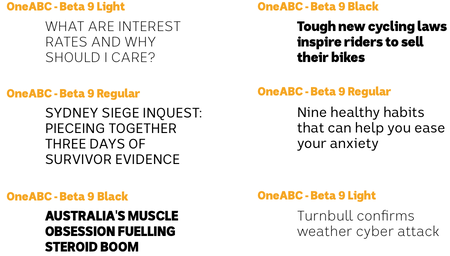
LJ.Rossia.org makes no claim to the content supplied through this journal account. Articles are retrieved via a public feed supplied by the site for this purpose.