| |
[Oct. 29th, 2008|07:18 pm] |
Пять составляющих (древнеегипетской) души человека * *
В Древнем Египте считалось, что человек состоит из *:
0. Сах. Тело. Сумма членов.
1. Иб. Сердце. Главная часть, средоточие разума, эмоций, воли и желаний. Ключ к загробной жизни: процедура взвешивания.
2. Шу. Тень. Всегда с человеком
3. Рен. Имя. Между прочим, очень важная часть. Живёт столько, сколько имя произносится.
4. Ба. "Душа". См. н.
5. Ка. Жизненная сила. То, что отличает живого человека от мёртвого. При рождении вдувается в уста богом.
Древнеегипетская душа состоит из пяти частей! Подробней по ссылке: http://en.wikipedia.org/wiki/Egyptian_soul.
Ба - наиболее близкая к современному понятию "душа". Кроме того, включает в себя всё то, что обозначает индивидуальность человека, таким образом, неодушевлённые предметы тоже могли иметь Ба. Изображалась вот такой вот птичкой, вылетающей из гробницы умершего человека.
 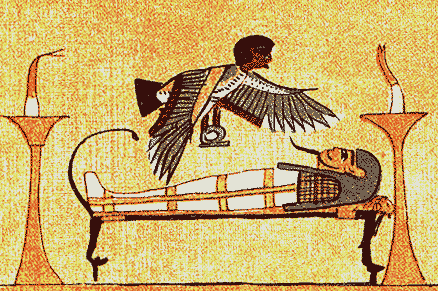
Это я к чему. Читая "диалог уставшего от жизни", возникает сразу два вопроса.
Понятно, что человек ведёт внутренний диалог. Но кто разговаривает с кем? Понятно, что человек разговаривает с Ба. Но кто первый собеседник, если Ба это часть человека? Что внутри человека ведёт разговор?
Возможно, Ка: According to Friedrich Junge, Giacomo Borioni proposes in his work "Der Ka aus religionswissenschaftlicher Sicht" that the Ka was the self of a human being. Возможно, ещё кто, будем думать.
Второй вопрос. Понятно, что человек помышляет о самоубийстве. Ясно (судя по словам Ба), что он собирается это сделать раньше времени. Но когда речь заходит о смерти, сразу нужно спрашивать. В каком смысле человек умирает?
В Египте со смертью дела обстояли весьма непросто. Моделью для жизни и смерти было путешествие Солнца. На ночь оно опускается в подземный мир Дуат и сливается с мумифицированным телом Осириса. Osiris and the sun, re-energized by each other, rise to new life for another day. For the deceased, their body and their tomb were their personal Osiris and a personal Duat. For this reason they are often addressed as "Osiris". For this process to work, some sort of bodily preservation was required, to allow the Ba to return during the night, and to rise to new life in the morning.
Ба отлетает от человека, чтобы воссоединясь с Ка, образовать Ах (типа призрака) и отойти в царство после жизни. Ancient Egyptians believed that death occurs when a person's ka leaves the body. Ceremonies conducted by priests after death, including the "opening of the mouth (wp r)", aimed not only to restore a person's physical abilities in death, but also to release a Ba's attachment to the body. This allowed the Ba to be united with the Ka in the afterlife, creating an entity known as an "Akh" (3ḫ, meaning "effective one").
Что касается Аха, потом верили, что Ka was considered to change into the Akh and Ba after death, rather than uniting with the Ba to become the Akh. At this stage, it was believed that the Akh spent some time dwelling in the underworld before returning and being reincarnated as a Ka, gaining a new Ba.
В "диалоге разочарованного", таким образом, "Запад" означает не что иное, как загробную жизнь. Нужно обращать особое внимание на "имя" в диалоге. Необходимо понимать, что человека следует хоронить по ритуалу, иначе могут быть сбои (человек не войдёт в подземный мир и т.п.). В начале, насколько я понимаю, Ба отговаривает человека от преждевременной (в каком-то смысле) кончины (до строфы 86). Теперь некоторые места диалога приобретают смысл. Перечитаем его снова и подумаем.
В дополнение небольшой синопсис с http://en.wikipedia.org/wiki/Dispute_between_a_man_and_his_Ba
(The beginning is lost) The man accuses his ba of wanting to desert him, of dragging him towards death before his time. He says that life is too heavy for him to bear, that his heart would come to rest in the West (i.e. the afterlife), his name would survive and his body would be protected. He urges his ba to be patient and wait for a son to be born to make the offerings the deceased needed in the afterlife. His ba describes the sadness death brings and retorts to the man's complaints about his lack of worth, his being cut off from humanity and the attractiveness of death by exhorting him to embrace life and promises to stay with him.
In spite of the presence of many symptoms which suicides generally display, there appears to be no hint in the text that the man is considering taking his own life,[1] although Pritchard's rendition[2] strongly suggests the opposite. |
|
|