Add this feed to your friends list for news aggregation, or view this feed's syndication information.
LJ.Rossia.org makes no claim to the content supplied through this journal account. Articles are retrieved via a public feed supplied by the site for this purpose.
| Tuesday, August 18th, 2015 | |
| LJ.Rossia.org makes no claim to the content supplied through this journal account. Articles are retrieved via a public feed supplied by the site for this purpose. | |
| 5:54 pm | The modular revival There is an article in The Quietus (written by Pipettes svengali turned avant-garde impresario Bobby Barry, no less) about the recent revival of analogue modular synthesizers. You know; the room-sized hulking behemoths, last seen on stage some time around the mid-1970s being operated by becaped prog-rock virtuosos and soon to be displaced by Minimoogs, then the wave of compact non-modular keyboards from Japan, and finally laptops. Well, now there is a new wave of modular synthesizers. Unlike the modulars of old, the components are standardised (based around a standard named Eurorack), strictly analogue (at least in how they interface with each other), and selling like hotcakes: Carlo Krug from Schneider’s Buero reckons that the last few years have seen a three- or four-fold increase in the amount of manufacturers bringing out Eurorack modules. One poster on the Muff Wiggler forum, where various correspondents have been trying to put together a timeline of Eurorack history, suggested that the number has risen so sharply in recent years that, “in 2045 the curve will go completely vertical. The modules will start making themselves.” Other than being more compact, the Eurorack wave is not your grandfather's Moog in other ways. Advancements in technology have made it easier to develop more complicated modules, meaning that those not wedded to a Moogian subtractive-synthesis purism are free to go wild with all kinds of hitherto unimaginable modules: Even back in the 60s, there was already a division opening up between the so-called ‘East Coast’ approach to synthesis, epitomised by Moog, and the ‘West Coast’ school of inventors like Donald Buchla and Serge Tcherepnin. The former tends to be based on ‘subtractive synthesis’, where ... (t)hings tend to have one function and one output and it’s largely eared towards being played with a keyboard. Buchla and Serge did things differently. They made synths controlled by touch pads and joysticks with weird and wonderful modules bearing named like ‘Multiple Arbitrary Function Generator’ or ‘Source Of Uncertainty’. Such machines have always been crazy expensive but, according to Lynch, new manufacturers like Make Noise and Wiard are “making the Buchla end of things more available now.” In fact, there's probably no reason why the modules would have to remain analogue internally; one could conceivably fit in, say, an Arduino-based sequencer, or if one was sufficiently perverted, a Raspberry Pi running a Pd patch or something. The new modules (and the synths one builds from them) also cost less than their distant predecessors, with the falling cost of electronics, at least in monetary terms, though they're still not cheap; simple modules might cost around £60, with more complicated ones going for hundreds, and the cost has a way of building up as one buys enough to build a viable synthesizer. A more pressing constraint, however, may be space (especially in cities like London, where the Invisible Hand Of The Free Market is aggressively adjusting the amount of space available to ordinary people ever downwards, and where the London Modular shop is reportedly doing a roaring trade). A modular synthesizer, by its nature, takes up space (physical space, the old-fashioned kind; measured in square metres, not megabytes). In the Berlin of recent years, with its cheap, spacious squats in the hollowed-out ex-Communist east and abundant low-cost slack, one could conceive of taking up a hobby of playing with modular synthesizers, and keeping at it long enough to make some minimal techno which looks as impressive as it sounds. In white-hot oligarchical London, one does wonder who is buying all these Eurorack modules. I wonder if their profligate bulk does not make themselves a status symbol in and of themselves, making them attractive to a certain type of young finance alpha-predator seeking to demonstrate to his Tinder conquests that (a) despite working at Goldman, he is still a bohemian creative spirit at heart, and, more subtly, (b) that working at Goldman enables him to afford the living space in which all those blinkenlights can be set up, tastefully overlooking the city skyline. Or perhaps an older target market; with middle-aged executive types who spent their youths necking Es at raves buying them, in the way that one might have once bought that expensive, beautiful-sounding electric guitar one was fated to never have the time to actually learn to play. (It has been commented that, these days, the modular synthesizer is the Harley-Davidson of electronic music, more showpiece than workhorse.) One or two may end up in the foyers of creative marketing agencies, or perhaps at some point Foxtons or someone similar will buy a job lot and array them in their offices, as part of a campaign about how, you know, edgy and creative and hip London is. In any case, I wonder what proportion of the modular synthesizers sold in London will actually end up being played for any non-trivial amount of time. |
| Sunday, June 28th, 2015 | |
| LJ.Rossia.org makes no claim to the content supplied through this journal account. Articles are retrieved via a public feed supplied by the site for this purpose. | |
| 4:59 pm | ALP MIA The rumours coming from Australia recently have been of preparations for an early federal election; Tory MPs have been sent offers to get updated photos with Team Australia Captain Tony Abbott, and the tragicomically misnamed Liberal Party have launched attack ads against the Labor leader, Bill Shorten, whilst insisting that an early election is not on the cards. Of course, it could well be that these are merely contingency plans, and the election is still over a year away. But whenever it happens, it's probably safe to call the outcome: Abbott will secure a second term, quite probably with an increased majority. He will do so comfortably, even if Lynton Crosby declines to lend his election-winning campaigning genius, instead opting to spend more time swimming, Scrooge McDuck-style, in his massive underground pool full of hard-won pounds sterling. Even if Rupert Murdoch suffers (heaven forfend!) a massive coronary beyond the abilities of the best in American private health care, and his editors, bereft of their helmsman's guiding hand, phone their election coverage in. Even if the Silent Majority Of Suburban Battlers stop being scared shitless of Islamic State jihadis arriving on waves of refugee boats to slaughter them in their beds, aided and abetted by lefty traitors in the ABC, with only Captain Abbott to protect them. Abbott will win, because the ALP, in its current form, has abandoned being an actual opposition, and there is no reason to vote for them other than a vague hope that they may, at some point, be a perceptibly lesser evil. Because the one thing more shit than voting for a bully is voting for the nonentity who hides in his shadow and cheers him on. Somewhere along the way, the ALP seems to have accepted the Murdochian mantra that it is unfit to govern. As such, its present role in parliament is not so much in opposition to the Tories as in apprenticeship; following the leader, rubberstamping his decisions, putting the boot into the Greens and the remaining small-L liberals, and mastering the art of downward-punching, dog-whistling and general neoliberal authoritarianism, seemingly in the hope of proving itself to be worthy of one day graduating and taking the master's place; by then, “ALP” having changed to standing for “Alternative Liberal Party”. Over the past week, the ALP has voted with the government to implement an extrajudicial internet censorship system (ostensibly for blocking pirate web sites, though once the infrastructure's in place, a sufficiently authoritarian government can find its own uses for it), to criminalise the reporting of child sexual abuse which is endemic in the refugee detention camps (guess what, fellow Australians? There are rape camps run in your name to deter brown/Islamic people from even thinking about coming over), gutted the renewable energy target (and allowed the felling and burning of native forests to count as renewable energy, alongside solar and wind power) and joined in calls for an inquiry into the ABC being insufficiently loyal. Earlier, the ALP had rubberstamped the government's internet surveillance regime and draconian national security censorship laws. And if the Trans-Pacific Partnership comes up for a vote, the government can undoubtedly count on the ALP's loyalty, but we all knew that already. These days, the ALP is most reminiscent of one of those pseudo-opposition parties that exist in places like Singapore and Russia to give the illusion of multiparty democracy; a bunch of clowns who know what their job is, and are aware, in no uncertain terms, that should they ever cross the boundaries of what is expected of them and start posing an actual challenge to the government, they will get smacked down, hard. The tragedy is that they do not actually live in a one-party “managed democracy” where going for the throat would result in them being sent to the gulag; it's pure learned helplessness. And so, the actual Liberal Party will almost certainly form the next government, and resume ruling with an iron fist and a mandate to reshape Australia in its own image. We have seen a preview of this: policies based on dogmatic neoliberal ideology (austerity economics as a moral imperative, attempts to phase out universal health care, and an opposition, in principle, to public transport, seemingly inherited from from US free-market ideologues intent on ruling out the very possibility of a common good, lest it inexorably lead down Hayek's Road To Serfdom) and a fetishisation of fossil fuels, all book-ended with disturbingly authoritarian rhetoric, not least of which is Abbott's reframing of Australia as “Team Australia”, a body moving in a unified direction under the leadership of its captain, and a contrast with actual liberal ideas of a pluralist society; there is, after all, no room for dissent or difference in a team. Beyond that, we have seen the government aggressively politicise formerly impartial sectors, gutting an independent arts fund and diverting the money to a new government-controlled one, and most recently, calling for sackings in the ABC, and, tellingly, referring to it as a “state broadcaster” (which implies a duty to present an official government line) rather than a “public broadcaster” (a more liberal institution). Abbott's vision for the country is an authoritarian one, and it is likely that in his second term, he will ease further into the role of an Erdoğan-style strongman, and the memory of the old liberal Australia will recede further into the past. Electorally speaking, this victory will be at the expense of the Labor Party, whose support will crumble as voters start asking themselves what the point of it actually is. In electoral terms, at least the Greens (who are emerging as the actual opposition) will do well, though whether an opposition party under an authoritarian system can be said to have “done well” is an open question. In the longer term, perhaps it will make sense for the ALP and the National Party to trade places. The National Party, a largely rural socially conservative party, has been in coalition with the Liberal Party since time immemorial (and the two parties even merged in Queensland), though is starting to shed rural voters to the Greens in some areas, as the Liberals' monomaniacal support for mining and fracking alienates some in its (hitherto captive) traditional base (a problem the rightward-triangulating ALP has had in inner cities); a post-coalition National Party (or offshoot thereof) could be a right-of-centre ally to the Greens on some issues. Meanwhile, given that the current ALP is intent on brown-nosing its way into the Coalition, perhaps that is its natural place after all? |
| Sunday, May 24th, 2015 | |
| LJ.Rossia.org makes no claim to the content supplied through this journal account. Articles are retrieved via a public feed supplied by the site for this purpose. | |
| 10:55 pm | Ireland votes Yes The other big news this weekend, of course, Ireland voting in favour of legalising same-sex marriage. The margin (62%) was decisive enough, even without taking into account the fact that only one of Ireland's 43 parliamentary constituencies reported a majority against. The case is pretty much settled; even senior Catholic clergy have conceded that history was on the side of the change. This result shows how much has changed in Ireland over the past few decades, and in particular, how much the influence of the Catholic Church, which once controlled all aspects of life in the republic, has waned. It has only been 22 years since homosexuality itself stopped being a crime in Ireland, and a decade or so longer since divorce became legal. Of course, the Church Holy Roman and Apostolic's influence still weighs heavily in one conspicuous area: abortion remains strictly illegal in Ireland, with several referenda in the past decades failing to reverse this. It is, to say the least, not at all clear that this would be repeated in any future referendum. (On the other hand, the experience in the US has shown that it is possible for a liberalisation in gay rights to occur alongside a rolling back of womens' reproductive rights, so legalised abortion in Ireland is by no means inevitable.) The decision's impact will spread beyond the Irish Republic; calls for reform in Northern Ireland, the only part of the United Kingdom where same-sex marriage is illegal, are likely to be strengthened (though still face an uphill battle, with the conservative Democratic Unionist Party coming increasingly under evangelical Protestant influence. Considerably further afield, Australia is another place where this may have an impact. Australians famously like their politicians to be more conservative and moralistic than they themselves are, which has been reflected, as recently as a few years ago, in both major parties being against same-sex marriage. The vein of religious conservatism that animates this opposition, meanwhile, stems largely from Irish Catholic conservatism (the Prime Minister, Tony Abbott, is an conservative Catholic whose political views stem largely from the ultra-conservative, Democratic Labor Party, which emerged when the Catholic elements in the ALP left, citing creeping Communist influence in the party); while it is possible that Australia will remain as a sort of Galapagos of the Irish Catholic Right circa 1950, preserving this otherwise extinct culture in the way that a 19th-century dialect of English remains alive on the South Atlantic island of Tristan da Cunha, the fall of the Old Sod to secular modernity could have an effect. |
| Saturday, May 23rd, 2015 | |
| LJ.Rossia.org makes no claim to the content supplied through this journal account. Articles are retrieved via a public feed supplied by the site for this purpose. | |
| 7:14 pm | Eurovision 2015 liveblog Well, it's that time of year again, and so I will be providing live commentary on Eurovision; this year, live from Vienna. So watch this space: It's kicking off with style; for the introduction, the Austrian hosts have done a good job of melding sophisticated 1990s club pop à la Robert Miles with Austria's historic musical institutions, including the Vienna Philharmonic and the Vienna Boys' Choir; orchestral strings and brass and smooth synth pads; or as Graham Norton said, “most things you'd want there, and some things you wouldn't, like an Austrian rapper”. Slovenia; 20:20: a red-haired woman in a white lace dress sings her lungs out, accompanied by a mohawked dude on piano and an interpretive dancer; Mohawk Piano Dude tries to steal the show, winking cheekily at the camera, and the dancer plays frenzied air violin. France; 20:25: a chanteuse in black sings something melancholic, over gentle minor-key piano and strings, imploring a lover to not forget her; projected behind her is a computer-generated wasteland, a metaphor for her forlorn love. Symbolism, and we're only two songs in. As the song wends to its climax, she gives it everything. Israel; 20:29: Funky and muscular, in a boy-band sort of way, with Latin beats and middle-eastern violin in the chorus. It lifts the tempo a bit. Estonia; 20:33: another faintly anguished male-female duet in overwrought minor key, like the musical equivalent of a Brazilian telenovela. I think the female vocalist actually cried towards the end; method acting. UK; 20:37; the UK's entry this year calls itself Electro Velvet. Their shtick is a sort of MIDI-ragtime, underscored by a 4/4 house beat, and blinking LED costumes. This is what happens when steampunk electro-swing gets diluted for mainstream consumption, I guess. Armenia; 20:41; six musicians, of Armenian heritage, all from different continents. Figures in black cloaks standing in the mist over projected celtic knotwork. The music itself doesn't live up to the witchy visuals, instead sounding like a Whitney Houston B-side, with the obligatory chugging power guitar riffs kicking in in the choruses. Lithuania; 20:45; I think this one could be in with a chance; it's a catchy, inoffensive pop number, with little about it that is odd or weird in any way. Serbia; 20:49; a Classic Eurovision Power Ballad, which halfway through, casts off its costumes and turns into a hi-NRG disco stomper. Norway; 20:53; “A Monster Like Me”; another for the Anguished Ballad genre; this one's quite subtly done. I think they're also in with a shot. Sweden; 20:58; another song which starts introspective and explodes into a stomping hands-in-the-air club anthem. Also a strong contender. Cyprus; 21:03; a chap in 1950s-style glasses singing over an absentee guitar accompaniment. The way they break it down and bring it back up is quite subtle, though this may be too inoffensive to win. 21:06; and here comes Australia, who, by rights, shouldn't be there, and who are represented by former reality-TV contestant Guy Sebastian, who comes across as a bargain-basement Bruno Mars; the brass in the song is also a bit reminiscent of Uptown Funk. I'm not going to bet on it winning, but if there's any justice (and there isn't in Eurovision), it'll get more votes than the UK. Belgium; 21:11; the singer looks about 14; Belgium's entry is a minimal affair, all black and white and a sparse electronic beat. Austria; 21:14; Austria's The Makemakes, not to be confused with Australia's The Fuck Fucks; though to be fair, it'd be difficult to get the two mixed up. The Makemakes are soulful piano-driven soft rock, though to their credit, they do set the piano on fire halfway through the song. Also, I wonder if they chose a guy with long hair and stubble on purpose. Greece; 21:20; a sequined blonde lungsmith brings the minor-key melodrama, with her ballad of emotional anguish, One Last Breath Montenegro; 21:25; the second song not in English today (after France); by coincidence, its title, Adio, means goodbye in both French and Montenegrin, the language it is sung in. Balkan strings and stomping beats are the order of the day. It's a well-crafted Eurobanger, which should do better than it probably will. Germany; 21:28; Germany exports most of the world's electronic music software, and quite a bit of it undoubtedly ended up in the production of this number. It could do well. Poland; 21:32; no saucy milkmaids this time; instead, an understated minor-key piano ballad which is actually quite decent. The singer, Monika Kuzynska, is a former professional pop star whom a car accident left in a wheelchair; during the middle of the song, screens on the side of the stage show black and white footage of her earlier career. Latvia; 21:36. “Love Injected” is the title of this song; perhaps it sounds more appropriate in Latvian. The song itself starts off as glitchy electropop, though soars into torch-song territory in the chorus, as per the Eurovision rules, before a wonky breakdown. Not bad. Romania; 21:41; the third non-English-language song, peformed by veteran Romanian band Voltaj, shares its title with an abandoned children's charity the band supports. The suitcases on the stage underscore this connection, marking the band out as Good Guys, which is probably just as well, as with his bald head, goatee and all-black wardrobe, the frontman looks like a Satanic film villain. The song is a competent number, and the emotional angle and production may work in its favour. Spain; 21:44; urgent strings, percussion, capes and a bare-chested male dancer; this is (part of) what Eurovision is about. Should do well. Hungary; 21:49; Hungary's chanteuse swapped her unpronounceable-in-English name for her nickname, which is, perhaps unfortunately, Boggie. The song never gets beyond a simple guitar accompaniment and some platitudes vaguely about war and injustice. Georgia; 21:53; from peace to war, Georgia's entry is titled “Warrior”, and starts with smoke, lightning-like strobes and thunderous drums. The singer appears on stage attired in what looks like crow feathers, fixing the camera with her gaze. It's almost as if Björk's Hunter were a Eurovision number. Azerbaijan; 21:57; more mist and moonlight in the near east; this time, an earnest young man sings his heart out as two dancers gyrate in the smoke-machine fog. The song's title is Hour Of The Wolf, which is perhaps more dramatic than the song itself. Russia; 22:01; quite slickly produced, and likely to do well; Russia presumably really want to win, partly to make up for the humiliation of having been indirectly responsible for last year's victory. The song itself is fairly neutral, though the theme (a million voices singing in unison) could, in some contexts, sound ominous. Albania, 22:05 Strings, pounding drums, acoustic guitar and soaring female vocals; Eurovision-by-numbers. Italy; 22:09 More operatic than most; a bit of Pavarotti, a bit of Mantovani and the inimitable style of Italian screen drama; the images of Roman statuary shrouded in smoke and flames underscores the classical drama, as three tuxedoed tenors belt it out. 22:54: and the votes are being tallied. First up is Montenegro. Serbia got douze, but that's to be expected. 22:56; Malta voted; the UK was saved from ignominy with one point, but Australia got six. I suspect Australia will do best from the countries it had many immigrants from. 22:57:; Finland voted, Sweden is leading, with Russia close behind. 22:58: Greece gives Australia five points; also not unexpected. Also look for strong Italian backing. Speaking of which, Italy is leading. 23:00; Sweden, Italy and Russia keep changing places at the top. Russia is leading. 23:05; looks like Russia will get it. Wonder whom they'll invade during next year's final. Perhaps Latvia, who only gave them 10 points? 23:08; Russia's vote is supposed to come up, but is met with boos. The announcer has to admonish the audience to refrain. 23:10; Australia gets 8 points from Denmark. They're at number 5, with 47 points. The UK, in contrast, has one point. 23:11; Australia gets a further 8 points from Switzerland, and has now overtaken Belgium. 23:17; Sweden just gave Australia douze points, taking them to 79 23:19; and Australia votes, represented by cult icon Lee Lin Chin. Sweden gets the douze. The UK gets bugger all. At the halfway mark, Russia leads by some 14 points, with Sweden in second place. 23:26; Australia gets its second douze, from Austria. 23:27; Russia only got five points from Slovenia; Sweden got 12, being just nine shy of the top. 23:29; Russia only got six from Hungary, with Sweden getting 10, and Belgium the 12. 23:30; and here's Nigella with the UK's results. Russia gets six, Australia gets 10, and the 12 goes to Sweden, taking it to the slimmest of leads. 23:33; Lithuania has spoken; the other two Baltic states did well, and Sweden did as well. Russia got zilch. 23:36; now Sweden has a commanding lead, after the Russian vote collapsed in several countries. Ten countries to go. 23:38; Russia's vote comes up (this time for sure!), people boo. The Russian anchor chews the scenery: “Twelve points from Russia go to RUSSIA! Just kidding” 23:40 Looks like Eurovision will be in Stockholm next year. 23:42 Australia gets 8 points from Iceland; is comfortably holding on to number 5. Sweden's lead extends further. 23:43 Cyprus; Russia gets only two, and Greece only eight. 23:44 And Sweden has it. Grattis på din Eurovisionseger. 23:49 And the final tally is: Sweden 365, Russia 303, Italy 292; Australia is at number 5 with 196. The UK, meanwhile, languished third from last, with five points; only France (four points) and the two German-speaking countries, with nul points between them, were below it. Which is hardly surprising, given that the UK appears to be averse to be seen to be taking Eurovision seriously. Being one of the funding members, the UK's place in the final is guaranteed; and so, the UK plays the thick posho of the Eurovision scene; the rich kid who isn't particularly good at anything, but has never had to be, because of their privilege, and consequently regards everything with an air of condescending boredom. This does not go down well with the other European nations; meanwhile, their earnestness appears irredeemably naff from across the Channel. Australia, however, gets Eurovision in a way that Britain, ostensibly in Europe, or at least anchored off the coast of it, though not of it, doesn't. Perhaps for the same reason that Australia gets coffee in a way that eluded the UK until a decade or so ago. Because more of Australia's cultural DNA comes from the Continent, via a few waves of mass migrations, diffused via the SBS TV network; a sort of Australian proto-Channel 4, only initially set up to show news and programming from the home countries of migrants, and eventually imbuing a proportion of Australians of all backgrounds with an appreciation of everything from Krimis to giallo. At some point, SBS started broadcasting a delayed feed of Eurovision on the Sunday following the final, and this eventually became an excuse for a party. Unlike in the UK, the subject was not regarded with sniffy disdain; perhaps there was no need to defensively stand apart from the Europeans as, on the other side of the world, nobody would mistake you for one, or perhaps it's a sort of Neighbours/Eastenders contrast between sunny, easygoing (if, arguably, at times naïve) cheer on one hand, with an eeyorish, beaten-down misery and/or barely repressed anger on the other. In any case, for whatever reason, the EBU invited Australia to participate, strictly as a one-off, and Australia, fielding a reality-TV contestant, came a respectable fifth, with almost 40 times as many points as the Old Country. Australia has thrashed the Poms this way before, but this usually took place on a cricket oval. And this was with a reality-TV contestant; think of what Australia could have done if they made more of an effort, and sent its real talent. Like, say, TISM, or Regurgitator, or the musician who played the Doof Warrior in Mad Max: Fury Road. Of course, this was a one-off, and Australia will not be participating in Eurovision again; unless, of course, whoever makes the rules up as they go along decide to invite them back. |
| Friday, May 8th, 2015 | |
| LJ.Rossia.org makes no claim to the content supplied through this journal account. Articles are retrieved via a public feed supplied by the site for this purpose. | |
| 12:27 pm | No lubrication Well, that all turned dark pretty quickly. The Tories achieved a surprise upset in the general election, not only getting vastly more votes than Labour but confounding expectations of an inevitable hung parliament and winning an outright majority, their first since 1992. The Lib Dems, as expected, suffered heavy losses, not only losing dozens of seats but forfeiting hundreds of thousands of pounds' worth of electoral deposits when candidates failed to reach the magic 5% mark, and Labour lost all its seats in Scotland. What's more surprising is Labour falling flat south of the border; this was undoubtedly helped by the entire press (save for the Grauniad) throwing their weight behind the Tories and stoking fears about those awful Scots and their unreasonable demands. The UKIP surge also failed to happen, though that's partly because the Tories moved into their ideological turf (a strategy echoing the Australian Tories' appropriation of the xenophobic One Nation party in the 1990s).
The upshot of this is that, for the next five years, Britain will have a Tory government unrestrained by either more squeamish coalition partners (the all-but-extinct Lib Dems, who were, as Charlie Brooker so memorably put it, “the lube on the broom handle”) nor by any considerations of being seen as “modernisers”, “moderates” or “compassionate conservatives”. The raw, atavistic, Murdochian id of the public has spoken, and revealed that it responds to fear and outrage: that it believes some proportion of the people they So, in short: if you're a non-dom tax exile, a buy-to-let landlord or merely asset-rich, the next five years will be just fine, thank you very much. For everybody else, struggling on exploitative zero-hours contracts, eating expired baked beans from the food bank, not complaining about breathing in mould spores for fear of (perfectly legal) revenge eviction and hoping that you don't become sick or disabled, ever, life will suck more. But at least you can blame the Romanians. Or the Scots. In short, in a few years' time, people will genuinely miss the Lib Dems. Labour, meanwhile, seem to be in a bind. With Miliband (branded “Red Ed” by the right-wing tabloids due to making vague noises about social justice and inequality rather than just preaching from the Blairite trickle-down prosperity gospel) gone, the temptation might be to triangulate rightward again, choosing a slick Blairite leader (or perhaps manufacturing their own Farage-style jolly reactionary bigot-whisperer) and hope that the punters buy it; though the problem with this would be (as Channel 4's Paul Mason pointed out) that this could trigger the largest union, Unite, cutting its ties with Labour and using its funds and resources to set up a hard-left party along the lines of Syriza/Podemos, and eclipsing a Labour who, after the loss of Scotland, no longer have any ideological base or coherence. Or Labour could bite the bullet and become the aforementioned hard-left party, alienating all the big-business donors they have so carefully built up connections with, and losing credibility with the mainstream before earning the trust of the angry precariat, though that won't happen. Scotland, meanwhile, is drifting away from the Westminster settlement. The Westminster parties are all but extinct north of the border, with Labour joining the Tories in oblivion; currently, as far as the Westminster parliament is concerned, Scotland is almost a one-party state governed by the SNP. This, of course, is hardly a sustainable state of affairs, and at some point there will (hopefully) be a vigorous opposition. It's not a safe bet that this will be a reinvigorated Labour Party. If Britain does leave the EU, the SNP is likely to vociferously demand a rerun of the referendum; of course, as far as Westminster is concerned, the matter of Scotland's place in the UK has been settled once and for all, though they said similar things about Irish Home Rule. (Speaking of which, if Scotland does, sooner or later, break away, the knock-on effects on the status of Northern Ireland will also be interesting.) There are a few minor glimmers of sunshine in the gloom: Nigel Farage failed to win Thanet (but mostly because the Tories ran a UKIP-alike, pandering to the electorate's perceived xenophobia) and promptly fell on his sword; this, incidentally, should free him up to host Top Gear. The Greens' Caroline Lucas has held Brighton Pavilion with a greatly increased majority (despite predictions that the unpopularity of a Green local council would damage her chances), and though the Greens have not claimed any additional seats, they did make back their deposits in a few. And George Galloway has lost the seat of Bradford West after a dirty campaign; Galloway blamed the loss on “racists and Zionists”; the candidate who beat him, Labour's Naz Shah, is a Muslim woman of Asian heritage. |
| Monday, May 4th, 2015 | |
| LJ.Rossia.org makes no claim to the content supplied through this journal account. Articles are retrieved via a public feed supplied by the site for this purpose. | |
| 11:05 pm | Rebellious Scots to crush In two days, the United Kingdom will go to the polls to elect a new parliament. It is all but certain that this will result in a hung parliament, the exact nature and composition of the next government will not be known for weeks afterward, and the government will be a fractious and unstable one. The last general election, in 2010, also produced a hung parliament. The Conservatives won more seats than Labour, though nowhere near enough to govern in their own right; the cards were held by the Liberal Democrats, then seen as a modern centre-left party, free of both the patrician hauteur and residual Thatcherite toxicity of the Tories and the oily Blairite triangulation, Blunkettian authoritarianism and half-buried old-school socialism of the Labour Party; consequently, throughout the campaign, they were vilified pitilessly by the (then dominant) Murdoch press and right-wing tabloids. After the election, the tone changed rapidly, and both parties courted the Lib Dems as a governing partner. The Lib Dems ended up going with the Tories, promising to moderate their nastier extremes, and promptly betrayed their electoral manifesto by voting for a sharp increase in university tuition fees, in return for a Tory promise to back a referendum on electoral reform. The Tories won that one through sheer cunning; by the time the referendum came around, the sting of the Lib Dems' betrayal was still sharp in the minds of the progressive end of the electorate, and the Lib Dems' electoral reforms were voted down two to one, mostly because people really wanted to give them a good kicking. And it looks like they still do; in the upcoming election, they are staring at a massive parliamentary wipe-out; indeed, the only thing protecting their moderately right-leaning leader, Nick Clegg, from losing his own seat (in the student-populated seat of Sheffield Hallam) is Tory voters in his electorate tactically backing him, presumably as he's a known quantity with whom they can do a deal. The elephant in the room is, of course, what Charles Stross has termed the Scottish Political Singularity; in a nutshell, politics in Scotland has become detached from the rest of the United Kingdom in a way that looks unlikely to be reversed. This process began when Margaret Thatcher, in her characteristic measured wisdom, decided to use Scotland as a testbed for her unpopular and regressive poll tax; as a result, the Conservative Party (which, at its height, had enjoyed wide support north of the border, what with the Protestant work ethic and all that) declined to a desultory rump. In the past several parliaments, the Tories had merely one MP north of the border, which, as is widely reported, is one fewer than the number of giant pandas in Scotland. Of course, Labour made hay from this, packing their Blair-era cabinets with Scottish MPs, elected by the Tory-loathing descendants of Glaswegian shipworkers and Aberdonian oil riggers, safe in the knowledge that they could triangulate rightward as far as tactics demanded without losing support for at least a generation. But then, the independence referendum happened, and while the No side won comfortably, the sight of Labour joining with the Tories in vociferously opposing independence did it for them. If the polls are to be believed, Labour (or, as they're known in Scotland, the Red Tories) are facing all but electoral annihilation north of the border, and the Scottish National Party—once a single-issue pro-independence party, now the seemingly natural party of Scotland's own devolved government, promoting itself as a broad centre-left social-democratic party, with a few sops to religious conservatism—looks set to take an overwhelming majority of Scottish seats in Westminster. The result of this is that, even though the Tories and Lib Dems are set to fall short of a majority (or even the Tories, Lib Dems and the hard-right reactionary party UKIP, if the three could somehow stomach each other for long enough), Labour will also fall short, and the SNP look set to be kingmakers. This is, of course, a massive problem for both major parties. The SNP have ruled out forming a coalition with the Tories, for obvious reasons, though have extended an offer of mutual support to Labour, suggesting that they could help Labour be bolder (i.e., move away from the Blairite centre-right and sharply to the left). Of course, the tabloids had a field day with the prospect of the Northern barbarians dictating policy, and the Labour leader, Ed Miliband, ruled out any sort of deal with the SNP, saying that if Labour cannot govern without them, there will not be a Labour government, full stop. The presumable tactical goal of this is to scare Scottish voters into flocking back into the Labour fold, in the hope that enough Labour MPs will be returned to get a majority. This is the sort of thing that the Americans call a “Hail Mary pass”; a desperate last-ditch attempt to snatch a highly improbable victory from the jaws of almost certain defeat. What will happen if (as polls predict) there is a hung parliament, but Labour plus the SNP would have a majority, is uncertain. Miliband could stick to his word, fall on his sword, and let Cameron assemble a fractious minority government (attempting to get the handful of surviving Lib Dems and the triumphant UKIPpers singing from the same hymn sheet), having the luxury of toying with it from the opposition benches as a cat does with a dying mouse; the downside of this would be that the Tories would still be the government, and even if the government does fall long before the end of its five-year term, there's no guarantee of which way the next election would go (and the Tories, it must be said, have the advantage in campaign fund raising). Or he could swallow his words and do a deal with the SNP, undoubtedly coming up with some lawyerly rationalisation for why he is not actually doing a deal with the SNP but instead doing something entirely different. (Whether Labour and the SNP could come to an agreement is another matter; the SNP seem less likely to fold on their red-line issues, such as the scrapping of the Trident nuclear missile system, than the Lib Dems were; and, indeed, a noble defeat hastening the breakup of the United Kingdom may be what the SNP want.) Or the result could be the formerly unthinkable: a Conservative-Labour rainbow coalition, a “government of national unity” of a kind unheard of in peacetime, with everybody else (the rebellious Scots nationalists, the cranky English nationalists, the convalescing Lib Dems, and Brighton's Green MP, Caroline Lucas) forming a somewhat chaotic opposition. Such a government would have very little in the way of representation north of the border, and would probably do little to dampen down the still smouldering embers of the secessionist mood. (If the Tories deliver on their promise of a referendum on leaving the EU, all bets are off; Scotland favours EU membership a lot more strongly than England does.) To add to this, there is another wildcard: Her Royal Highness Princess Charlotte Elizabeth Diana of Cambridge, Saviour Of The Union, also known as the newly-born Royal Baby. Announced in the weeks before the Scottish independence referendum, the Royal Baby, whilst still a mere zygote, may have saved the Kingdom (for now, at least); and now, whilst yet functionally little more than a digestive tract, there is the prospect that she may do the same for David Cameron's Prime Ministership. The theory goes that the groundswell of uncritical patriotism, taking the form of an acceptance of the deep, ineffable rightness of deference to an archaic, ceremonial system of nobility, should rub off to some extent on the patrician Cameron (who is, after all, Queen Elizabeth II's fifth cousin once removed); and if not, surely the omnipresent Union Jack bunting and spontaneous Royal Baby tea parties in every street, where everyone—the Morrises and MacLeods, the Khans and Kowalczyks—come together to sing God Save The Queen in unison, should take the edge off dissatisfaction with the government of the day by polling day. Or perhaps not; the Guardian's Zoe Williams thinks that the Royal Baby may have the opposite effect (by virtue of being a baby, rather than being royal). The upshot of all this is: we live in interesting times, and it'll take a long time for the dust to settle. At this stage, it is not at all clear who will be Prime Minister after the next election. |
| Monday, April 6th, 2015 | |
| LJ.Rossia.org makes no claim to the content supplied through this journal account. Articles are retrieved via a public feed supplied by the site for this purpose. | |
| 10:13 pm | The toddlerification of indiepop It is an early afternoon during the Easter bank holiday weekend, at an indiepop weekender at an art venue in Cardiff. A band is playing on stage, fuzzy guitar lines, drums and female vocals mixing together. The audience, or those who have arrived early, are standing and watching; they tend to be in their mid-30s and older; women wear hair slides and floral/polka-dot dresses, while the Mod Dad look, with Fred Perry polo shirts, short hair and sideburns, is popular among the menfolk. In front of the stage, what might have once been the mosh pit is now a children's play area, replete with LED-illuminated balloons. about four or five young children run around, squealing and bouncing the balloons. Wearing ear protectors, they appear to be unaware of the grown-ups on the stage holding guitars, the relationship between them doing this and the sound coming out of the speakers, or that there would be any reason to not run around in front of the stage. The concept of a “gig” seems to be alien to them. Elsewhere, smaller children bop gently up and down in time to the music in their mothers' hands, animated by parental enthusiasm; they gawp bewilderedly, their faces showing only undifferentiated emotion. The squawls of babies fill the gaps between songs and add a novel accompaniment to the jangly melodies. Occasionally, a musty odour fills the air and a balding guy in a faded Milky Wimpshake T-shirt leaves hurriedly, carrying a discomforted-looking infant to a baby-changing area. Once upon a time, pop/rock/alternative music consumption was strictly for teenagers; you got into it when the adolescence hormones hit your bloodstream and you needed something that was yours and not your parents', spent a few years spending your pocket money on 7" records and dressing in a way your grown-up self might later find as embarrassing as your parents did at the time, and dropped it just as quickly when you Grew Up, got a job, married and had kids of your own and were saddled with the burden of adult responsibilities which you would carry unto the grave. Gradually the boundaries got pushed back, and a whole market of “adult-oriented rock” emerged; engineered to soothe the nerves of stressed Responsible Adults whilst providing them with just enough of a hit of what excited their younger selves a quarter-century earlier, it tended to a sort of soaring, platitudinal blandness; a weak substitute for what had been forfeited. Though over the past few decades, the idea that one must check one's musical/subcultural identity at the door of adulthood has been eroded even further. The pioneers may well have been the Goths, who stubbornly refused to Grow Out Of It well into middle age and beyond; though soon, the commodification of cool into cultural capital opened the doors further, until soon we had shops in trendy areas selling Ramones baby clothes and lullaby renditions of The Cure and Nirvana, and bands classified, back-handedly, as “dad-rock” or “dad-house”. This isn't completely universal—after all, supermarkets flog millions of records by the likes of Coldplay and Ed Sheeran for people who either never were into music or else vaguely remember what it felt like but have no desire to regress to that phase of their lives—but one no longer has to be a fringe-dwelling bohemian to remain particular about music Of all the genres and subcultures, though, the indiepop scene seems to have become uniquely small-child-inclusive. As a critical mass of indiepop kids hit middle age and have kids of their own, they are more likely to bring them, en masse, to gigs and festivals, and adapt the events themselves for the kids; songs with rude words are dropped or bowdlerised, balloons are provided, and the gig becomes a mass playdate first, and a musical performance only tangentially to this. Flocks of toddlers run around, yelping and shouting gleefully, and it is seen to be their right to do so; anybody who objects to this getting in the way of their enjoyment of the music may as well be a fascist or a Tory or something equally unspeakable. The music's almost just a side product for the parents' benefit. Elsewhere, there are indiepop baby discos, acclimatising young ears to Belle & Sebastian and Allo Darlin' from an early age. Perhaps, elsewhere, there are pint-sized punks pogoing anarchically to toddler-friendly renditions of Anarchy In The UK, baby discos spinning gnarly brostep, or black-clad toddlers running around like swarms of ground-hugging bats at the Whitby Gothic Weekend, but such possibilities notwithstanding, this seems to be peculiar to indiepop. There are no boisterous toddlers at, say, shoegaze, psych or post-rock gigs; other festivals may have a few small children in attendance, but they are fewer in number, and where special provision has been made for them, it is away from the stages. Why indiepop has, upon its members' parenthood, shifted wholesale into a toddler-friendly environment is not certain. Perhaps it's a natural outgrowth of the “twee” signifier, which originated in the 1980s as a rejection of the hypermasculinity of hardcore and/or post-punk rock, instead embracing, with varying degrees of irony, the signifiers of childhood. Much in the way that things that start as ironic appropriations often end up shedding the irony and continuing with some degree of sincerity (as seen, for example, with the “ironic” sexism of 1990s “lad” magazines), a scene whose zines and button badges copied old children's books might transform from a subculture questioning the inherent conservatism in the childish/mature dichotomy to a subculture tailor-made for small children and their parents. It'll be interesting to see whether the toddlerification of indiepop changes the subject matter of it more than removing the word “fuck” from lyrics. Thematically, indiepop songs do tend to hover around adolescence and its long decay envelope, with themes of crushes, break-ups and being in or out of love cropping up disproportionately often. These days, this is even more so than in, say, the C86 days, as “twee” became stylised and codified into a somewhat excessively fey, cupcakey aesthetic, and some of the oddness of 1980s-vintage indie has been replaced by chaste adolescent romance like a plot from an Archie comic soundtracked by vintage Motown girl groups. Perhaps as the under-5 demographic at indiepop gigs swells, these themes will be displaced to some extent by songs about dinosaurs, monkeys, pirates, rocket ships, monkeys who are rocket-ship pirates, poop and other things more likely to appeal to actual small children. Secondly, it will be interesting to see what a generation of kids who were brought up listening to twee pop from birth end up doing when adolescence, and the need to individuate themselves, hits them. |
| Friday, April 3rd, 2015 | |
| LJ.Rossia.org makes no claim to the content supplied through this journal account. Articles are retrieved via a public feed supplied by the site for this purpose. | |
| 11:29 am | The paradox of the necktie Anarchist anthropologist David Graeber (of Debt: The First 5,000 Years and On Bullshit Jobs fame) writes in the Baffler about the evolution of business attire, and in particular, the paradox of the necktie: No doubt, part of the objection to the tie is to the pure arbitrariness of the thing. A tie serves no function. It doesn’t hold your trousers up or keep you warm. But at the same time, it’s uncomfortable, so much so that putting it on does somehow feel like a gesture of submission, a reluctant pledge of allegiance to everything the suit is supposed to represent. [t]he business suit derives not from aristocratic formal wear, but from hunting clothes—this is why fox-hunters, for instance, still wear something very much like one. Both uniforms are a kind of active wear, adopted by a class of people who wanted to define themselves through their actions. Actually, I suspect that the ultimate derivation of the business suit is from a suit of armor. The suit, after all, encases your body, covering as much of it as possible; what minimal openings to the world such clothes do afford—at your neck and sleeves—are bound tightly together by ties and cuff links. The contours of the body are thus obscured, in striking contrast with women’s formal wear, which, even in covering the body, constantly hints at revealing it, and particularly at revealing its most sexualized aspects. Skirts, even when they cover the lower half of the body completely, tend to form an open-ended cone whose apex is between the legs, and except in the most prudish times, there has been some gesture toward revealing the cleavage. It’s almost as if the staid uniformity of men’s attire is meant to efface individuality just as its design is meant to make the body itself invisible; women’s formal wear, on the other hand, makes the wearer both an individual and an object to be seen. Indeed, the conventions of higher-class fashion ensure that any woman wearing such an outfit is obliged to devote a good deal of time and energy to monitoring herself to make sure too much is not revealed and, more generally, to constantly thinking about what she looks like. I suggest a simple formula: To express power through display is to say to those over whom one exercises it, “Behold, see how I have been treated. I have been treated this way because of who I am. Now you, too, must treat me this way.” Kings cover themselves with gold as a way of saying that you must cover them with gold as well. To refuse any such display, in contrast, is to say, “You simply have no idea what I am capable of.”As for the necktie, Graeber's theory as to its provenance is a somewhat Freudian one; essentially, the tie is a sort of symbolic, decorporealised codpiece: Couldn’t we say that a tie is really a symbolic displacement of the penis, only an intellectualized penis, dangling not from one’s crotch but from one’s head, chosen from among an almost infinite variety of other ties by an act of mental will? Hey, this would explain a lot—why men who wear bow ties are universally taken to be nerds, for example. True, a bow tie could be taken for a pair of testicles. But even so, bow ties are small, and they point in entirely the wrong direction. Mafiosi wear ties that are too fat and colorful; dissipated sophisticates wear thin ties; cowboys wear string ties that produce the effect you might expect from wearing a bow tie and a regular tie at the same time—ordinarily, this would be too unsubtle, but cowboys are mythic he-men who can get away with it. (James Bond can also get away with a bow tie, but then he’s basically just a giant penis anyway.) |
| Saturday, March 21st, 2015 | |
| LJ.Rossia.org makes no claim to the content supplied through this journal account. Articles are retrieved via a public feed supplied by the site for this purpose. | |
| 12:00 am | Renting your way to poverty There's a piece in the Telegraph (yes, the Torygraph) about the London housing crisis; the prognosis is not good. Basically, it's going to get much worse. Private tenants are, of course, screwed as they've always been, and there'll be no relief as the Invisible Hand Of The Free Market tightens the screws on them (and this will increasingly apply further from London, encompassing the entire South-East of England; basically, anyone living anywhere where a commute to London is not utterly soul-crushingly miserable will be paying through the nose for the privilege). The lucky few who have managed to grab a tenuous grip on the bottom rungs of the housing ladder as it started to pull away are also not out of the woods; as interest rates start to rise, many will find it difficult to keep up and some will fall off. As for their houses, and the thousands of flats being built around London, they're unlikely to help: virtually all of them (other than the super-premium ones bought as investments and “bubble-wrapped” by foreign investors) will be snapped up by buy-to-let landlords, flush with cash from their healthily growing rents and looking to build up their portfolios further, aided by preferential mortgage terms. The end result looks pretty bleak for everyone. Well, everyone with the exception of landlords, for whom life is good and can only get better: The Joseph Rowntree Foundation extrapolates and suggests that by 2040 private rents will rise by more than twice as much as incomes, resulting in a majority of future private renters in England living in poverty. Social renting, currently the tenure of one in seven people, will house only 10 per cent of the population by 2040.And don't expect relief from any of the major political parties; none of them have submitted any proposals for fixing things, save for ones which would further push housing prices up, and keep the cash flowing into the pockets of landlords. Perhaps the fact that a third of MPs are buy-to-let landlords has something to do with their collective reluctance to in any way interrupt the party? The elephant in the room is the assumption that the normal state of affairs is owning one's own home; this is a peculiarly Anglo-Saxon ideal, perhaps imported from the broad suburbias of the United States, where the average working stiff could buy and pay off a detached bungalow (at least in theory). Whereas in a lot of other countries, renting is seen as the normal state of affairs, in the UK, people live with the belief—or delusion—that it's a temporary state of affairs, a stepping stone on the way to being a fully-fledged adult member of the property-owning democracy. John Steinbeck famously said that socialism never took off in the United States because poor Americans, in their eternal optimism, saw themselves not as exploited proletarians but as temporarily embarrassed millionaires; perhaps in Britain, the idea of rent control, regulation (even such supposedly uncontroversial regulations as preventing landlords from evicting tenants in revenge for raising a fuss about problems), or even not rigging the system to funnel billions of pounds of taxpayers' cash to landlords, stems from a similar sentiment: that the hard-pressed renter, paying 60% of their income for a mouldy bedsit, will somehow eventually become a property owner, and, ultimately, graduate to the hallowed echelon of landlords, funding their golden years from the property portfolio that they will, in the fullness of time, inevitably own? |
| Sunday, March 1st, 2015 | |
| LJ.Rossia.org makes no claim to the content supplied through this journal account. Articles are retrieved via a public feed supplied by the site for this purpose. | |
| 11:58 pm | We Can Marry You Off Wholesale We Can Marry You Off Wholesale, a hypothetical piece set in an alternate universe where Facebook is evil and uses its power to monitor and manipulate human relationships to keep its users optimally unhappy for profits: Facebook knew you were in love a long time before you did. It noticed you scrolling back through her timeline. Every millisecond lingering over the photos of her at the beach was faithfully logged. On the surface, you two were perfectly suited to each other. But Facebook had detected a problem. At your age, it's hard for Facebook to make money from your love. Sure, a promotion for flowers earns a few bucks. Adverts for romantic dinners can bring in some cash. But here's not much money in that. So Facebook acted. It "lost" the occasional message you sent her. It made sure that photos of her with other guys were always at the top of your newsfeed. She mostly saw your posts about drinking - and all the girls who had liked your status updates. With perfect algorithmic efficiency, Facebook found you a beautiful wife who was practically guaranteed to produce a sickly child. Nothing too bad, mind you, but just ill enough to make you spend a little bit more than you would otherwise. A child is a joyous event. Lots of photos posted to Facebook. Lots of likes. Lots of inspiring updates about bravely struggling.This is, as the author points out, a work of fiction, though once the deep-learning algorithms are given access to all incoming data and control of the entire system, and optimised only to solve one problem (maximise profits, whilst avoiding a list of forbidden tactics that someone has thought of), there may be millions of subtly malevolent scams like this, all of them too complex for any human in a position of oversight to understand. Billions of equations, predicated on complicated models of circumstances and human behaviours, combining into scenarios which result in one or more users becoming slightly better-performing profit centres. |
| Wednesday, February 25th, 2015 | |
| LJ.Rossia.org makes no claim to the content supplied through this journal account. Articles are retrieved via a public feed supplied by the site for this purpose. | |
| 11:58 pm | The city that privatised itself to death Upon seeing the title “The City That Privatised Itself To Death” in this morning's Guardian, I began wondering what gruesomely absurd edge-case of neoliberalism the piece would be about; some bankrupt municipality in the US, perhaps, reduced to selling its fire brigade to Uber-like privateers (who, subsequently, would elude prosecution after having been found actually setting fires) and flogging off tolling rights to its roads; or possibly some once-vibrant city in central America, cracked open like a ripe nut by corporate raiders armed with free-trade treaties and the IMF's full backing, bled dry and reduced to a fortified enclave and a sprawl of miserable shanty towns, their inhabitants busily dying of preventable diseases? But no, it turned out to be the latest Humorous Rant About London Privatisation/Gentrification (so bleak, you have to laugh), this time by a chap named Ian Martin (who, if I recall correctly, has stepped in for Charlie Brooker when he had a column): Perhaps eminent historians will study London in the early 21st century, see how its poorer inhabitants were driven out, observe how its built environment was slowly boiled to death by privatisation. And they will wonder why people tolerated this transfer of collective wealth from taxpayers to shareholders. And they will perhaps turn their attention to Eduardo Paolozzi’s fabled mosaics at Tottenham Court Road underground station. Paolozzi's mosaics' significance is, firstly, that they date back to the instance before the privatisation explosion and, more importantly, whatever their artistic merit, they take up space that could be otherwise monetised for advertising, as the owners of the city would will it to be. You can’t paste an ad on to a wallful of public art. You can’t fix one of those irritating micromovies over it, telling a vacuous five-second story about investments or vitamins or hair. The Paolozzi mosaics went up as decorative art, just as privatisation was about to explode like a dirty bomb all over the public realm. What survives at Tottenham Court Road station is a brave, forlorn little seawall set against a stormtide of corporate advertising. I say “we”, although the greatest trick Thatcherism ever pulled was this redefinition of “us and them”. Suddenly, people in your own family were voting Tory. Mrs Thatcher’s chief information officer, Rupert Murdoch, was telling us that the firemen and the dustmen were our enemies. That the women of the NUT and Nalgo were the mad, selfish defenders of a doomed elite. The Tory government went after the local authorities, telling us that government itself was our enemy. You were just going: “Hold on a minute, if you’re the government …” and then they shouted: “Oh, God, look! The Falklands!”, hired more expensive PR guys and carried on privatising. Further on, Martin contrasts the Blatcherite moment of privatisation with the old world, the shards and pseudo-public spaces in the middle of ridiculous-looking postmodern vanity skyscrapers, with the heady, wholesome, if at times drab and unexciting-looking, not-quite-socialism of the post-war decades: Let me tell you, little ones, about how popular music and the bright optimism of collective space came together long ago in London’s heady, soot-laden, pre-privatised air of 1967. Song of the summer was Waterloo Sunset by the Kinks, with its odd blend of keening melancholy and positivism. Nostalgia for a doomed postwar world, exhilaration for the coming of a new post-industrial one. Terry and Julie, facing the future unafraid. Wherever you went, it floated into earshot on a tide of treble from someone’s transistor radio. (I have, as undoubtedly many who have heard Waterloo Sunset do, a particular image of Terry and Julie standing on the bridge; an image formed long before I heard that the song referred to Terence Stamp and Julie Christie. Terry, in my vision, wears a beige cashmere jumper, and his chestnut hair cascades voluminously over his ears, as the hair of men did in 1967; he has a gold ring on the middle finger of his right hand, which rests on Julie's shoulder. Julie, his dollybird, hangs on his arm; she is tall (though half a head shorter than him) and beanpole-thin, with long, straight bottle-blond hair and teeth slightly too large, giving her a somewhat horsey appearance. Both of their respective sets of parents toiled in menial jobs, but the increased social mobility has allowed them to raise their expectations of what life has to offer. They have a little apartment near the Thames, which they've done up fashionably, a Dansette which they've bought on hire-purchase, and half a dozen records which get played when they invite friends over for parties. Life is good, and can only get better.) And if you were Terry and Julie gazing at a Waterloo sunset in the summer of 67, you’d have seen the Hayward Gallery under construction. The beautiful, brilliant, brutalist Hayward, part of a people’s South Bank that had started with the Festival Hall in 1951 and would end triumphantly with the National Theatre in the 1970s. And we did gaze at it, thinking: “This is us.” This is us, building something amazing, for us. Several eminent architects worked on the scheme, but oversight belonged to the GLC architects department. Imagine that. A time when most architects worked in the public sector, designing a world of public space and collective aspiration, a world of affordable housing with statutory space standards. Martin outlines the Blatcherite big-bang which ended all that; the privatisation of architecture, the normalisation of privately-owned spaces, with actual public participation governed by conditions enforced by private security, the transformation of public ownership into a sin—socialism— and its abolition into a moral imperative, takes a few shots at the Shard, and then extrapolates the zeitgeist to a post-apocalyptic conclusion: On the current track, maybe life does become unbearable in the future, when the last remaining cubic centimetre of public space – a trembling pocket of air perhaps, in a cellar at the Emirates British Library – is finally acquired by a friend of King Charles III. At some point, there’ll be no more space left to squeeze and monetise. The city’s overlords will own everything. Qatari, Saudi, Russian, Indian, Chinese, some UK hedge funds named after Shakespearian characters – all air will be their air. Then – who knows? Maybe when London is pixellated into billions of stock-marketable units of sequestered air, boing! The world cracks and changes. Iceland acquires the north pole, discovers tons of diamonds and becomes the richest nation on earth. Ghana puts the first woman on Mars. Scientists announce they can convert rising sea levels into environmentally sustainable “brinergy”. The global petrochemical industry suffers a fatal prolapse. Its sheiks and warlords, the fawned-upon princes who once did as they wished – buying up most of Streatham in the morning, beheading someone for sorcery in the afternoon – well, they’re dust and shadow now. Maybe the global property market follows oil down the plughole. London’s last human inhabitants head north, their hovertransits stuffed with electronic belongings and omniplasma, to affordable housing, a temperate climate and a hopeful, collective future.Also on the topic of spaces in the shadowy hinterland between public and private, the Guardian has a piece on the Thames Path, a public walking route running along the river's banks, considerable lengths of which (particularly in “regenerated” parts of London) have been surrounded with fences and gates, with the aim of intimidating the public into abrogating the right they have to use them, allowing them to finally be fully, legally taken out of the public realm. |
| Monday, February 16th, 2015 | |
| LJ.Rossia.org makes no claim to the content supplied through this journal account. Articles are retrieved via a public feed supplied by the site for this purpose. | |
| 12:07 am | Girls In Peacetime Want To Dance My impressions of the new Belle & Sebastian album:
|
| Wednesday, February 4th, 2015 | |
| LJ.Rossia.org makes no claim to the content supplied through this journal account. Articles are retrieved via a public feed supplied by the site for this purpose. | |
| 12:49 am | Cursive writing considered obsolete Apparently Finland's school system is scrapping cursive writing lessons in favour of typing. In other news: apparently, in the 21st century, children are still taught cursive writing in schools: "There's research shows us that a child will have a better concept and better memory for what a letter is and what it represents if they actually handwrite it ... [but] the argument is really against those pages of cursive, joined-up writing exercises which, in the end actually don't change many people's hand writing styles... Cursive writing is cute, and nice, and decorative if you've got a leaning towards wanting to do it ... just like you might like to learn to crochet or knit. "The handwriting exercises that we do are really based on very old technology," she said."So when we teach kids particular downstrokes and where to start their letters, it's really based on how you had to use the technology of a fountain pen and ink."Cursive writing is a funny thing; it's not quite practical (who writes an essay under exam conditions cursively, and who finds that more legible than neatly separated printed script?), and it's not quite decorative (it stops well short of anything that could even generously be called “calligraphy”). Its sole raison d'etre is tradition (that teaching children fountain-pen-era techniques is in some ways useful), if not an authoritarian, vaguely punitive disciplinary mindset (idle hands are the devil's plaything, and those little hell-apes that we call children must have their rebellious spirits broken with laborious exercises lest they get up to mischief). Perhaps killing it off as a mandatory part of the curriculum could be the best thing for it: once it's no longer compulsory, and is as alien to the average person as film photography or slide rules, some subset of artisanal crafters and/or hipster contrarians will take it upon themselves to revive this vintage skill and take it further than it would have otherwise gone? The article, on ABC News, speculates on the possibility of Australia following the Finnish lead and removing cursive writing from its schools. I expect that will happen somewhere around the time of them ditching King Charles III as their head of state and abolishing Imperial honours for the second time in history. I can imagine the ultra-conservative establishment running the country wouldn't have a bar of any such proposal, and indeed can almost read the column in The Australian denouncing the very idea as proof that the Marxists have taken over the teaching profession. |
| Monday, February 2nd, 2015 | |
| LJ.Rossia.org makes no claim to the content supplied through this journal account. Articles are retrieved via a public feed supplied by the site for this purpose. | |
| 11:59 pm | The Big Area Artefact found in a record shop in London: A snapshot of 1980s major-label rock at its most excessive, moments before grunge/alternative came along, doused it with petrol and threw the fateful lit match. This has all the maximalist, late-80s-high-tech sheen of commercial rock of the time: beds of digital synthesizers, sheets of chugging, flanged guitars, drums gate-reverbed to within an inch of their life, and expansive mixes as if bragging about the sheer number of tracks on the mixing deck at the studio that the label was hiring by the day (and remember, this was in the days before ProTools, when audio tracks were actual physical hardware that took up costly space). And yet, the music laid atop this gloss argues vociferously that, despite all the expensive digital gloss, it is Rock, in its primal, testosteronal sweatiness. The guitar figures in places aren't a million miles from Guns'n'Roses or Poison, in that post-Lynyrd-Skynyrd South-of-the-psyche that bespeaks rock'n'roll Authenticity. The subject matter is vaguely in the cars'n'girls territory of Rock. And above all are the frontman's vocals, hoarse and grunty almost to the point of ridiculousless. This is late-80s rock as cyborg caveman, a Hegelian synthesis of the dialectics of high-tech polish and Rockist Authenticity. Not a particularly convincing synthesis, though, in hindsight, given the lit match that was tracing a parabola through the air towards it at the very moment it came out. Rockist Authenticity won out, through Grunge and retrostyled Britpop and the waves of three-chord alternative-rock bands which all sounded equally rough-hewn; this state of affairs lasted until people realised that, while there were ProTools plugins for grunging up an expensively recorded boy band, one could make smooth, polished music on a cheap laptop, and the equation between roughness and Authenticity was forever broken. |
| Thursday, January 22nd, 2015 | |
| LJ.Rossia.org makes no claim to the content supplied through this journal account. Articles are retrieved via a public feed supplied by the site for this purpose. | |
| 11:08 pm | Industrielle Volksmusik for the 21st century I am writing this on a train to London from Birmingham, where I have spent the past two days at an academic conference about the electronic music group Kraftwerk. There were some 175 people in attendance; their ages varied from those who had not yet been born during Kraftwerk's heyday to a sizeable contingent of (mostly) men of a certain age who had been at various legendary shows back in the early 80s. The conference, whilst theoretically an academic conference, was open to the general public, and the talks presented varied from critical-theoretical analyses of the signifiers in various records to autobiographical monologues. The conference began with Stephen Mallinder, of Cabaret Voltaire, talking autobiographically about his own experience of Kraftwerk and how they inspired his and his bandmates' own music-making; he mentioned that, back in the 1970s, he and his mates would refer to traffic cones as “kraftwerks”. Later, Nick Stevenson talked specifically about Cabaret Voltaire, the Sheffield scene, their use of Dadaist techniques and Burroughs' cut-up technique, and the themes of “the control culture” in their music. Other than that, the rest of of the first day was occupied with going through Kraftwerk's early career and first few albums, as well as the “archaeological period” of the three pre-Autobahn albums one gets the impression Ralf Hütter would rather were struck from the historical record. David Stubbs, author of the recent Krautrock book Future Days, talked about this period, tracing the band's history from their shambolic start as The Organisation (which, in surviving footage of live performances, looks like an “on-the-nose parody of Krautrock” in all its scruffy, hippie shambolicness), through the first three albums—Kraftwerk 1 (whose pastoral sound prefigured what Boards Of Canada would do several decades later), Kraftwerk 2 (where the potential of drum machines first appeared) and Ralf & Florian (which, in its title and cover photograph, showed the artists starting to make themselves part of the artwork, perhaps echoing Gilbert & George, who had visited Düsseldorf in that period). This was followed by a talk by David Pattie, a Glaswegian academic, elaborating on Ralf & Florian and from that, the question of Kraftwerk's relationship with Germanness. Among other things, Pattie pointed out a progression in the works of Kraftwerk and other West German bands (Can, Popol Vuh, Tangerine Dream, Neu! and Kluster/Cluster) through the early 70s; a divergence from pure rhythm and/or noise and rediscovery of melody in subsequent albums, and put forward the theory that all these bands had initially set out to reject the musical heritage of their forefathers, and gradually come to an accommodation with it. In the afternoon, Melanie Schiller (from Düsseldorf, via Groningen) examined Autobahn and its cover artwork, examining the use of space in the sound and the past, present and future as depicted in the LP artwork, and the sense of forward motion, and of there being a start (the sound of the key in the ignition) but not an end (the road going on forever ahead; the self-referential lyrics referring to turning the radio on and hearing the song on it, forming a loop), and, of course, the Beach Boys reference alluding to the American car-song trope. This was followed by a talk by Hillegonda Rietveld about the Trans-Europa Express album; its theme of a borderless, unified Europe, the echoes of an elegant/decadent pre-war past (Neonlicht has a vaguely Weimar feel to it), and its musical antecedents (such as Pierre Schaeffer's 1948 Musique Concréte sound-poem etude aux chemins de fer, and parallels with railway rhythms in the blues in America). The final talk of the day, by Uwe Schütte, about Die Mensch-Maschine, and the idea of the Man-Machine, was rich with details and connections; he tied in Soviet structuralism (the cover artwork drew heavily on El Lissitzky's compositions), a notorious (though in today's climate, quaintly tame) 18th-century atheist pamphlet titled L'Homme-Machine, musical automata throughout the ages, a French novelty act named Les Robots Music, E.T. Hoffmann's 1817 Romantic novel Der Sandmann, Karel Čapek's Rossum's Universal Robots, Fritz Lang's Metropolis, and the evolution of Kraftwerk's own stage robots. After this, former Kraftwerk member Wolfgang Flür was to read from his memoir, I Was A Robot, but was somehow unable to make it; in his stead, Rüdiger Esch (formerly of electro-industrial band Die Krupps) spoke about his book Electri_City, about the history of the Düsseldorf music scene. The second day of the conference had a few more interesting talks; Pertti Grönholm spoke about the nostalgic retrofuturism in the music of Kraftwerk, specifically singling out the Autobahn B-side Morgenspaziergang, a short pastoral tone-poem of sorts, and Radioland, with its nostalgia for childhood radio listening. Ulrich Adelt (an academic from Hamburg based in Wyoming) talked about Amon Düül II and their unsuccessful Made In Germany novelty record, Faust (who played with the whole idea of authenticity by projecting footage of their guitarist playing a solo while he stood still), the leftist squatter blues-rock/proto-punk band Ton Steine Scherben (who never made much of an impact outside of the German-speaking world) and the Kosmische Musik movement and their prefiguration of what would later devolve into the New Age genre, finally finishing by boldly attempting to reclaim Giorgio Moroder and Donna Summer for the Krautrock genre. This led into a monologue from Rusty Egan, former Blitz Club DJ and drummer from new-romantic synthpop band Visage, Camden nightclub proprietor and currently still a working music producer and DJ. Egan was not so much an academic speaker as a force of nature; attired in jeans, turtleneck and leather jacker, all black, his hair slicked back, he went on for over an hour, pacing the stage, showing photographs on his laptop, playing fragments of tracks he had worked on recently, and telling anecdote after anecdote, often framed with sound effects, funny voices, hand gestures and beatboxing. One gets the feeling he could easily have gone on for another few hours, had it not been time to adjourn for lunch. After the break, there were three more talks: Heinrich Deisl (who edits an Austrian music magazine titled Skug, which is a little like The Wire, only in German) talked about the metaphors of the Autobahn and the German forest in the music of Kraftwerk, Wolfgang Voigt and the Detroit techno project Dopplereffekt (who, like most Detroit techno artists, are African-American, but affect a stylised Germanness in their art; one of their albums is titled Gesamtkunstwerk). Alexei Monroe spoke about Laibach, their own relationship to modernism and problematic history, and their engagement with dystopian ideology. Finally, Alexander Harden talked about the topic of post-human authenticity, and the question of how one can ascribe authenticity (or its absence) to an act like Kraftwerk. One theme that kept emerging in the talks was that of Kraftwerk's (and, to a lesser extent, other bands') relationship to the idea of Germany and Germanness, and the country's problematic history. In the late 60s and early 70s, the trauma and shame of the Third Reich and World War 2 was still relatively recent; most night porters in Düsseldorf hotels (as Rusty Egan mentioned) had missing limbs, the British music press made crude Nazi references when faced with the idea of there being bands from Germany, and the youth of the nation were waking up to the idea of post-war denazification having been largely unsuccessful, and of people in positions of power having done terrible things. The idea of Germany was contaminated by Nazism, and so was a lot of its much-vaunted culture, to which music had been central. There was the very real idea of Stunde Null, hour zero, of there being nothing before 1945 worth salvaging; and, indeed, a lot of the Krautrock bands started partly with this assumption, rejecting both the Western classical canon and the Anglo-American blues/rock-based sounds that were filling the airwaves, and venturing outward, to the extremes of experimental noise, the “ethnographic forgeries” of Can, to heavy psychedelic experimentation or the sounds of an imagined Cosmos. But, of course, that is not sustainable forever; and even if one does keep it up, one only has to venture abroad to be put in one's place as one of the Krauts. Kraftwerk's work, at least from Autobahn (their own Stunde Null) onwards, attempts to answer the question of what is to be done with the past. For all its futurism, it is deeply nostalgic, albeit for the forward-looking pulse of modernism, the future that never was; in part for the Bauhaus-era modernism that was so brutally cut off (as evident in the video for Trans-Europa Express, with its 1930-vintage turbine train model zooming past Metropolis-style buildings), though partly also for the 1950s Wirtschaftswunder years of their own childhoods. What is to be done with the terrible years in between? Well, as much as in one sense, Kraftwerk strive to close the gap, their works are peppered with references which German audiences can pick up, alluding to the unspoken time before Stunde Null: the radio on the cover of Radioactivity, for example, resembles those distributed by the Nazi authorities to households, and indeed, the Autobahn system itself was bound up with the Third Reich (who did not initiate the programme though greatly extended it). As for audiences abroad, rather than seeking to escape German stereotypes, Kraftwerk took them and played, mischievously, to them; becoming the stiff, deadpan robot-men, and throwing in the occasional ambiguous turn of phrase like “total music” or the “mother language”, as if to see if they can jar the foreigners into Mentioning The War again. But Kraftwerk have, discreetly, the last laugh. Kraftwerk's significance in popular music is hard to overestimate; on their shoulders stand not only electronic pop music (from the early synthpop bands of the late 70s to today's commercial hits), house, techno and dance music, but also much of hip-hop, via Afrika Bambaataa. As Heinrich Diesl quoted, “Before Kraftwerk, German pop music was perceived as Schlager; afterward, it was perceived as Techno”. And, because of their position at the intersection of various historical currents, there is enough to discuss about them to fill an academic conference. Speaking of which, the organiser, Dr. Uwe Schütte, says that, if all goes well, there should be an academic conference about Krautrock at Aston University in a year or two. |
| LJ.Rossia.org makes no claim to the content supplied through this journal account. Articles are retrieved via a public feed supplied by the site for this purpose. | |
| 11:08 pm | Industrielle Volksmusik for the 21st century I am writing this on a train to London from Birmingham, where I have spent the past two days at an academic conference about the electronic music group Kraftwerk. There were some 175 people in attendance; their ages varied from those who had not yet been born during Kraftwerk's heyday to a sizeable contingent of (mostly) men of a certain age who had been at various legendary shows back in the early 80s. The conference, whilst theoretically an academic conference, was open to the general public, and the talks presented varied from critical-theoretical analyses of the signifiers in various records to autobiographical monologues. The conference began with Stephen Mallinder, of Cabaret Voltaire, talking autobiographically about his own experience of Kraftwerk and how they inspired his and his bandmates' own music-making; he mentioned that, back in the 1970s, he and his mates would refer to traffic cones as “kraftwerks”. Later, Nick Stevenson talked specifically about Cabaret Voltaire, the Sheffield scene, their use of Dadaist techniques and Burroughs' cut-up technique, and the themes of “the control culture” in their music. Other than that, the rest of of the first day was occupied with going through Kraftwerk's early career and first few albums, as well as the “archaeological period” of the three pre-Autobahn albums one gets the impression Ralf Hütter would rather were struck from the historical record. David Stubbs, author of the recent Krautrock book Future Days, talked about this period, tracing the band's history from their shambolic start as The Organisation (which, in surviving footage of live performances, looks like an “on-the-nose parody of Krautrock” in all its scruffy, hippie shambolicness), through the first three albums—Kraftwerk 1 (whose pastoral sound prefigured what Boards Of Canada would do several decades later), Kraftwerk 2 (where the potential of drum machines first appeared) and Ralf & Florian (which, in its title and cover photograph, showed the artists starting to make themselves part of the artwork, perhaps echoing Gilbert & George, who had visited Düsseldorf in that period). This was followed by a talk by David Pattie, a Glaswegian academic, elaborating on Ralf & Florian and from that, the question of Kraftwerk's relationship with Germanness. Among other things, Pattie pointed out a progression in the works of Kraftwerk and other West German bands (Can, Popol Vuh, Tangerine Dream, Neu! and Kluster/Cluster) through the early 70s; a divergence from pure rhythm and/or noise and rediscovery of melody in subsequent albums, and put forward the theory that all these bands had initially set out to reject the musical heritage of their forefathers, and gradually come to an accommodation with it. In the afternoon, Melanie Schiller (from Düsseldorf, via Groningen) examined Autobahn and its cover artwork, examining the use of space in the sound and the past, present and future as depicted in the LP artwork, and the sense of forward motion, and of there being a start (the sound of the key in the ignition) but not an end (the road going on forever ahead; the self-referential lyrics referring to turning the radio on and hearing the song on it, forming a loop), and, of course, the Beach Boys reference alluding to the American car-song trope. This was followed by a talk by Hillegonda Rietveld about the Trans-Europa Express album; its theme of a borderless, unified Europe, the echoes of an elegant/decadent pre-war past (Neonlicht has a vaguely Weimar feel to it), and its musical antecedents (such as Pierre Schaeffer's 1948 Musique Concréte sound-poem etude aux chemins de fer, and parallels with railway rhythms in the blues in America). The final talk of the day, by Uwe Schütte, about Die Mensch-Maschine, and the idea of the Man-Machine, was rich with details and connections; he tied in Soviet structuralism (the cover artwork drew heavily on El Lissitzky's compositions), a notorious (though in today's climate, quaintly tame) 18th-century atheist pamphlet titled L'Homme-Machine, musical automata throughout the ages, a French novelty act named Les Robots Music, E.T. Hoffmann's 1817 Romantic novel Der Sandmann, Karel Čapek's Rossum's Universal Robots, Fritz Lang's Metropolis, and the evolution of Kraftwerk's own stage robots. After this, former Kraftwerk member Wolfgang Flür was to read from his memoir, I Was A Robot, but was somehow unable to make it; in his stead, Rüdiger Esch (formerly of electro-industrial band Die Krupps) spoke about his book Electri_City, about the history of the Düsseldorf music scene. The second day of the conference had a few more interesting talks; Pertti Grönholm spoke about the nostalgic retrofuturism in the music of Kraftwerk, specifically singling out the Autobahn B-side Morgenspaziergang, a short pastoral tone-poem of sorts, and Radioland, with its nostalgia for childhood radio listening. Ulrich Adelt (an academic from Hamburg based in Wyoming) talked about Amon Düül II and their unsuccessful Made In Germany novelty record, Faust (who played with the whole idea of authenticity by projecting footage of their guitarist playing a solo while he stood still), the leftist squatter blues-rock/proto-punk band Ton Steine Scherben (who never made much of an impact outside of the German-speaking world) and the Kosmische Musik movement and their prefiguration of what would later devolve into the New Age genre, finally finishing by boldly attempting to reclaim Giorgio Moroder and Donna Summer for the Krautrock genre. This led into a monologue from Rusty Egan, former Blitz Club DJ and drummer from new-romantic synthpop band Visage, Camden nightclub proprietor and currently still a working music producer and DJ. Egan was not so much an academic speaker as a force of nature; attired in jeans, turtleneck and leather jacker, all black, his hair slicked back, he went on for over an hour, pacing the stage, showing photographs on his laptop, playing fragments of tracks he had worked on recently, and telling anecdote after anecdote, often framed with sound effects, funny voices, hand gestures and beatboxing. One gets the feeling he could easily have gone on for another few hours, had it not been time to adjourn for lunch. After the break, there were three more talks: Heinrich Deisl (who edits an Austrian music magazine titled Skug, which is a little like The Wire, only in German) talked about the metaphors of the Autobahn and the German forest in the music of Kraftwerk, Wolfgang Voigt and the Detroit techno project Dopplereffekt (who, like most Detroit techno artists, are African-American, but affect a stylised Germanness in their art; one of their albums is titled Gesamtkunstwerk). Alexei Monroe spoke about Laibach, their own relationship to modernism and problematic history, and their engagement with dystopian ideology. Finally, Alexander Harden talked about the topic of post-human authenticity, and the question of how one can ascribe authenticity (or its absence) to an act like Kraftwerk. One theme that kept emerging in the talks was that of Kraftwerk's (and, to a lesser extent, other bands') relationship to the idea of Germany and Germanness, and the country's problematic history. In the late 60s and early 70s, the trauma and shame of the Third Reich and World War 2 was still relatively recent; most night porters in Düsseldorf hotels (as Rusty Egan mentioned) had missing limbs, the British music press made crude Nazi references when faced with the idea of there being bands from Germany, and the youth of the nation were waking up to the idea of post-war denazification having been largely unsuccessful, and of people in positions of power having done terrible things. The idea of Germany was contaminated by Nazism, and so was a lot of its much-vaunted culture, to which music had been central. There was the very real idea of Stunde Null, hour zero, of there being nothing before 1945 worth salvaging; and, indeed, a lot of the Krautrock bands started partly with this assumption, rejecting both the Western classical canon and the Anglo-American blues/rock-based sounds that were filling the airwaves, and venturing outward, to the extremes of experimental noise, the “ethnographic forgeries” of Can, to heavy psychedelic experimentation or the sounds of an imagined Cosmos. But, of course, that is not sustainable forever; and even if one does keep it up, one only has to venture abroad to be put in one's place as one of the Krauts. Kraftwerk's work, at least from Autobahn (their own Stunde Null) onwards, attempts to answer the question of what is to be done with the past. For all its futurism, it is deeply nostalgic, albeit for the forward-looking pulse of modernism, the future that never was; in part for the Bauhaus-era modernism that was so brutally cut off (as evident in the video for Trans-Europa Express, with its 1930-vintage turbine train model zooming past Metropolis-style buildings), though partly also for the 1950s Wirtschaftswunder years of their own childhoods. What is to be done with the terrible years in between? Well, as much as in one sense, Kraftwerk strive to close the gap, their works are peppered with references which German audiences can pick up, alluding to the unspoken time before Stunde Null: the radio on the cover of Radioactivity, for example, resembles those distributed by the Nazi authorities to households, and indeed, the Autobahn system itself was bound up with the Third Reich (who did not initiate the programme though greatly extended it). As for audiences abroad, rather than seeking to escape German stereotypes, Kraftwerk took them and played, mischievously, to them; becoming the stiff, deadpan robot-men, and throwing in the occasional ambiguous turn of phrase like “total music” or the “mother language”, as if to see if they can jar the foreigners into Mentioning The War again. But Kraftwerk have, discreetly, the last laugh. Kraftwerk's significance in popular music is hard to overestimate; on their shoulders stand not only electronic pop music (from the early synthpop bands of the late 70s to today's commercial hits), house, techno and dance music, but also much of hip-hop, via Afrika Bambaataa. As Heinrich Diesl quoted, “Before Kraftwerk, German pop music was perceived as Schlager; afterward, it was perceived as Techno”. And, because of their position at the intersection of various historical currents, there is enough to discuss about them to fill an academic conference. Speaking of which, the organiser, Dr. Uwe Schütte, says that, if all goes well, there should be an academic conference about Krautrock at Aston University in a year or two. |
| Saturday, January 17th, 2015 | |
| LJ.Rossia.org makes no claim to the content supplied through this journal account. Articles are retrieved via a public feed supplied by the site for this purpose. | |
| 10:51 pm | Words of 2014 (international edition) Arika Okrent, author of In The Land Of Invented Languages, has a survey of neologisms of the year from various countries: In the Netherlands, the Van Dale dictionary group chose dagobertducktaks, “Scrooge McDuck tax,” a tax on the super rich. The “youth language” category choice was aanmodderfakker (someone with no ambition in life, from a blend of aanmodderen, “muddle,” and motherf***er). Médicalmant, a word for a medicine taken to in order to calm down (a blend of médicament, “drug,” and calmant, “soothing”) was selected word of the year at the annual XYZ Festival of New Words in Le Havre The Fundéu BBVA, a Madrid organization tasked with the protection of the purity of the Spanish language, made selfi, without the English e, the word of the year. Previous suggestions such as autofoto and autorretrato (self-portrait) had failed to catch on, so the spelling change to selfi seemed the next best option. Other candidates were amigovio (blend of amigo, “friend,” and novio, “boyfriend/girlfriend,” for “friends with benefits”) and impago (successfully replacing “default” in discussion of the economy).Elsewhere in the list, a few themes recur: the younger generation's attachment to their mobile phones gives rise to the German neologism Generation Kopf unten (“generation head down”); members of this generation may be at risk of what the Norwegians call mobilnakke, mobile neck. Meanwhile, the Swedish Language Council's list of words included fotobomba (to intrude into someone else's selfi) and klickfiske (“click-fishing”, i.e., what viral content sites engage in). On the other side of the Öresund Bridge, political issues such as hverdagssexisme (“everyday sexism”) and madspild (“food waste”) were the order of the day, while Portugal tackled the social implications of technology, from gamificação (gamification), to cibervadiagem (“cyberslacking”). And apparently in Finland, the word of 2014 was Putin-juusto (“Putin-cheese”), referring to Finnish cheese intended for the Russian market, knocked back because of import bans and sold at a steep discount all over Finland, with Cyrillic lettering still on the packaging. English, meanwhile, had fairly mundane ones; the OED chose “vape” (relating to electronic nicotine inhalers), while Merriam-Webster's choice of “culture”, seemingly mundane, reflected the mainstreaming of anthropological thinking about collective human behaviour (in the sense of “company culture” or “rape culture”). And Australia had “shirtfront”, a testament to the virility of its elected leader. |
| Sunday, January 11th, 2015 | |
| LJ.Rossia.org makes no claim to the content supplied through this journal account. Articles are retrieved via a public feed supplied by the site for this purpose. | |
| 7:38 pm | Crocodile tears for Charlie A massive rally in the defence of free speech and in solidarity against Islamist terrorism has taken place in Paris, with the crowds estimated between 1.5 and 2 million in number, more than turned out when Paris was liberated from the Nazis. The rally has also attracted leaders from around the world, including various dictators, autocrats and authoritarians, uniting in Paris to say Je Suis Charlie, before going back to supervise their torturers giving some recalcitrant journalists a going over, or just to rush in sweeping mass-surveillance powers (which are unlikely to have helped catch terrorists the intelligence services already had on their watch lists). Meanwhile, elsewhere in the world:
Finally, it appears that the noble French tradition of freedom of offensive speech only applies to offensive speech punching outwards. |
| Saturday, January 10th, 2015 | |
| LJ.Rossia.org makes no claim to the content supplied through this journal account. Articles are retrieved via a public feed supplied by the site for this purpose. | |
| 1:29 am | Je suis vraiment Charlie? (Or, death ennobles) The jihadist terrorist raid on the offices of French satirical magazine Charlie Hebdo, the murder of ten of its staff (including the editor and several renowned cartoonists and columnists), and the subsequent manhunt and police raids have been all over the news for the past few days; the horror that this could happen in the middle of Paris, in a satirical magazine already under police protection, was palpable. I'm not going to recap the details of the events; one can find comprehensive accounts in the press. This post is more about the reaction. (On the events of the day, suffice it to say that my condolences are with the families and loved ones of those who were murdered, and I condemn the criminals who perpetrated these acts; also, the best way to defeat terrorism is to refuse to be terrorised.) The aftermath of the attacks drew a unified display of solidarity; all over the world—at Paris's Place de la République, at Trafalgar Square, in Martin Place in Sydney (the site of a recent siege by a clown with pretensions of being a jihadist terrorist), and elsewhere, people gathered with candles and signs. (There were some notable exceptions; the authorities in Tehran—totalitarian Islamists, albeit of a form deeply hostile to the Sunni jihadists involved in the attacks—clamped down on protests, presumably afraid that they might turn into an Iranian Spring.) One sign which soon emerged read Je Suis Charlie, a statement of solidarity with the victims. Soon, this sign had spread around the world; banners with it, in Charlie Hebdo's distinct headline typeface, in white on black, made it to T-shirts, banners on official buildings, the pages of newspapers of all stripes, and even Apple's French homepage. One can understand the sentiment—you have attacked all of us, it says, but we will prevail, and you will not win—though those expressing it might not want to see it tested to its logical conclusion. Charlie Hebdo was not a cuddly, friendly or broadly loved publication; it was satire at its most scabrous, a tourettic court jester speaking truth to power and then dropping his pants and farting in its general direction. Its cartoonists and writers lampooned all targets without fear or favour, often calibrating their attacks to be deliberately, bluntly offensive; the offence, in their case, was part of the message, namely an assertion of the freedom of the secular, democratic Republic. The upshot of this is that a lot of the institutions now claiming to be Charlie look somewhat absurd; newspapers publishing Je Suis Charlie signs but carefully avoiding reprinting the offending cartoons, for example, are not particularly Charlie. Government buildings bearing banners identifying them with a viciously irreverent satirical publication look somewhat ridiculous. As for Apple's claim, one only has to look at its Disneyesque curation of the App Store to answer that question. Had Charlie Hebdo submitted an app containing the sorts of content that is their stock in trade, would Apple have ever approved it? Apple is not Charlie. But death ennobles; tragic, spectacular death, even more so. In 1997, another death in Paris transformed a ditzy socialite into a saintly, virtuous figure, forever beyond mortal reproach; and now, the same phenomenon threatens to ossify Charlie Hebdo in a similar pristine marble. Though while its editor and cartoonists may be dead, Charlie Hebdo is not dead; the surviving staff have committed to producing an edition next week; money from a variety of sources (among them, Google and the Guardian) will help push the print run, normally around 60,000, to a million. The problem is, what comes after that: neither having been ennobled nor being universally loved is particularly healthy for a satirical publication (readers of a certain age might recall the genteel dotage of the English satirical magazine Punch as an example of this). Elsewhere: Nick Cohen writes in The Spectator about the truths that ought to be self-evident; and on Twitter, one Dyab Abou Jajah points out an alternative figure to identify with: I am not Charlie, I am Ahmed the dead cop. Charlie ridiculed my faith and culture and I died defending his right to do so. #JesuisAhmedAhmed is Ahmed Merabet, the French police officer who was murdered by the jihadists. |
| Wednesday, December 31st, 2014 | |
| LJ.Rossia.org makes no claim to the content supplied through this journal account. Articles are retrieved via a public feed supplied by the site for this purpose. | |
| 1:30 am | Records of 2014 Once again, the year is almost over, so it's time to look back on the music of the past year; and so, here are the records of 2014 (in alphabetical order):
The album of the year is, of course, Taylor Swift's 1989, but were it not, it'd be Jane Weaver's The Silver Globe. As far as the gigs of the year go, the highlight would be a tie between the Slowdive gigs I saw; they were all great, but I'd say either the very first one at Hoxton Bar (for the “I'm watching Slowdive play live!!” factor), the one at Primavera, for its epic scale and energy, or the very last one at the Forum (by when they had had half a year of live gigs under their belt and some appropriately psychedelic visual projections to boot); they were all magnificent. I'll just say that watching them play what their cover of Syd Barrett's Golden Hair has grown into—a sonic cathedral of coruscating majesty—is the musical equivalent of watching the most breathtaking sunset one has ever seen, until its very last rays disappear below the horizon into the velvet night.
This, of course, is a very hard act to follow, but the very strong runner-up was seeing For your listening pleasure and/or curiosity, there is a streamable mix taken from the records mentioned above here. |
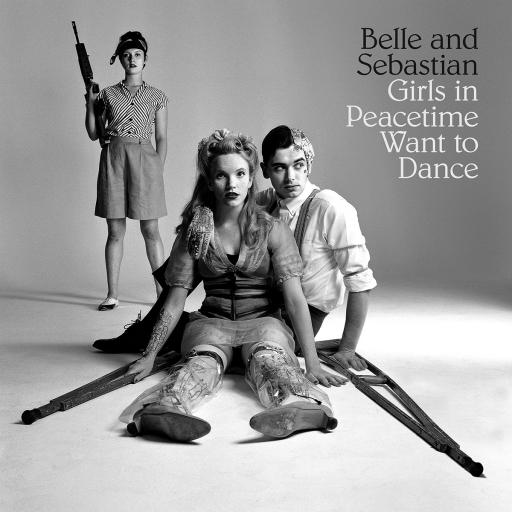

LJ.Rossia.org makes no claim to the content supplied through this journal account. Articles are retrieved via a public feed supplied by the site for this purpose.