Add this feed to your friends list for news aggregation, or view this feed's syndication information.
LJ.Rossia.org makes no claim to the content supplied through this journal account. Articles are retrieved via a public feed supplied by the site for this purpose.
| Wednesday, July 10th, 2013 | |
| LJ.Rossia.org makes no claim to the content supplied through this journal account. Articles are retrieved via a public feed supplied by the site for this purpose. | |
| 2:41 pm | Language turned convict An interesting article on cryptolects, secret group languages whose purpose is to conceal meaning from outsiders: Incomprehension breeds fear. A secret language can be a threat: signifier has no need of signified in order to pack a punch. Hearing a conversation in a language we don’t speak, we wonder whether we’re being mocked. The klezmer-loshn spoken by Jewish musicians allowed them to talk about the families and wedding guests without being overheard. Germanía and Grypsera are prison languages designed to keep information from guards – the first in sixteenth-century Spain, the second in today’s Polish jails. The same logic shows how a secret language need not be the tongue of a minority or an oppressed group: given the right circumstances, even a national language can turn cryptolect. In 1680, as Moroccan troops besieged the short-lived British city of Tangier, Irish soldiers manning the walls resorted to speaking as Gaeilge, in Irish, for fear of being understood by English-born renegades in the Sultan’s armies. To this day, the Irish abroad use the same tactic in discussing what should go unheard, whether bargaining tactics or conversations about taxi-drivers’ haircuts. The same logic lay behind North African slave-masters’ insistence that their charges use the Lingua Franca (a pidgin based on Italian and Spanish and used by traders and slaves in the early modern Mediterranean) so that plots of escape or revolt would not go unheard. A Flemish captive, Emanuel d’Aranda, said that on one slave-galley alone, he heard ‘the Turkish, the Arabian, Lingua Franca, Spanish, French, Dutch, and English’. On his arrival at Algiers, his closest companion was an Icelander. In such a multilingual environment, the Lingua Franca didn’t just serve for giving orders, but as a means of restricting chatter and intrigue between slaves. If the key element of the secret language is that it obscures the understandings of outsiders, a national tongue can serve just as well as an argot.The article goes on to mention polari, which originated as a travelling entertainers' argot and ended up being a cryptolect used by gay men in 20th-century Britain, becoming largely obsolescent after homosexuality was decriminalised, surviving as a piece of period colour in artefacts like Morrissey's song Piccadilly Palare. With its roots in Yiddish, cant, Romani, and Lingua Franca, Polari was a meeting-place for languages of those who were too often forced to hit the road; groups who, however chatty, tend to remain silent in traditional historical accounts. Today, the spirit of Polari might be said to live on in Pajubá (or Bajubá), a contact language used in Brazil’s LGBT community, which draws its vocabulary from West African languages – testimony to the hybrid, polyvocal processes through which a cryptolect finds voice.Of course, as the whole point of a cryptolect is to conceal meaning, as soon as some helpful soul compiles a crib sheet, they kill that particular version of the language as surely as a butterfly collector with a killing jar. (An example of this that has become a comedic trope is parents, politicians and other grown-ups trying to be hip to the groovy lingo of teenagers and falling flat.) The work of the chronicler of cryptolect must always end in failure. These are languages which need to do more than keep up with current usage: they have to stay ahead of it, burning bridges where the vernacular has come too close; keeping their distance from the clear, the comprehensible. When Harman returned to the subject of pedlars’ French, his promises of understanding came with a new caveat: ‘as [the canting crew] have begun of late to devise some newe tearmes for certaine things: so will they in time alter this, and devise as evill or worse’. We can’t write working dictionaries of secret languages, any more than we can preserve a childhood or catch a star.Not all cryptolects belong to marginalised, disempowered or nefarious outsider groups (say, itinerant thieves, galley slaves, sexual minorities or minors under the totalitarian regime of parental authority); various technical jargons have something of the cryptolect about them where they avoid using laypersons' terminology in favour of synonymous terms specific to their subcultures. This could be argued to be a good thing, as confusion can occur when words have both technical and vernacular meanings (take for example the word “energy” as used by physicists and New Age mystics). Indeed, whether, say, International Art English is a cryptolect could come down to whether it serves to actually communicate to an in-group or just as a form of ritual display. |
| Sunday, July 7th, 2013 | |
| LJ.Rossia.org makes no claim to the content supplied through this journal account. Articles are retrieved via a public feed supplied by the site for this purpose. | |
| 10:59 pm | The Ruling Party Charlie Stross speculates about the suggestion that, politically, Britain may be functionally a one-party state: I'm nursing a pet theory. Which is that there are actually four main political parties in Westminster: the Conservatives, Labour, the Liberal Democrats, and the Ruling Party. The Ruling Party is a meta-party; it has members in all of the three major parties, and probably the minority parties as well. It always wins every election, because whichever party wins (or participates in a coalition) is led in Parliament by members of the Ruling Party, who have more in common with each other than with the back bench dinosaurs who form the rump of their notional party. One does not rise to Front Bench rank in any of the major parties unless one is a paid-up Ruling Party member, who meets with the approval of the Ruling Party members one will have to work with. Outsiders are excluded or marginalized, as are followers of the ideology to which the nominal party adheres.The Ruling Party Stross posits has a few characteristics: it's comprised of people from a specific background (typically public-school, politics/economics at Oxbridge or LSE, often followed by a career as a barrister), and, as befits entities which have little to fear from public opinion, is not answerable to the general public (who can take their frustration out on whichever of the publicly visible parties nominally forms the government at the moment). The interests they serve are of multinational corporations (which Stross previously equated to a form of alien life which has taken over the Earth) and free-floating elites (i.e., those who stand to benefit from privatisation, the endless trough of contracts or the good old-fashioned Friedman Shock Doctrine). Of course, the problem is that, if democracy becomes increasingly a sham, sooner or later it will lose a crucial advantage it has over other systems, i.e., it offering a mechanism for the peaceful transfer of power: Moreover, we are now discovering that we live in a panopticon, in houses of glass that are open to inspection and surveillance by the powers of the Deep State. Our only remaining form of privacy is privacy by obscurity, by keeping such a low profile that we are of no individual interest to anyone: and even that is only a tenuous comfort. Any attempt at organizing a transfer of power that does not ring the changes and usher in a new group of Ruling Party faces to replace the old risks being denounced as Terrorism. My conclusion is that we are now entering a pre-revolutionary state, much as the nations of Europe did in 1849 with the suppression of the wave of revolutions that spurred, among other things, the writing of "The Communist Manifesto". It took more than a half-century for that pre-revolutionary situation to mature to the point of explosion, but explode it did, giving rise to the messy fallout of the 20th century. I don't know how long this pre-revolutionary situation will last — although I would be surprised if it persisted for less than two decades — but the whirlwind we reap will be ugly indeed: if you want to see how ugly, look to the Arab Spring and imagine it fought by finger-sized killer drones that know what you wrote on Facebook eighteen years ago when you were younger, foolish, and uncowed. And which is armed with dossiers the completeness of which the East German Stasi could only fantasize about. |
| Thursday, July 4th, 2013 | |
| LJ.Rossia.org makes no claim to the content supplied through this journal account. Articles are retrieved via a public feed supplied by the site for this purpose. | |
| 9:17 pm | Why I am not an ‘artist’ Tom Ellard, formerly of industrial electropop combo Severed Heads and now an academic teaching the digital arts, takes the world of art and the vocation of the Artist to task in an essay titled Five Reasons Why I Am Not An ‘artist’. His targets include the various hierarchies, hypocritical masquerades and rituals enforced on those playing the role of Artist, from refraining from lowering oneself to doing anything too hands-on or technical (there are operators for that) to the politics and carefully circumscribed modes of relating to other people within the art world (a place seemingly as formalised as an 18th-century aristocratic court), to the somewhat less than inspiring reality facing an Artist who has Made It: When I worked in advertising I was surprised to meet people who didn’t do anything. They are called ‘art directors’. People like myself that perform the actual tasks are called ‘operators’ and there is a strong class distinction which leads ‘art directors’ to cross their arms while speaking near any object that they may accidentally use*. I was employed to move text on a page for an irate person standing a few feet away from the means to do it. Apparently their pureness of thought would be sullied by contact with a mechanism. I’ve said it too many times: the ideal of an artistic career is inertia. Innovate for a while. Find a practice, a style, a scheme that earns attention. Repeat it endlessly, never daring to step outside your persona because the system will need to bind you to an iconic representation of yourself. Do you reproduce famous paintings as slow motion videos? Or use a skateboard as your macguffin? Better stick to that. Keep on making action painting, or ‘industrial’ tape cut up until you die – which is your prime function, sealing off the quantity of your saleable work. Artists that constrain themselves are recognised more quickly, they are funded, they are more acceptable to publications because they are easier to digest. They are the cheddar cheese of creativity, and when I am I told that ‘all the best work is happening over here’, I know the place to look is anywhere but there. Innovation is part of a continuing vitality, and confusedly being alive is more important than being neatly dead. We should never ever pre-organise ourselves into categories that fit nicely in museums, journals and repositories. That’s like pinning yourself into a display case. What will we call ourselves? The Kraftwerk guys were onto something when they called themselves ‘music workers’. But I have another idea. In advertising the term ‘creative’ is a mixed signal, it seems to be a positive, but can be a polite substitute for ‘operator’. I’ve often heard somebody say, ‘we’ll get our creatives onto that’. It means ‘all slaves to the oars’. If so, perhaps we can claim ‘creative’ or ‘operator’ back. It can be our own swearword. |
| LJ.Rossia.org makes no claim to the content supplied through this journal account. Articles are retrieved via a public feed supplied by the site for this purpose. | |
| 9:40 am | How To Spot A Communist A look at a pamphlet prepared by the US Army in 1955, at the height of the Red Scare, and titled How To Spot A Communist: While a preference for long sentences is common to most Communist writing, a distinct vocabulary provides the more easily recognized feature of the “Communist Language.” Even a superficial reading of an article written by a Communist or a conversation with one will probably reveal the use of some of the following expressions: integrative thinking, vanguard, comrade, hootenanny, chauvinism, book-burning, syncretistic faith, bourgeois-nationalism, jingoism, colonialism, hooliganism, ruling class, progressive, demagogy, dialectical, witch-hunt, reactionary, exploitation, oppressive, materialist. Rather chillingly, the pamphlet also warned that Communists revealed themselves if and when they talked about “McCarthyism,” “violation of civil rights,” “racial or religious discrimination” or “peace.” In other words, they were guilty if they suggested that the government was overstepping its bounds. |
| Saturday, June 29th, 2013 | |
| LJ.Rossia.org makes no claim to the content supplied through this journal account. Articles are retrieved via a public feed supplied by the site for this purpose. | |
| 12:21 pm | Comedy as canary in the coalmine? As austerity cuts bite and politicians retreat from the great unwashed rabble they are supposed to represent, comedians are finding themselves on the firing line of public anger at social injustice, the political class or just “outsiders”, writes Irish comic Keith Farnan: There you are: a boy, standing in front of a whole bunch of other boys and girls, asking them to love you. But when times are tough, people need a target and politicians are much too canny to actually go out in front of a crowd that hasn’t been tightly vetted and controlled so they get the maximum return for their tested and meaningless sound bites. Comedians are in danger of becoming the canaries down the political coalmine. When one of them doesn’t come back up, you know it’s time to cede control of that voting district to some extreme left or right organisation. As in all times of economic strife, the “outsiders” are being blamed and, while this traditionally and obviously means “immigrants”, there must surely be a cautionary tale in how the comedy clubs of the Weimar Republic were shut down after violent unrest at various 'why did the German cross the road jokes'. (Because zere vas a zebra crossing, ja, it is safe to go now. Ok, I made that bit up; Ireland is now a German-economically-occupied state, what can I say?) Whether it’s a strategy or a natural consequence, there has been a rise in surreal and abstract comedy as well as mime-comedy. Mime-comedy is the perfect comedy for any time of social upheaval, because you can’t enrage a crowd when you’re literally saying nothing. If you’re going to play the fiddle while Rome burns, then play the fiddle and shut up about it. (via withtimferguson) ¶ 0 Share |
| Wednesday, June 26th, 2013 | |
| LJ.Rossia.org makes no claim to the content supplied through this journal account. Articles are retrieved via a public feed supplied by the site for this purpose. | |
| 9:50 am | Community radio reprieve Australia's community radio sector, facing the onerous costs of switching to digital radio, got a reprieve today, in the form of a $6M government funding package, passed in the last moments of the Gillard government's last parliament. The funding boost came after an earlier bill which left the stations several million dollars short, and following a campaign which attracted more than 43,000 signatories. Which is just as well, because community radio cannot expect any sympathy from the incoming Abbott government; the best it could hope for is indifference, and the worst, active hostility. Community radio in Australia leans towards an urbane, university-educated and mostly left-leaning audience, all considered with deep suspicion by Liberal Party strategists and the predominantly right-wing commercial media; in the views of the Australian Right, it would be a nest of “un-Australian” opinions, such as empathy for refugees, support for depraved and immoral art, and anti-business sentiments verging on “Cultural Marxism” being part of the same neo-Whitlamite crypto-Communist conspiracy as the Greens. Indeed, its very existence outside of the purview of the Free Market is anathema; why should a bunch of latte-sipping trendies and subversive degenerates who don't share the values of the Silent Majority Of Suburban Battlers have a slice of the radio spectrum reserved for their esoteric interests, and protected by law from the democracy of market forces? Were community radio left to the Abbott government, any solution would probably look like a radical Thatcherite big-bang of deregulation, abolishing the distinction between community and commercial licences and “freeing up” community stations to sell advertising, enforce playlists mandated by advertisers, lose the uncommercial niche shows and chase the commercial mainstream, or just get bought up for their spectrum by existing radio networks. Such a move would, in the views of the Right, drain the stagnant pond of un-Australian opinion that has been fermenting in the inner cities since the Whitlam era, once and for all. (In fact, I wouldn't be too surprised if there had been an editorial in The Australian advocating that very course of action.) |
| Tuesday, June 25th, 2013 | |
| LJ.Rossia.org makes no claim to the content supplied through this journal account. Articles are retrieved via a public feed supplied by the site for this purpose. | |
| 12:27 pm | Berlusconi guilty Silvio Berlusconi's return to government suffered a setback yesterday when the former sultan of Italy was found guilty of paying for sex with an underaged prostitute and using his office to cover it up. The latter charge relates to an incident when the prostitute in question, Karima el-Mahroug or “Ruby the heart-stealer”, was arrested for theft, and Berlusconi called Milan's chief of police to get her off, saying that she was the daughter of the President of Egypt, and charging her with theft would have caused an international diplomatic incident. Berlusconi was sentenced to seven years in prison (which he will not serve, as Italy does not jail those aged over 70) and banned for life from holding public office. Berlusconi maintains his innocence, claiming (a) that he gave el-Mahroug money out of the goodness of his heart to get her off the streets, (b) that he sincerely believed that she was Hosni Mubarak's daughter (presumably reduced to theft and prostitution on the streets of Milan for some reason), and (c) that the charges were the result of an ongoing Communist conspiracy to destroy him and Italy. The typical thing for il cavaliere, as he is known, to do would have been to get his allies in parliament to table a law retroactively legalising bunga-bunga parties, dropping the age of consent for prostitutes and changing the technical definitions of corruption in a way that would not apply to acting prime ministers; his party, the right-wing-populist People Of Liberty (PdL), is part of the governing coalition, and could in theory threaten to bring down the government if such a bill is not passed. Now, though, that may be harder to pull off, as the other parties are vehemently opposed to Berlusconi and everything that he stands for, and the accompanying assumption of such a tactic—that after a snap election, PdL would be better poised to govern in its own right or choose more pliant coalition partners to share power and its benefits with—might not stand if its leader is a convicted criminal. The worst may be yet to come for Berlusconi, though; by the end of the year, Italy's supreme court will issue the final ruling in a tax fraud case concerning him. |
| Thursday, June 20th, 2013 | |
| LJ.Rossia.org makes no claim to the content supplied through this journal account. Articles are retrieved via a public feed supplied by the site for this purpose. | |
| 10:21 am | Obituaries for 19 June 2013 It seems that yesterday quite a few notable people died; among them:
|
| Monday, June 17th, 2013 | |
| LJ.Rossia.org makes no claim to the content supplied through this journal account. Articles are retrieved via a public feed supplied by the site for this purpose. | |
| 5:55 pm | Potemkin shops in Northern Ireland As the G8 prepare to meet in economically depressed Northern Ireland, the UK government hosts have been touching up the area, by covering the windows of the area's many empty shops with large photographic stickers of thriving businesses: One set of stickers have been fixed to a former butchers in Belcoo, on the border between the province and the Republic. They show the shop – which traded as Flanagan’s until it went out of business about a year ago – still fully stocked with a selection of fresh meat on display. A sticker pasted on a closed door even shows an open door and an apparently well-adorned interior. Another set of stickers have been put up in the windows of a former pharmacy in the village, to give the vacant site the appearance of an office supply stores.Perhaps if the Soviet Union and its satellites had had large-format photographic sticker technology, the Berlin Wall would never have fallen, and Marxism-Leninism would still be shambling on, joyless but just about alive, much like George Osborne's austerity plan is. Meanwhile, the US Secret Service has reportedly deployed agents disguised as Irish farmers; they purchased a fleet of shiny new tractors, but apparently neglected to make them look less conspicuously new: However, locals told the paper the agents would “stick out like sore thumbs” in Fermanagh, as their tractors are all brand new. It’s “like something out of Father Ted”, one resident said.Surely there'd be someone in the US Secret Service who could apply convincing amounts of dirt, rust and general wear to tractors to not compromise the whole point of having bought them in the first place? |
| Sunday, June 16th, 2013 | |
| LJ.Rossia.org makes no claim to the content supplied through this journal account. Articles are retrieved via a public feed supplied by the site for this purpose. | |
| 10:49 pm | Heightened awareness of the true reality Speaking of the tinfoil tendency, recently the annual Bilderberg conference, in which the world's rich and powerful get together to talk about stuff and/or make dastardly plans, was held in Watford of all places; unlike previous Bilderberg conferences, it included an unofficial fringe festival, with talks by famous conspiratologists like David “giant lizards rule the world” Icke and Alex Jones. VICE Magazine sent a reporter to talk to people attending the gathering and found a lot of awakening and raised awareness, but nobody knowing exactly about what: "I started to wake up about a year ago, when I had a stroke on the left side of my brain. Afterwards, my aware side woke up and I started to notice that the news was a load of rubbish. I started doing my own research into Egyptian pyramids, the Mayans, sacred geometry, the whole package – and aliens. They all sort of came together in a package and I put the pieces together myself... The message is the same – back to the Mayans, back to the Egyptians and back to the Atlantians even before that: You are God; you are one." "They’re just making people aware, which is great. I love the fact that they’re here doing the right thing and speaking the truth." "What brings you here today?" I asked a girl named Bryony, who was in the midst of a hooping.The article also quotes Alex Jones, who goes into a wrestlerly oration about cancer viruses and necrophilia. Alas, there is nothing about what truths David Icke brought to the table. |
| Saturday, June 15th, 2013 | |
| LJ.Rossia.org makes no claim to the content supplied through this journal account. Articles are retrieved via a public feed supplied by the site for this purpose. | |
| 1:49 pm | The Greens' own goal
The Australian Greens have a fine line to walk; maintaining an integrity of values whose lack doomed the third party which preceded them, the now-defunct Australian Democrats, whilst avoiding becoming a single-issue party (as their name suggests), or allowing themselves to be tarred with the brush of extremism. So far, they have succeeded modestly; having some of the most scientifically literate MPs in Parliament and a commitment to evidence-based policy helped, though could only go so far when the Murdoch-owned 70% of the press vilifies them as
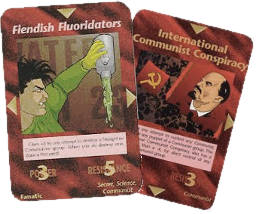
I can see this possibly costing the Greens seats in the next election. The ALP has been faced with a drain of educated, progressive-minded voters to the Greens in recent elections, which has cost them inner-city seats such as Melbourne (where the Greens' Adam Bandt will be fighting off a challenge from Labor). The threat of a sweeping landslide in favour of a hard-right Abbott government, whose promises not to feudalise industrial relations, ban abortion and generally drag Australia back to the penal-colony era via Howard's white-picket-fence father-knows-best 1950s have not convinced everyone completely, could compel the proportion of the electorate who don't understand how preferential voting works to vote Labor first, bleeding votes from the Greens. If the Greens manage to keep up the momentum, the appearance of leaflets, quoting their NSW MP John Kaye about fluoride and suggesting that a parliament with Greens in it will be tied up with chasing moonbeams at the taxpayer's expense, rather than (as has been the case) holding the two old parties to account on issues such as health care funding, schools and renewable energy, could swing the vote against them. So yes, nice work, Mr. Kaye. |
| Tuesday, June 11th, 2013 | |
| LJ.Rossia.org makes no claim to the content supplied through this journal account. Articles are retrieved via a public feed supplied by the site for this purpose. | |
| 2:28 pm | The straighteners strike back More dispatches from Australia's culture war, where a raid on an art gallery, and pending charges of child pornography production against one of the artists, signal a new climate of rising censorship and a the return of a narrow-minded, provincial prudishness, now riding within the mainstream of the Liberal Party: The opposition to Yore's work has been spearheaded by a group of local figures. Minutes from a City of Port Phillip council meeting on 28 May show that Chris Spillane, a Liberal party candidate for the council, "stated that while he hasn't seen the exhibition himself, from what he has heard about the exhibition it is offensive and pornographic in nature". Spillane has previously claimed the council "wastes considerable sums of money" on projects that promote "socialism and multiculturalism". He has been supported in his stance against the Linden centre by councilor Andrew Bond, who called Yore's exhibition "complete smut", and by resident Adrian Jackson.As Australian historian Manning Clark (who himself has fallen posthumously out of favour in the new age of muscular conservatism, partly thanks to the Murdoch press's attempts to paint him as a Soviet agent of influence) said, Australian history has been a battle between the “enlargers” and the “straighteners” (a somewhat more nuanced paradigm than the “larrikin/wowser” nexus; after all, Australia has no shortage of rowdy, flag-draped xenophobes vigorously defending their freedom from the rules of decorum whilst attacking anything outside of their narrow view of what belongs in Australia). The straighteners were the wowsers, the provincial prudes and authoritarians, drawing the boundaries and punishing those who dare cross them, whereas the enlargers, the liberal-minded cosmopolitans, were those who aspired to push the boundaries back. The enlargers were initially a minority but have had a home in the artistic and intellectual world of Australia's bohemian enclaves (as described by Tony Moore in Dancing with Empty Pockets) since the mid-19th century, gradually extended their influence as the nation's culture matured; this reached its peak during the great thaw, which began when the boundaries of the old conservatism, inherited from imperial administrators and shored up by the great patriarch of the Right, Menzies, broke, culminating in the sweeping in of the Whitlam government and a quarter-century of progressive change, creating the illusion of a forward-looking, broad-minded country. Now, after eleven years under the stern paternal gaze of arch-conservative John Howard and five more in an interregnum, governed by a Labor government keen to avoid breaking from the conservatism of the day and keeping the seat warm for the triumphant return of Howard's successor (Tony Abbott, a spiritual and cultural heir of Catholic ultraconservative Bob Santamaria), it becomes more apparent that that was an illusion; mere window-dressing over the small-minded authoritarianism of the penal colony and the military outpost of Empire. Leading the charge is a reinvigorated Liberal Party, having shed the ambiguity that its name suggests, sidelined progressive elements (such as deputy leader Malcolm Turnbull, who once led the push for Australia to abandon the monarchy) and firmly, unapologetically carrying the banner of a specifically Australian conservatism at all levels of government. Their Australia is a nation of God-fearing muscular soldier-sportsmen, standing proudly in the glow of imperial glories and singing in unison from the same hymn sheet, a nation in which there is no room for anything that is un-Australian, be it black-armband history, black-armband climatology, Godless Communism, uppity sheilas, uppity poofters or immoral or indecent art. |
| Sunday, June 9th, 2013 | |
| LJ.Rossia.org makes no claim to the content supplied through this journal account. Articles are retrieved via a public feed supplied by the site for this purpose. | |
| 8:06 pm | Nothing to hide? One reaction to the revelations about the NSA's surveillance programmes has been along the lines of the old chestnut that “if you have nothing to hide, you have nothing to fear”. One commenter, who claims to have lived under a Middle Eastern dictatorship, debunks this: 1) the purpose of this surveillance from the governments point of view is to control enemies of the state. Not terrorists. People who are coalescing around ideas that would destabilize the status quo. These could be religious ideas. These could be groups like anon who are too good with tech for the governments liking. It makes it very easy to know who these people are. It also makes it very simple to control these people. Lets say you are a college student and you get in with some people who want to stop farming practices that hurt animals. So you make a plan and go to protest these practices. You get there, and wow, the protest is huge. You never expected this, you were just goofing off. Well now everyone who was there is suspect. Even though you technically had the right to protest, you're now considered a dangerous person. With this tech in place, the government doesn't have to put you in jail. They can do something more sinister. They can just email you a sexy picture you took with a girlfriend. Or they can email you a note saying that they can prove your dad is cheating on his taxes. Or they can threaten to get your dad fired. All you have to do, the email says, is help them catch your friends in the group. You have to report back every week, or you dad might lose his job. So you do. You turn in your friends and even though they try to keep meetings off grid, you're reporting on them to protect your dad.... Maybe Obama won't do it. Maybe the next guy won't, or the one after him. Maybe this story isn't about you. Maybe it happens 10 or 20 years from now, when a big war is happening, or after another big attack. Maybe it's about your daughter or your son. We just don't know yet. But what we do know is that right now, in this moment we have a choice. Are we okay with this, or not? Do we want this power to exist, or not? I actually get really upset when people say "I don't have anything to hide. Let them read everything." People saying that have no idea what they are bringing down on their own heads. They are naive, and we need to listen to people in other countries who are clearly telling us that this is a horrible horrible sign and it is time to stand up and say no. |
| Friday, June 7th, 2013 | |
| LJ.Rossia.org makes no claim to the content supplied through this journal account. Articles are retrieved via a public feed supplied by the site for this purpose. | |
| 1:44 pm | PRISM Recently leaked slides from a NSA PowerPoint presentation have revealed that US internet companies, including Google, Facebook, Microsoft and Apple have been giving the NSA access to their users' private data since 2007. The data in question includes emails, instant messages, video and voice chat, stored data, online social networking details and “special requests”. The programme for harvesting this data is known internally as PRISM. This revelation comes a day after revelations that the NSA is indiscriminately collecting phone records of US mobile phone company customers, including their locations and whom they have been calling/texting and when. The companies implicated in the slide deck have issued carefully-worded denials, claiming that they have never heard of anything called PRISM (likely, as that was probably an internal NSA codename not revealed to the outside world), have never provided the NSA with direct access to their servers (which could just mean that the NSA had to request items of data, or sets of items of data, and got an itemised bill for them). Of course, this would mean that the NSA has had the task of wading through vast amounts of trivia: of social chatter, chain letters, forwarded amusing cat/sloth/lemur photos (which they'd have to check for steganographed terrorist plans, of course), mundane updates about people's lunch choices/music listening/reaction to last night's Game Of Thrones episode, online shopping receipts, steamy texts to lovers, drunkfaced party photos, viral ads, skinnerbox game invitations, complaints about traffic/public transport/coworkers and such. Though one wonders to what extent this can be automated. For decades, the US intelligence community has been investing millions in artificial intelligence research (a holy grail of CIA-funded research a while ago was the problem of “gisting”, or accurately summarising large amounts of text for human consumption; this is a hard problem, because it requires semantic knowledge about what the text is about). Meanwhile, in the private sector, data mining has shown uncannily accurate results, to the point where retailers have to insert a few deliberately inaccurate or useless coupons into the books they send to customers as not to freak them out with how much they know their true heart. (Remember the story about the angry father demanding why Target was sending his teenage daughter coupons for nappies and prams, and then apologising a few weeks later when she confessed that she was actually pregnant?) If the NSA has had an firehose-like feed of personal information on millions of individuals for years, it's not unreasonable to expect that some proportion of the multi-trillion-dollar US “black budget” has been allocated to research into finding ways of aggregating, interpreting and processing this information to build up summaries or models of individuals. These could be automated dossiers with estimated personality profiles (“probabilities of paranoia: 23% issues with authority: 17%, narcissism: 27%, procrastination: 53%, adherence to routine: 61%. Most likely to fear: abandonment (41%), cancer (37%), rats (29%), exposure of peccadillos (23%). Probably responsive to: intimidation (43%), flattery (37%)”), which could be useful if the powers that be need to apply subtle, very precise pressure on a conveniently located bystander to use them against someone like al-Qaeda or Occupy. If they have real-time information, such as the mobile phone metadata (and, even omitting the content of conversations, having a record of the location of a person's phone can reveal a lot about what they're doing), they could even get alerts when somebody deviates from their routine more than they typically do; a dive into their private data would reveal whether they're planning a surprise anniversary party for their spouse or a terrorist attack. (Spoiler: it's almost never a terrorist attack.) Of course, what the social and psychological effects of such surveillance are is another question. If there is a class of watchers, who can peer into the deepest secrets of the rest of the population, would their attitude to the pitiful, flawed wretches before them, with their pathetic little sins and failings, not be one of contempt? Would they not start regarding the rest of the population as little more than cattle, much as the participants in the Stanford Prison Experiment did? |
| Thursday, June 6th, 2013 | |
| LJ.Rossia.org makes no claim to the content supplied through this journal account. Articles are retrieved via a public feed supplied by the site for this purpose. | |
| 1:52 pm | Power, Corruption and Lies at 30
Power, Corruption and Lies, New Order's second album (and arguably the first true New Order album, with Movement being more a tying up of Joy Division loose ends) has just turned 30: There's a strangely cheery energy to the album as well. This is something that would be a hallmark of the intertwined dance that New Order and The Cure would perform over the next couple of years. This was to the extent that it sometimes seemed the distinguishing factor of a song wouldn't emerge fully until it was clear if the singer was Bernard Sumner or Robert Smith. However The Cure always possessed the sense of a singular voice going through eternal moods of structure and collapse in equal measure, wooziness and queasy pirouetting. Whereas by this point the rigorous structure of what was New Order remained crucial, especially that sense of being something not too far removed from Can, Kraftwerk and other Teutonic proponents of total focus. And now this sound was more openly underscored by the electronic disco rigour that continued to flourish worldwide. Sumner (or his narrative voice) opened the album confessing that he doesn't necessarily want to have to say what his desires are. This is an apt statement from the singer for a band who hadn't even wanted the job. But then he has to spend an entire album - for the first time ever - teasing a lot of things out song for song, however guardedly, however flippantly, however metaphorically. So why not write a song revolving around an image of lonely souls on deserted islands, except avoiding the kind of approach that the Police had dealt with a few years previously on 'Message In A Bottle' say. So Sumner, who heard so much desire for connection from Ian Curtis, came up with a much better lyric than Sting ever could. And he did it in a less mannered fashion, in a way that actually didn't want to resolve into easy romantic sentiment, on 'Leave Me Alone'.Power, Corruption and Lies is an album I have listened to a lot, mostly in the 1990s; first to a dodgy Indonesian cassette copy, adorned with a cut-out photograph of the album cover and padded out with tracks from other albums, which I picked up at a flea market, and then to the official Australian CD release, padded out with Blue Monday/The Beach. I lived in the outer suburbs of Melbourne then and thus spent a lot of time driving, and a cassette of Power, Corruption and Lies would often spend time in the car stereo. I haven't listened to it as much over the past decade or so (taking it out occasionally, but that's it), but I still know the lie of the album like the back of my hand. (Though, the Power, Corruption and Lies I was familiar with segued from 5-8-6 into the 12" mix of Blue Monday, before easing back into the more languid, resigned Your Silent Face, a flow which, despite its historical and authorial inauthenticity, made perfect sense to me.) Anyway, Power, Corruption and Lies remains my favourite New Order album (though in my opinion, they drop off a bit after Low-Life, a close follower), and Leave Me Alone is probably my favourite of their songs. |
| Tuesday, June 4th, 2013 | |
| LJ.Rossia.org makes no claim to the content supplied through this journal account. Articles are retrieved via a public feed supplied by the site for this purpose. | |
| 2:53 pm | The Day The Internet Breaks As the anniversary of the Tienanmen Square massacre/counterrevolutionary criminal riot (delete as appropriate) comes around, the game of cat and mouse between Chinese censors and dissidents have escalated to new heights of the absurd: 24 years after the Chinese government's bloody crackdown on pro-democracy protesters in Tiananmen Square, "today" is part of a long list of search terms that have been censored on Sina Weibo, the country's most popular microblog. Other banned words include "tomorrow," "that year," "special day," and many number combinations that could refer to 4 June 1989, such as 6-4, 64, 63+1, 65-1, and 35 (shorthand for May 35th). Many of their posts have been embedded in pictures, which can often elude automatic detection: a girl with her hand over her mouth; a Lego man facing down three green Lego tanks; the iconic "tank man" picture with its tanks photoshopped into four giant rubber ducks, a reference to a well-known art installation in Hong Kong's Victoria harbour. Most of these pictures, too, have since been scrubbed clean. By Tuesday afternoon, the term "big yellow duck" had also been blocked.And so, the fourth of June becomes The Day The Internet Breaks For No Reason Whatsoever. Last week, Sina Weibo appeared to have rolled out a new censorship function – searches for "Tiananmen incident" and "six-four incident" were not blocked, but instead pulled up posts about other historical events, such as a 1976 demonstration in Tiananmen Square mourning the death of Premier Zhou Enlai.Meanwhile, many dissidents are protesting precisely by posting nothing at all. Perhaps next year the authorities get wise to this and leaving a suspicious, indignant block of white space in one's online footprint on a sensitive date will be forbidden, with those doing so without a good excuse being taken away and prosecuted on various grounds. Perhaps in a few years' time, we will be treated to the spectacle of totalitarian censors trying to suppress an act of dissent by large numbers of people posting the same banal, apolitical message about the weather/what one had for lunch in mockery of the law or something? |
| LJ.Rossia.org makes no claim to the content supplied through this journal account. Articles are retrieved via a public feed supplied by the site for this purpose. | |
| 1:58 pm | Art vs. Australia: Everything's Fucked In the latest conflict between contemporary art and Australia's socially conservative morés, an artist is facing charges of producing child pornography after Victoria Police raided an exhibition and seized an installation titled Everything's Fucked, which allegedly depicted sexual acts with children's faces superimposed on them. On Saturday Yore described the police seizure as "completely absurd". "The work, I feel, has been taken completely out of context because they're very small fragments of a collage of a much larger work that constitutes literally thousands of different objects I've found in society - basically junk I've been collecting,'' he said.If convicted, Paul Yore is likely to end up with a lengthy prison sentence (and one knows how much respect “rock spiders”—convicted paedophiles—get in Australian prisons) followed by life on the sex offenders' register. Possibly a better deal than Pussy Riot got in Russia, but not by much. If the various tiers of Australian government are so keen to draw a firm line and authoritatively declare what is not allowed in our society, wouldn't it be cheaper for them to introduce a new series of arts grants, consisting of one-way tickets to, say, New York, Berlin or Amsterdam (or perhaps even New Zealand, which lacks the undercurrent of penal-colony authoritarianism that's never far from the surface in Australia), to be disbursed to potential troublemakers who have issues with our relaxed and comfortable way of life? |
| Sunday, June 2nd, 2013 | |
| LJ.Rossia.org makes no claim to the content supplied through this journal account. Articles are retrieved via a public feed supplied by the site for this purpose. | |
| 4:15 pm | No librul lightbulbs here, no sirree! Nuke the whales for Jesus: In another example of how politically polarised the US culture war is, research from the US has shown that self-identified “conservatives” are less likely to buy lightbulbs labelled as energy efficient, for ideological reasons; i.e., because, even if such bulbs did save one electricity, buying them would be a treasonous endorsement of the liberals' world-view: "Our results demonstrated that a choice that wasn't ideologically polarizing without a ("protect the environment") label became polarizing when we included that environmental labeling," Gromet said. "We saw a significant drop-off in conservative people choosing to buy a more expensive, energy-efficient option." "So it makes that choice unattractive to some people even if they recognize that it may be a money-saving choice. When we asked afterward, those consumers identified the CFL bulbs as providing greater monetary savings over time. But they would forgo that option when that product was made to represent a value that was not something they wanted to be identified with." (See related: "Missing the Chance for Big Energy Savings.") |
| Monday, May 20th, 2013 | |
| LJ.Rossia.org makes no claim to the content supplied through this journal account. Articles are retrieved via a public feed supplied by the site for this purpose. | |
| 1:13 pm | Eurovision 2013 A few thoughts about Eurovision 2013 (which I watched slightly later than most people, having had prior commitments on Saturday evening):
|
| Friday, May 10th, 2013 | |
| LJ.Rossia.org makes no claim to the content supplied through this journal account. Articles are retrieved via a public feed supplied by the site for this purpose. | |
| 12:21 am | From Operation Mindfuck to The White Room An interesting article about the origins of Discordianism and its influence on British pop pranksters The KLF, and in particular, the esoteric significance of their best-selling pop-house album The White Room and the lesser-known film they made of the same title: The ideas behind the book can be traced back to the late 1950s, when Hill and Thornley attended California High School in East Whittier, a rural Southern Californian town that was then nestled amongst vast orange groves. In school they were viewed as nerds. Hill was short, squat and introverted, while Thornley was tall, very thin, and bursting with a nervous energy. They both shared an enthusiasm for pranks and strange ideas. They were also both keen on bowling alleys, largely because they served alcohol and remained open until two in the morning. It was in one such bowling alley in 1957 that Thornley showed Hill some poetry that he was writing. It included a reference to order eventually arising out of chaos. Hill laughed at this. He told Thornley that the idea of ‘order’ was an illusion. Order is just something that the human mind projects onto reality. What really exists behind this fake veneer is an infinite, churning chaos. For Hill, an atheist, the failure to understand this was the major folly of the organised religions of the world, all of which claim that there is an organising principle at work in the Universe.The article goes on to mention Robert Shea and Robert Anton Wilson's initiation into Discordianism through their editorship of the Playboy letters page, in which formed what would later evolve into the Illuminatus! trilogy; Aunt Twackie's, the experimental art space set up by Liverpudlian poet Peter O'Hallighan; and the theatrical version of Illuminatus! that was performed there, which caught the attention of two artists named Bill Drummond and Jimmy Cauty, who, years later, started making music as The KLF, and the set of events which led to The White Room. |
 That is, until the New South Wales branch (why does it always have to be the NSW branch, in every party?)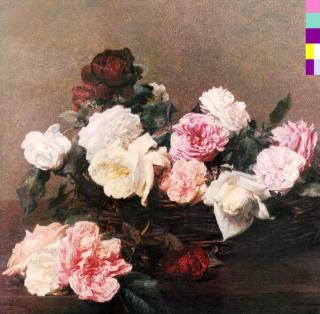
LJ.Rossia.org makes no claim to the content supplied through this journal account. Articles are retrieved via a public feed supplied by the site for this purpose.