[Recent Entries][Archive][Friends][User Info]
Below are 9 entries, after skipping 20 most recent ones in the "Сообщество, посвящённое ра" journal:| September 27th, 2011 | |
|---|---|
| 04:15 pm [industrialterro] [Link] |
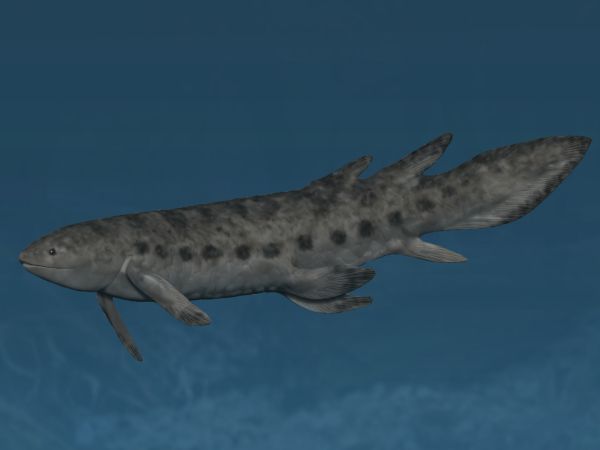
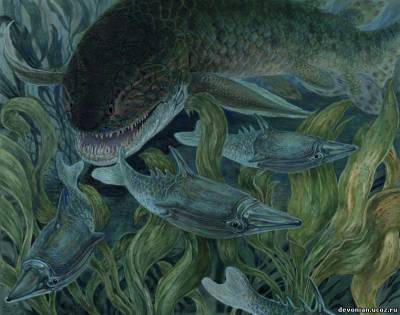
Gyroptychius Gyroptychius is an extinct genus of coelacanthiform lobe-finned fish from the Devonian period. Gyroptychius was a fast riverine predator with an elongated body about 30 centimetres (12 in) long. As its eyes were relatively small, it is presumed to have hunted by smell rather than sight. Gyroptychius had short jaws which gave it a powerful bite. All its fins except the pectorals were moved to the back to the body, increasing the power of the tail while swimming.
Tags: Вымершие рыбы, Девон, Лопастепёрые |
| September 26th, 2011 | |
| 08:31 pm [industrialterro] [Link] |
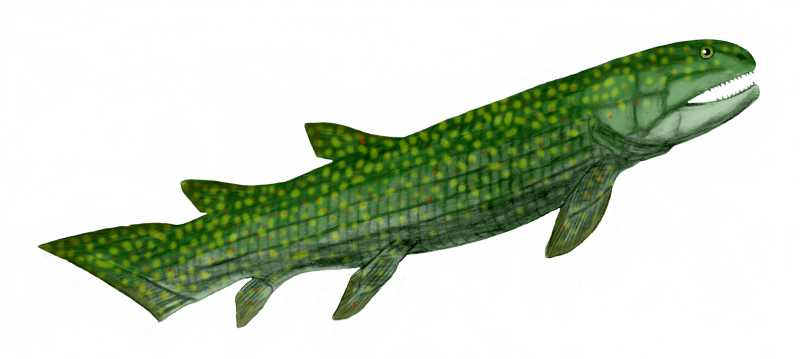
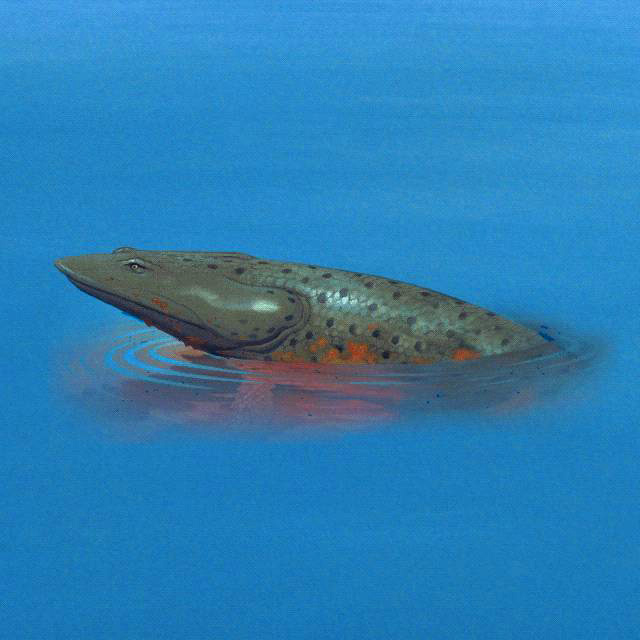
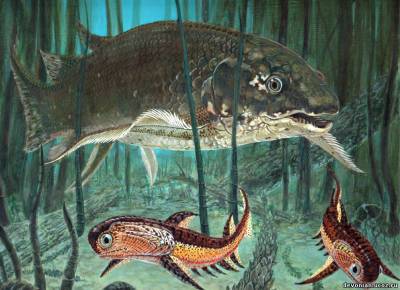
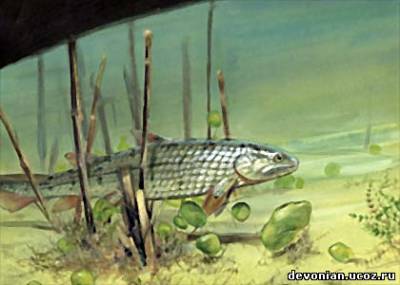
Gooloogongia Gooloogongia (pronounced /ɡʊlʉˈɡɒŋɡiə/ guu-luu-gong-gee-ə) is a genus of prehistoric lobe-finned fish which belonged to the group of Rhizodont fishes. Gooloogongia lived during the Late Devonian period (Famennian stage, about 360 million years ago). Fossils have been found in the Canowindra site, (Australia). It was named by Dr. Zerina Johanson and Dr. Per Ahlberg in 1998. In general size and shape Gooloogongia is similar to the modern saratoga which lives in the tropical rivers of northern Australia. Gooloogongia loomesi ("Loomes' Gooloogong") named after Bruce Loomes, the foreman of the 1993 excavation of the Canowindra site, and the town of Gooloogong, NSW. Gooloogongia was large in size (about 90 cm). Like other lobe-finned fishes, Gooloogongia had two rows of teeth in the jaw, the outer row being small teeth, and the inner row being larger fangs. The fangs of Gooloogongia are sharp and needle-like, but they were probably not strong enough to penetrate the armor plating of small placoderms.
Tags: Вымершие рыбы, Девон, Лопастепёрые |
| 08:25 pm [industrialterro] [Link] |
Gogonasus Gogonasus (лат. nasus — «морда» из Гоугоу) — лопастепёрая рыба, обитавшая 380 миллионов лет назад (поздний Девонский период). Найдена в формации Гоугоу (регион Кимберли, Западная Австралия). Некоторые особенности скелета делают её похожей на тетраподов. Gogonasus имел внутреннее ухо, строение плавников показывает наличие костей-предшественников передних конечностей. Считается, что эта рыба могла вылезать на коралловый риф для ловли добычи. Окаменевшие останки рыбы Gogonasus (возраст окаменелостей оценивается в 380 млн. лет), обитавшей в водоемах Девонского периода, прекрасно сохранились. Это позволило провести полное трехмерное исследование этого древнего создания.
Tags: Вымершие рыбы, Девон, Лопастепёрые |
| 07:58 pm [industrialterro] [Link] |
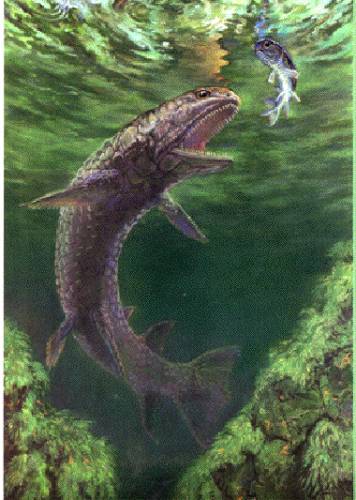
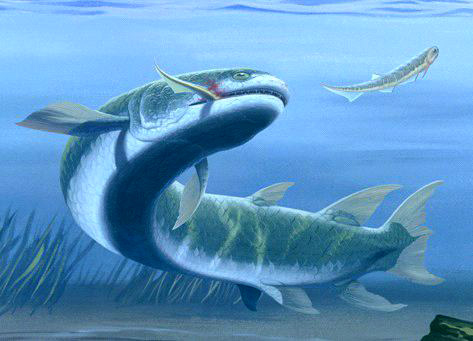
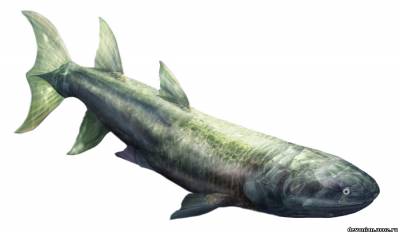
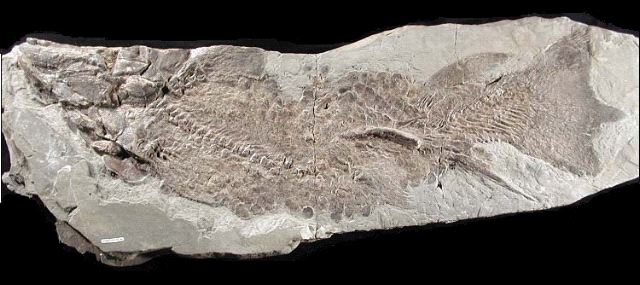
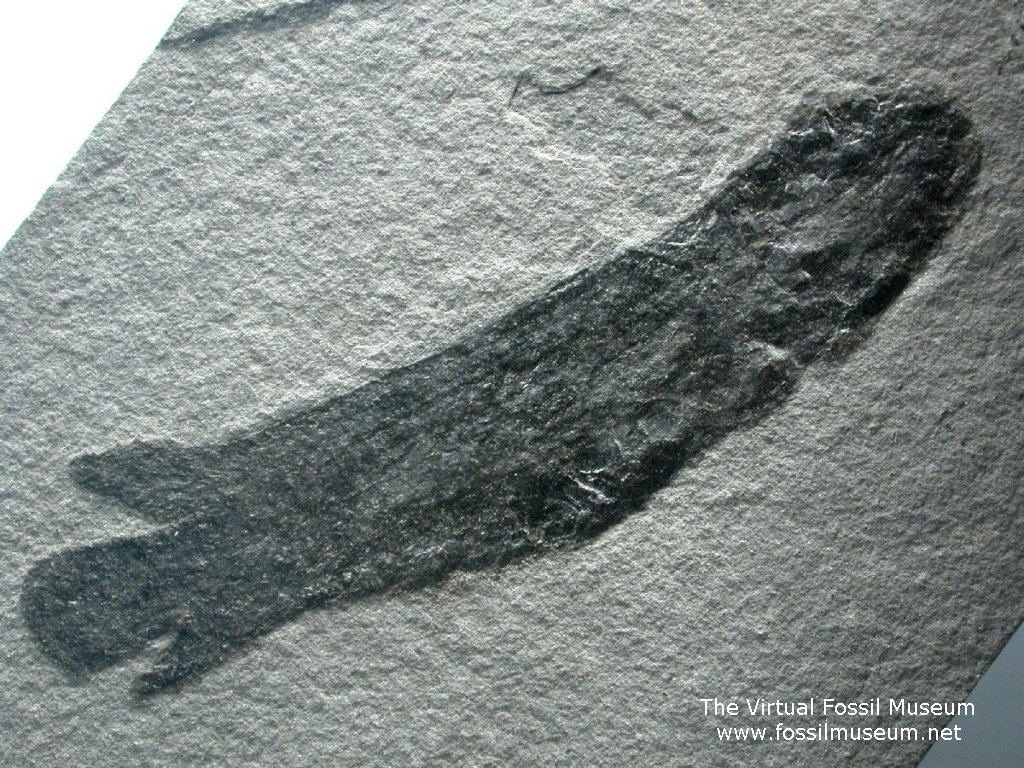
Eusthenopteron Eusthenopteron — вымерший род лопастопёрых рыб, сыгравших роль в становлении четвероногих. Ранее считалось, что эти рыбы выходили на берег, однако, сейчас большинство палеонтологов сходится на том, что они обитали в пелагической зоне. В род входят несколько видов, существовавших в позднем девоне, около 385 млн лет назад. Eusthenopteron был впервые описан J. F. Whiteaves в 1881 в ходе работ по исследованию большой коллекции окаменелых останков рыб, найденных в национальном парке Мигуаша. Было найдено около 2000 экземпляров Eusthenopteron, один из которых был подробно исследован и описан в цикле статей, издававшихся с 1940-х по 1990-е палеоихтиологом Erik Jarvik. Anatomically, Eusthenopteron shares many unique features in common with the earliest known tetrapods. It shares a similar pattern of skull rooting bones with forms such as Ichthyostega and Acanthostega. Eusthenopteron, like other tetrapodomorph fishes, had internal nostrils, (or a choana) which are found only in land animals and sarcopterygians. It also had labyrinthodont teeth, characterized by infolded enamel, which characterizes all of the earliest known tetrapods as well. Like other basal sarcopterygians, Eusthenopteron possessed a two-part cranium, which hinged at mid-length along an intracranial joint. Eusthenopteron's notoriety comes from the pattern of its fin endoskeleton, which bears a distinct humerus, ulna, and radius (in the fore-fin) and femur, tibia, and fibula (in the pelvic fin). This is the characteristic pattern seen in tetrapods. It is now known to be a general character of fossil sarcopterygian fins. Eusthenopteron differs significantly from later Carboniferous tetrapods in the apparent absence of a recognized larval stage and a definitive metamorphosis. In even the smallest known specimen of Eusthenopteron foordi (at 29 mm), the lepidotrichia cover all of the fins, which does not happen until after metamorphosis in genera like Polyodon. This might indicate that Eusthenopteron developed directly, with the hatchling already attaining the general body form of the adult (Cote et al., 2002). So, Jarvik was perhaps not correct as he proposed (1980) Palaeospondylus gunni might have been the larva (tadpole-like) of Eusthenopteron.
Репродукции (1, 2, 3, 4, 5, 6):
Ископаемые останки (1, 2, 3, 4):
Tags: Вымершие рыбы, Девон, Лопастепёрые |
| 07:50 pm [industrialterro] [Link] |
Elpistostege Elpistostege is an extinct genus of tetrapod-like fish that lived in the Late Devonian period (Late Givetian to Early Frasnian). Fossils of skull and a part of the backbone have been found at Escuminac Formation in Quebec, Canada. Когда Стэнли Вестолл сообщил о первых окаменелостях элпистостеги (частичная крыша черепа) в 1938 году, он идентифицировал её как раннюю амфибию. С открытием дополнительных окаменелостей (дермальных элементов черепа вместе с сочленёнными позвонками и чешуями) в 1970-х и 1980-х годах, было обнаружено её сходство с пандерихтисом, лопастепёрой рыбой из Латвии. Элпистостега отличается от пандерихтиса, главным образом, более длинным рылом, меньшими и более округлыми орбитами глаз, а также немного разными формой и пропорциями дермальных костей черепа. Переописание элпистостеги, основанное на новых образцах, позволило учёным сделать вывод, что пандерихтис и элпистостега имеют многие черты, промежуточные между таковыми у тристихоптеридов (например, эвстеноптерона) и у ранних тетрапод. Современные исследования Пэра Альберга заключают, что элпистостега является более близким родственником тетрапод, чем пандерихтис. Элпистостега входит в фауну девонских рыб национального парка Мигуаша в Квебеке (Канада). Эти отложения долго считались озёрными, но теперь их определяют как эстуарийные. Данное место необычайно богато позвоночными, среди которых наиболее знаменита лопастепёрая рыба эвстеноптерон. Другие находки включают панцирную бесчелюстную (эскуминапсис), двух анаспидоподобных бесчелюстных (эндейолепис, эвфанеропс), двух плакодерм (ботриолепис и плоурдостей), акантод (диплакант), раннюю лучепёрую (хейролепис), и трёх других лопастепёрых (голоптихий, мигуашия и скауменация).
Tags: Вымершие рыбы, Девон, Лопастепёрые |
| 07:19 pm [industrialterro] [Link] |
Dipterus Dipterus (meaning 'two wings') is an extinct genus of lungfish from the late Devonian period of Australia and Europe. In most respects, Dipterus, which was about 35 centimetres (14 in) long, closely resembled modern lungfish. Like its ancestor Dipnorhynchus, it had tooth-like plates on its palate instead of real teeth. However, unlike its modern relatives, in which the dorsal, caudal, and anal fin are fused into one, Dipterus's fins were still separated. It mostly ate invertebrates, and had lungs, not an air bladder. These were more developed in Dipterus and are still seen in modern day lungfish.
Ископаемые останки (1, 2, 3, 4):
Tags: Вымершие рыбы, Девон, Лопастепёрые |
| September 25th, 2011 | |
| 04:20 pm [industrialterro] [Link] |
Лопастепёрые рыбы Лопастепёрые ( Sarcopterygii) или хоановые — класс костных рыб. Основу осевого скелета составляет упругая хорда. Известны с раннего девона (300—400 млн. лет назад), сочетают в себе как архаические, так и прогрессивные черты. К лопастепёрым относятся надотряды двоякодышащие и кистепёрые. Лопастепёрые рыбы (в отличие от лучепёрых) перешли к обитанию во внутренних водоёмах, у них вырост пищевода превращается в лёгкое, ведущий анализатор — обоняние, и по сравнению с другими рыбами изменяется головной мозг. Опорно-двигательный аппарат. Движение производится с помощью боковых изгибов тела. С помощью плавников могут ползать по дну и переползать в другой водоём. Дыхание. Жабры и лёгкие. Механизм вентиляции: ротоглоточный и с помощью жаберных крышек. Кровеносная система. Поскольку имеются лёгкие, появляется второй (лёгочный, малый) круг кровообращения. Пищеварение. Разнообразные способы питания. Есть 3 отверстия: половое, анальное, выделительное. Размножение. Внутреннее оплодотворение, небольшое количество икринок, могут развиваться в теле матери. Нервная система. Хорошо развит передний мозг, в нём появляется новая кора, появляются хоаны (внутренние ноздри). Sarcopterygians and their relatives the actinopterygians ("ray-finned fish") comprise the superclass Osteichthyes, the "bony fish", characterized by their bony skeleton rather than cartilage. There are otherwise vast differences in fin, respiratory, and circulatory structures between the Sarcopterygii and the Actinopterygii. The first sarcopterygians, found in the uppermost Silurian (ca 418 Ma), closely resembled the Acanthodians (the "spiny fish", a taxon that went extinct at the end of the Paleozoic). In the early–middle Devonian (416 - 385 Ma), while the predatory placoderms dominated the seas, some sarcopterygians came into freshwater habitats. In the Early Devonian (416 - 397 Ma), the sarcopterygians split into two main lineages — the coelacanths and the rhipidistians. The former never left the oceans and their heyday was the late Devonian and Carboniferous, from 385 to 299 Ma, as they were more common during those periods than in any other period in the Phanerozoic; coelacanths still live today in the oceans (genus Latimeria). The Rhipidistians, whose ancestors probably lived in the oceans near the river mouths (estuaries), left the ocean world and migrated into freshwater habitats. They in turn split into two major groups : the lungfish and the tetrapodomorphs. The lungfish evolved the first proto-lungs and proto-limbs; they learned in the middle Devonian (397 - 385 Ma) how to live outside a water environment, using their stubby fins (proto-limbs) to walk on land and find new water if their waterhole was depleted, and their lungs to breathe air and get sufficient oxygen. The lungfish's greatest diversity was in the Triassic period; today there are fewer than a dozen genera left. The first tetrapodomorphs, which included the gigantic rhizodonts, had the same general anatomy as the lungfish, who were their closest kin, but they appear not to have left their water habitat until the late Devonian epoch (385 - 359 Ma), with the appearance of tetrapods (four-legged vertebrates). Tetrapods are the only tetrapodomorphs which survived after the Devonian. Non-tetrapod sarcopterygians continued until towards the end of Paleozoic era, suffering heavy losses during the Permian-Triassic extinction event (251 Ma).
Tags: Вымершие рыбы, Девон, Лопастепёрые |
| September 14th, 2011 | |
| 08:44 pm [industrialterro] [Link] |
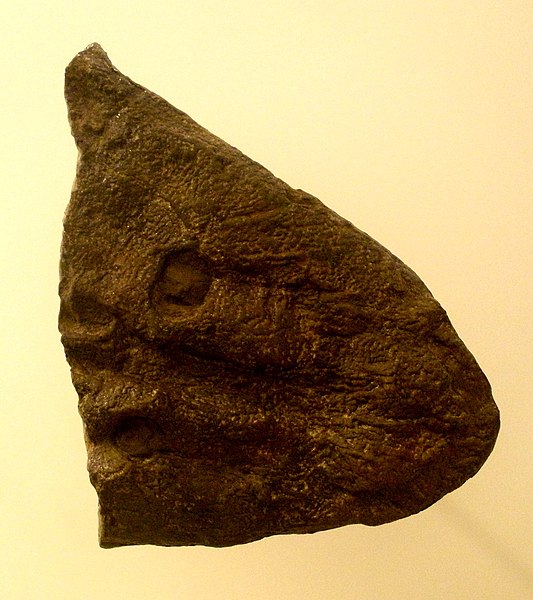
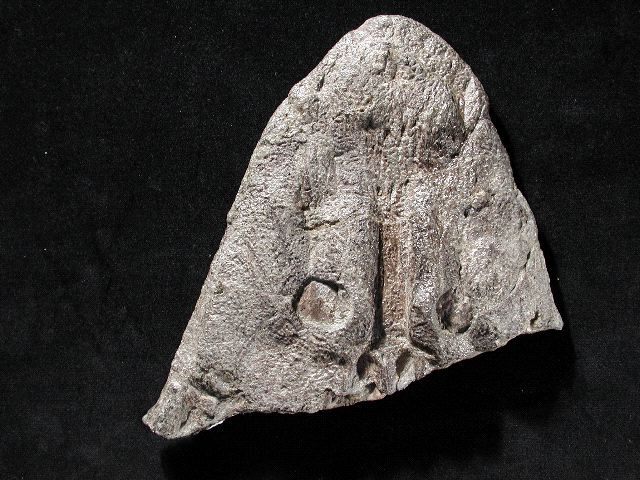
Psarolepis Psarolepis (pronounced /sæˈrɒlɨpɨs/, psārolepis, from Greek ψαρός 'speckled' and λεπίς 'scale') is a genus of extinct lobe-finned fish which lived around 397 to 418 million years ago (Pridoli to Lochkovian stages). Fossils of Psarolepis have been found mainly in South China and described by paleontologist Xiaobo Yu in 1998. It is not known certainly in which group Psarolepis belongs, but paleontologists agree that it probably is a basal genus and seems to be close to the common ancestor of lobe-finned and ray-finned fishes. In 2001, paleontologist John A. Long compared Psarolepis with Onychodontiform fishes and refer to their relationships. Psarolepis had a pair of 'parasymphysical tooth whorls', teeth which extend up at the front of the lower jaw. The head was made of several thick dermal plates and covered with deep pock-marks and large pores. Another trait is a large pectoral spine, just in front of the pectoral fin, extending back from the shoulder girdle, and a dorsal spine located in front of a median fin behind the head, which gives the fish a shark-like form. The pock-marked head of Psarolepis was made of plates containing a layer of porcelain-like cosmine. Because the cosmine layer obscures the suture lines of the skull, it is difficult to study the exact bone structure. The snout was strangely humped and the nostrils were located above the eyes, which were just above the upper jaw. The most spectacular findings were the fin spines. Two are known: one extending back from the shoulder girdle and another which is associated with the dorsal fin. These fin spines are found only in primitive jawed fishes and are apparently absent from the most primitive sharks, but present in abundance in more derived forms. Psarolepis had teeth at the very front of the snout with large fangs on the tooth plate. Outstanding feature are the 'parasymphysical tooth whorls' which place the fish in the order of onychodontida. The premaxilla and the dentary had large inner teeth and irregular array of tiny outer teeth. When Psarolepis was described for the first time in 1998, it was placed in the group of sarcopterygians (lobe-finned fishes) because the skull and jaws resemble those of primitive lungfishes. In 1999 Zhu et al. were unable to locate Psarolepis in the cladogram because they did not know if it was the most primitive lobed-finned fish or the most primitive bony fish. There are some characteristics that bony fish do not have, such as the median spine located behind the head, which is known in sharks and acanthodians, and the pectoral spine extending back from the shoulder girdle which is found in some placoderms and acanthodians. Later, in 2001, Zhu and Schultze gave more basis to the theory that Psarolepis was probably a basal bony fish. The same year Long re-examined the phylogenetic position of the fish and pointed out several similarities between Psarolepis and Onychodontiform fishes. He also noted that the presence of a rotational tooth whorl combined with the other characteristics in the skull, and possibly in the shoulder girdle, show that Psarolepis is better placed as a sister taxon to Onychodus as the most basal member of the group of Onychodontiforms. Moreover, Long, referring to new fossils collected from Gogo Formation, Western Australia, said that Psarolepis and Onychodus are both basal bony fish and are more primitive than other lobe-finned groups.
Tags: Вымершие рыбы, Лопастепёрые, Силур |
| 08:29 pm [industrialterro] [Link] |
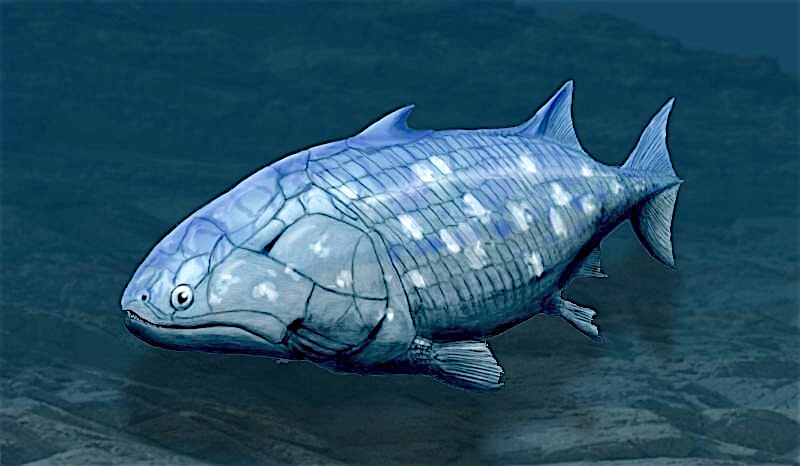
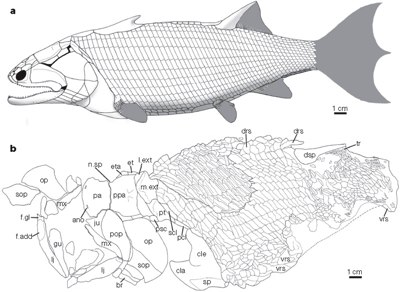
Guiyu oneiros Guiyu is an extinct genus of bony fish, and is the earliest known one. It lived during the Late Silurian (419 million years ago) in China. It has the combination of both actinopterygian and sarcopterygian features, although analysis of the totality of its features place it closer to Sarcopterygii.
Tags: Вымершие рыбы, Лопастепёрые, Силур |