Войти в систему

Home
    - Создать дневник
    - Написать в дневник
       - Подробный режим

LJ.Rossia.org
    - Новости сайта
    - Общие настройки
    - Sitemap
    - Оплата
    - ljr-fif

Редактировать...
    - Настройки
    - Список друзей
    - Дневник
    - Картинки
    - Пароль
    - Вид дневника

Сообщества

Настроить S2

Помощь
    - Забыли пароль?
    - FAQ
    - Тех. поддержка


Пишет ivanov_petrov ([info]ivanov_petrov)
@ 2008-11-16 15:51:00


Previous Entry  Add to memories!  Tell a Friend!  Next Entry
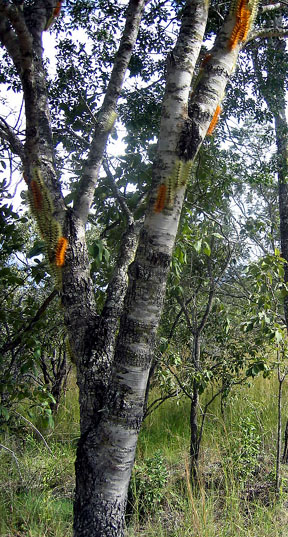
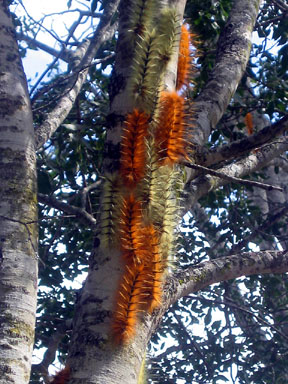
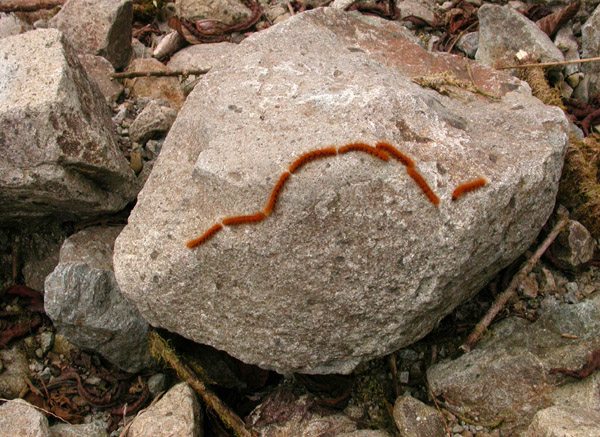
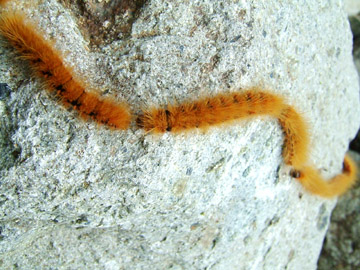
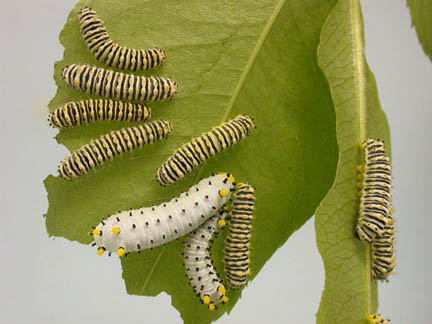
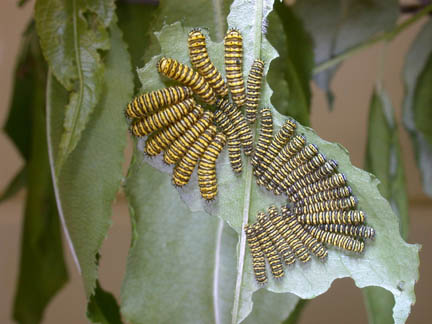
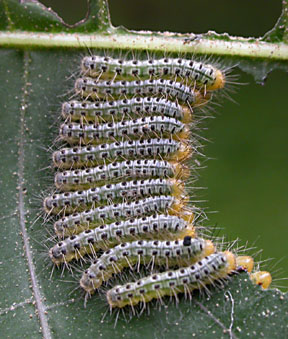
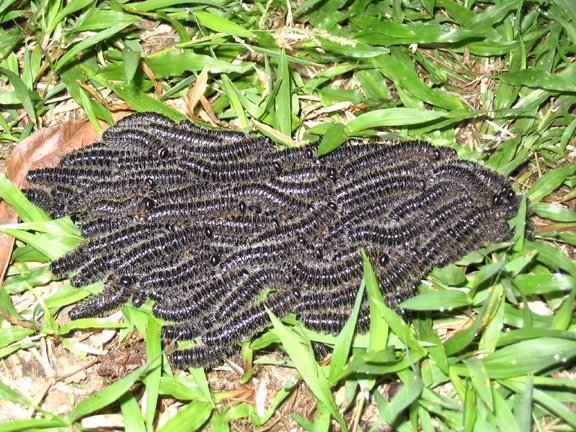
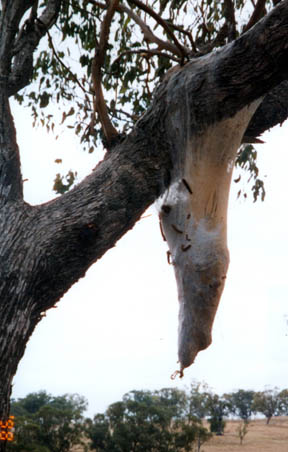
Гусеницы, живущие колониями

(Imbrasia ertli)


бабочки из них выходят вполне обычные, удивительно поведение гусениц


другие колонии. Это, правда, Pachymeta robusta Aurivillius (Lasiocampidae)


общее паутинное гнездо для окукливания


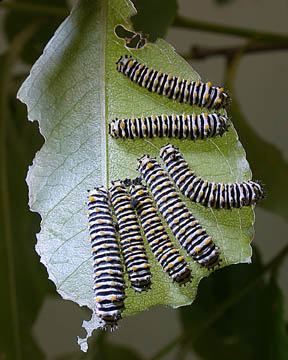
а вот компании Callosamia promethea


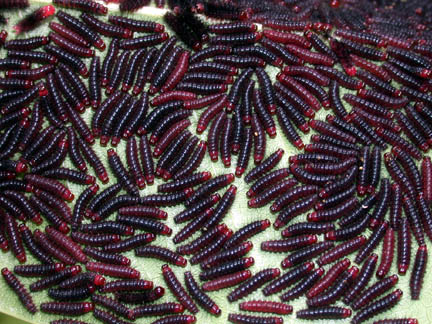
А это - Ammalo helops (Arctiidae) на листе фикуса

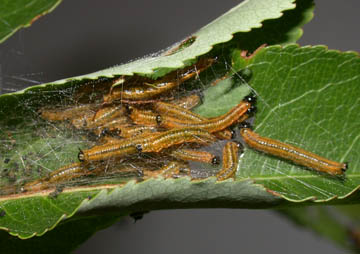
Neurotoma fasciata

не знаю кто
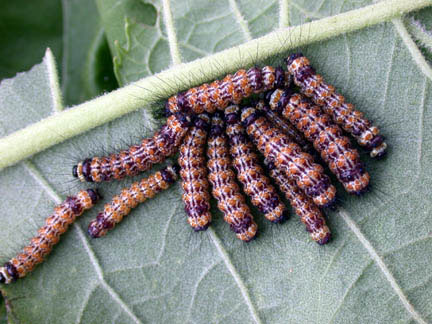

Euproctis chrysorrhoea (Lymantriidae)
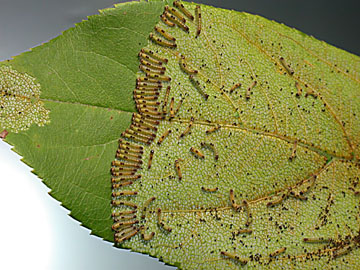

Euselasia chrysippe (Riodinidae)
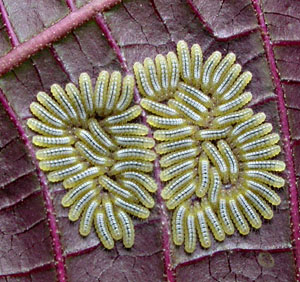


Pereute charops (Pieridae)


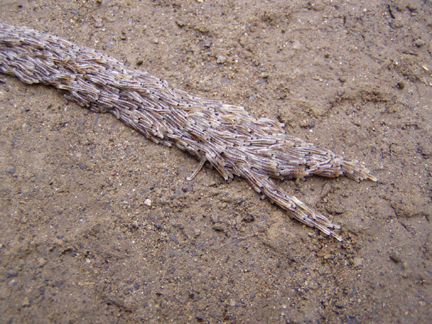
или вот такое можно увидеть...


(Читать комментарии) - (Добавить комментарий)


[info]muh2@lj
2008-11-19 07:16 (ссылка)
/Suppose you have two swarms. One uses only local interactions and follows some set algorithm, taking no collective decisions via communication between the members. Another does both. Which one is a more efficient forager, a better defender, better at breeding, etc.?/

Ну разумеется тот, который владеет искусством нуль-транспортировки и трансмутации металлов.

Это способность коммуникации и коллективных решений-то ничего не стоит?

Но по-моему у нас опять расхождения в определениях. Например реакция на градиент - типичная _локальная_ реакция.

Со словом "leader" я соглашусь, но только в том смысле в котором есть лидер и велогонки и у молнии. Доказательством принятия коллективного решения ни тот, ни другой являться не могут. Точно та же история с описанным Вами процессом развития колонии. Попробовать проверить это можно, например, наблюдая реакцию лидера на удаление дальней от него части колонии.

(Ответить) (Уровень выше) (Ветвь дискуссии)


[info]shkrobius@lj
2008-11-19 12:41 (ссылка)
Это способность коммуникации и коллективных решений-то ничего не стоит?

The cost is minimal. It exploits what is already there, almost never requiring the costly morphological change. You can see that, again, at the lowest level: quorum sensing in a colony (on which the collective decision to become virulent or bioluminesce is based) is just an excretion of an agreed-upon signal molecule. The molecule itself is homologous to several common metabolites. It's really a minor step.

реакция на градиент - типичная _локальная_ реакция.

Of course it is, if you view it this way: as a reaction. What you say is true, but one can also say the same about the speech: it is, after all, is just a local change in the density of air. The gradient is created by part of the colony. What you see there is differentiation of the colony that allows it to exploit the nutrient gradients using two kinds of metabolic pathways in a coordinated fashion, maximizing the overall gain for the colony. It is an "unusual" (for us) way of intercolony communication. I gave you an example of the extreme case of this communicative strategy when part of the bacterial colony sacrifices itself for the sake of the rest, in a coordinated provocation of the immune reaction swamping out its competitors.

Доказательством принятия коллективного решения ни тот, ни другой являться не могут.

I gave you the example of the amoebozoid slug where the leading tip leads the colony to the surface. We do not know how the leaders in the tip are chosen, so there is a possibility that this appointment might be at random, if that's what you mean. However, I do not think so. For the slug to move at all, it is not enough to have the leader. The followers have to follow. There is a "collective decision" to follow, which is as important as the leadership itself. Why am I so sure of that? Here is why: an amoeba can cheat. The slug does not rest to feed on its way up, because its goal is sporulation and it has sufficient energy reserves to reach this and only this goal. But the slug can also be opportunistically used as transportation by individual cells in order to move up, to a new stratum in the soil, where could be more food. It is the thoroughly selfish behavior: the cell minimizes its individual chances of reproduction for a greater food availability. The fact is that the slug leaves the trail of such opportunists in its wake. To follow the leader in order to procreate (playing with death) or cheat and be better off but sterile is the individual choice made by each cell in the slug. The majority follow the leader, and the leaders could be the cells with the greatest commitment to procreate. Who becomes the leader and its followers is most likely to be determined by the census of the swarm on this commitment. It is a collective decision and the leaders are the most determined individuals. When the tip is removed, the two parts of the slug both dissolve: the tip is too small to make the functional fruiting body so it gives up and the followers are content to explore the new stratum they've reached instead of reorganizing themselves into a new set of leaders and followers and keep moving to the surface. Instantaneously, they all become opportunists. The two swarms can reunite later, after the dispersion, but that's a new slug. There is no doubt that there is some kind of quorum sensing in the slug (which is not surprising as it is required to form the slug in the first place) and a mechanism for determining the three grand strategies of leading, following, and opportunism for each cell. I do not know about the bicycles; it's an army on the march. I like this example because it has many features of democracy: the fate is decided by the majority (of the followers), there are leaders elected on some criterion, there are the typical devil's bargains of such an arrangement (which are all very familiar to us), there are multiple ways of cheating and opportunism derived from selfishness, there is clearly defined common good, and this good can only come through sacrifice on the part of the few for the sake of the rest. And then you come and tell me it is all geometry and simple local rules. No, my friend. That's life.

(Ответить) (Уровень выше) (Ветвь дискуссии)


[info]muh2@lj
2008-11-19 17:33 (ссылка)
Я во первых действеительно подозреваю, что выбор лидера колонии - случаен. Во вторых - локален. Второе можно попытаться проверить так, как я описал. Первое проверить, пожалуй, сложнее, но тоже, думаю, можно.

/It is a collective decision and the leaders are the most determined individuals. /

Наиболее решительные для чего? Умереть? Насчет удаления лидера - это интересно, я не нашел на это ссылки.

И наконец - насколько я понимаю, по крайней мере агрегация устроена крайне просто и локально - чсутвуешь градиент накоторого вещества - влыви туда и выделяй это вещество. Понятно, что в поведении колонии можно найти аналогии с человеческим обществом. В конце концов и мозг устроен из большого (очень) количества сравнительно локальных элементов с, по-видимому, достаточно простыми правилами для каждого элемента.

(Ответить) (Уровень выше) (Ветвь дискуссии)


[info]shkrobius@lj
2008-11-19 20:38 (ссылка)
Наиболее решительные для чего? Умереть?

Yes. They are incurable altruists. But before dying, they are unquestionable leaders of the swarm. These anterior prestalk cells generate most of the motive force
http://www3.interscience.wiley.com/journal/119317631/abstract
they make the cAMP wave organizing the slug and most of the slime sheath that is needed for forward motion. I think it is fair to tell that these cells are the most commited to the cause and they pay the price for that. They do lead and they do self-appoint themselves to lead:

It is known a bit how the anterior-posterior (prestalk-prespore) differentiation works,see
http://www.ncbi.nlm.nih.gov/pubmed/7981039?ordinalpos=1&itool=EntrezSystem2.PEntrez.Pubmed.Pubmed_ResultsPanel.Pubmed_DiscoveryPanel.Pubmed_Discovery_RA&linkpos=4&log$=relatedreviews&logdbfrom=pubmed
The first differentiation during the swarm formation is more-or-less at random (?) and the cells can move around, but as soon as they organize themselves the tip generates cAMP waves and DIF-1 gradients that maintain the axis. Even then some cells change their caste, but most do not. The interaction is not local and the leader lead.

the disaggregation/exploitation in the presence of food
http://beheco.oxfordjournals.org/cgi/content/full/arl102v1

I cannot remember exactly where I read about the surgeries (moving of the "grex" was explored in the 1970s quite extensively), I think it was in the old papers by Garrod and Yamomoto. If I remember it correctly, cutting with or without the sheath intact had very different effects. The cut pieces can recommence the motion, develop into a stalk, or disperse depending on where precisely the slug is cut and whether the sheath had been intact. The slug moves like a tractor; the sheath is like the continous track. If the slug is very small, it cannot generate enough force to move through the soil, so if you remove the very tip, it gives up and disperses. If you cut more, it may still move further and slowly redifferentiate. The prespore (posterior) part of the slug either gives up (when there is food) or makes a fruiting body in the soil (when there is no food).

I guess it would be more fair if the posterior prespore cells were the leaders, but I think it is technically prohibitive: the anterior cells have to shovel the dirt so they have to make a lot of tubulin proteins. It would be a waste not to use them for a stalk. So the leaders are sacrificed.

(Ответить) (Уровень выше) (Ветвь дискуссии)


[info]muh2@lj
2008-11-20 09:02 (ссылка)
Очень пафосно. "Атомы лидера молнии находятся на острие. Они знают, что будут разрушены и закончат свои дни разбитыми на ионы и электроны, но ничто не может остановить их стремление к земле". Примерно так.

/The first differentiation during the swarm formation is more-or-less at random (?) /

Этот вопросик - Вы добавили? А зачем? Авторы, похоже, со мной согласны, а Вы нет - но почему, не говорите. А вот еще цитатка

"when the prestalk or the prespore fragment is isolated from a slug, conversion of cell - type between prestalk and prespore cells occurs in each isolate without cell division, so that isolates containing normally proportioned prestalk and prespore cells are obtained within a matter of several hours."

Более подробное описание Вами последствий срезания лидера выглядит много менее впечатляющим.

(Ответить) (Уровень выше)


[info]muh2@lj
2008-11-20 09:05 (ссылка)
/I guess it would be more fair if the posterior prespore cells were the leaders, but I think it is technically prohibitive: the anterior cells have to shovel the dirt so they have to make a lot of tubulin proteins. It would be a waste not to use them for a stalk. So the leaders are sacrificed./

Так это не лидеры, а стадо пушечного мяса, за которым идут посмеивающиеся в усы амебы-повелители?

(Ответить) (Уровень выше) (Ветвь дискуссии)


[info]shkrobius@lj
2008-11-20 10:48 (ссылка)
I'll answer your first comment later. Briefly, ask yourself whether some "randomness" is not the general feature of differentiation into leaders and followers. How "random" is this randomness?

The prespores are not rulers by any means or in any sense. They are passive followers and cheaters. The "feed for cannons" as you put it is the true leader.

I think this is the most important lesson this oldest democracy teaches us: the price of surrendering one's freedom and becoming a passive slave led by the others can only be the demonstration by the leader its total altruism and willing sacrifice. If you want to lead, show (i) you are willing to pay the price for domination and (ii) you do do it for the others. Imposing one's will on a fellow being is the offence that merits death even if it is selfless. If you have democracy built on such principles, then it can last 600 Myr. If you do not, then you know what happens, both in nature and in our society.

(Ответить) (Уровень выше) (Ветвь дискуссии)


[info]muh2@lj
2008-11-20 11:39 (ссылка)
Как знает любой, смотревший фильм "Чапаев", из которого мы все выросли, командир - он не всегда впереди на лихом коне. Вас обманули хитрые читеры. Читеры - они во много читеры. На самом деле колонией (а заодно и Вселенной, но это уже менее важно) правят они. Я, конечно, многим рискую написав это, но чего сде....

Я пожалуй завяжу эту дискуссиию. У Вас явно есть агенда и все эти псевдо-билогические рассуждения нужны только для ее оправдания.

(Ответить) (Уровень выше) (Ветвь дискуссии)


[info]shkrobius@lj
2008-11-20 14:32 (ссылка)
I am not going to deny that I have the agenda. What interests me is the origin of multicellularity; I came across these cellular molds a few years ago screening the literature. What I was pondering was a problem of a democracy turning into a dictatorship: how and why does it happen.

You say the talk about the sacrifice is pathos, but I think that such a statement (by itself) shows a certain bias which is very natural to us. You consider the extreme altruism highly irregular and demand much proof for no other reason that it is indeed unheard of starting from true multicellularity to animals to animal societies. However, it is by no means obvious that such an outcome is "normal." What's normal about it? What I always wanted to understand is why the democracy of the cellular molds is marginal whereas our own way (the rigid hierarchy, the dictatorship of the germ line) is "normal." What I see coming from you time and again is viewing the cellular molds on our terms. It seems incredible and doubtful that the leaders (!) chose death. I think it tells more about us than about the molds. Our leaders do not make such a choice; they seek their advantage in their leadership.

I've promised to answer about the randomness. There was a time when it was said that the gonad cells in the Volvox are picked at random. Then one day it turned out that it was not random: the first cell to reach a certain size becomes a gonad. With the amoebas it can be something like that; what appears random to us, is not truly random, though it may have some randomness in it (like what cell grows faster). Think of people. To a casual observer it would seem that our leaders are picked at random (it is a diverse group in their abilities - as diverse as the followers). Furthermore, the choice may be truly random. But even if the first step is more-or-less random, the next step is not random. The amoebas that lead grow to be progressively more leading. Perhaps it is the same with people. All of us, from our tender age, experiment with power - at random. Some enjoy it, some do not. Those that enjoy leading, want more of it and become leaders. The more they seek power, the more they grow into the role of the leader. So, what you are saying: that amoebozoa leadership is not true one because it's random -- I just disagree with that on principle, because I do not think it is fundamentally different from the only leadership that we understand from inside out, which is our own. I think what's important is not randomness (that in both cases is probably deceptive) but positive reinforcement: the leader becomes more of a leader over time. Call it anyway you like, pseudobiology, whatever, but there are striking parallels which I cannot mentally avoid. I cannot avoid projecting on our society because that is where all of our ideas of leadership and following come from; we do not have any other model to think of it than this reference. And I do think that the cellular molds show the way (perhaps, the only way) in which the democracy can last and consistently outcompete dictatorships without becoming one. Unlimited altruism leads to the first path, selfishness to the second one. You are darn right that the cheaters have inherited the earth. Don't you want to know how & why did it happen? I do. I want to know whether the fall of nature was the inevitable outcome of eukaryotic autonomy or we were given several more chances to right the wrongs. Why these slime molds aren't the rule?

(Ответить) (Уровень выше) (Ветвь дискуссии)


[info]muh2@lj
2008-11-20 18:05 (ссылка)
Я не вижу смысла в аналогии между амебами и людьми. Полезная аналогия основывается на том, что законы, управляющие двумя обяектами одинаковы (для наших целей). Тогда по наблюдаемому или доказанному поведению одного объекта можно предсказывать поведение другого объекта. Если такой эквивалентности законов не видно, то аналогии нет.

Очеловечивание амеб - я его как-раз вижу в Ваших рассуждениях. Для меня амебы - просто амебы.

(Ответить) (Уровень выше) (Ветвь дискуссии)


[info]shkrobius@lj
2008-11-20 19:45 (ссылка)
No. That works nicely if you know the laws; it does not work at all when you are trying to discover these laws. If you do the latter, anything goes, because you have to be bold and guess. You start simple and build up. Human society is way too complex to find any laws there. The bugs offer a window of opportunity, via simplicity + realism. That's where sociology can take off as a science. Playing with toy models is waste. The nice thing about it is that all of the conflicts are already there from the start, including the devil's bargains that interest me most.

I do not humanize the amoebas; they are too socially advanced for that. They already do what our morality demands but where we all fail: selfless, active altruism. I view these slime molds as the endpoint of the road which we are just beginning to take. If we'd set out to be what we want to be - then we'll be like these amoebas. I think they are more of what life is supposed to be like, and so it perpetually returns to the same type of conlict at different levels, trying to right itself. Perhaps we're another such attempt. A new variable is added: rational intellect. Would that work?

It was nice chatting with you, thank you; I like your critical mind.

Bye.

(Ответить) (Уровень выше)


(Читать комментарии) -