[Recent Entries][Archive][Friends][User Info]
March 4th, 2012
| March 4th, 2012 | |
|---|---|
| 10:01 am [industrialterro] [Link] |
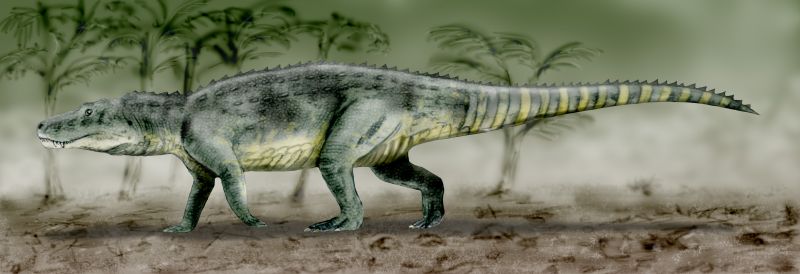
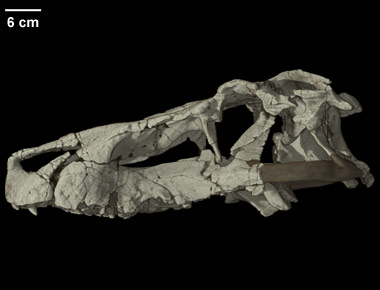
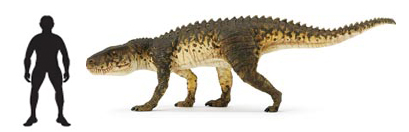
Saurosuchus Saurosuchus (meaning "lizard crocodile" in Greek) is an extinct genus of rauisuchian archosaur in the family Prestosuchidae. With a length of around 7 m (23 ft), it was the largest rauisuchian, except perhaps for the less well known Fasolasuchus. Like other rauisuchians, Saurosuchus walked on four fully erect limbs. It lived in the Late Triassic of Argentina. Saurosuchus is known from several partial skeletons collected from the Ischigualasto Formation of Argentina. The holotype specimen consists of a complete but deformed skull, dorsal vertebrae, dorsal osteoderms, and parts of the pelvis. The hind limbs, tail, neck, and scapulae are also represented in several other skeletons. The type species S. galilei was named in 1959. Saurosuchus was also reported from the Chinle Formation of Arizona in 2002 on the basis of isolated teeth and small skull fragments. The diagnostic value of these bones has been questioned in later studies, which considered them to be from an indeterminate species of rauisuchian. Saurosuchus is one of the largest rauisuchians. The complete skeleton is not known and size estimates range from around 6 to 9 metres (20 to 30 ft) in total body length. It has a deep, laterally compressed skull. The teeth are large, recurved, and serrated. The skull is wide at its back and narrows in front of the eyes. The skull roof and maxilla are somewhat pitted, a distinguishing feature not seen in any other rauisuchian. Pitting is also seen in aquatic phytosaurs and crocodilians, but the ridges and grooves are deeper and much more extensive across the skulls of these forms. The frontal bones, located at the top of the skull, are enlarged to form thick ridges over the eyes. As in other rauisuchians, a small rod projects down from the lacrimal bone in front of the eye, but it does not attach firmly to the jugal bone below it. Ridges along the upper surface of the supraoccipital bone at the back of the skull are attachment points for strong neck ligaments. The cervical vertebrae are shortened and robust, forming a strong neck. Dorsal osteoderms run along the back of Saurosuchus. There are two rows to either side of the midline, with each leaf-shaped osteoderm joining tightly with the ones in front of and behind it.
Размеры тела в сравнении с человеком:
Размеры тела в сравнении с другими равизухиями (закрашен оранжевым цветом):
Ископаемые останки (1, 2, 3, 4):
Tags: Вымершие рептилии, Триас, архозавроморфы, архозавры, диапсиды, круротарзы, престозухиды, равизухии |
| Time | Event |
| 10:41 am [industrialterro] [Link] |
Ticinosuchus Ticinosuchus is an extinct genus of rauisuchian archosaur from the Middle Triassic (Anisian - Ladinian) of Switzerland and Italy. Ticinosuchus was about 3 metres (10 ft) long, and its whole body, even the belly, was covered in thick, armoured scutes. The structure of the hips shows that its legs were placed under the body almost vertically. Coupled with the development of a calcaneus and a specialized ankle joint, this would have made Ticinosuchus a fast runner, unlike most earlier reptiles.
Репродукции (1, 2, 3, 4, 5, 6):
Размеры тела в сравнении с человеком и другими равизухиями (закрашен светло-зелёным цветом):
Tags: Вымершие рептилии, Триас, архозавроморфы, архозавры, диапсиды, круротарзы, престозухиды, равизухии |
| Time | Event |
| 10:56 am [industrialterro] [Link] |
Fasolasuchus Fasolasuchus is an extinct genus of rauisuchid. Fossils have been found from Argentina that date back to the Rhaetian stage of the Late Triassic, making it one of the last rauisuchians to have existed before the order went extinct at the end of the Triassic. It is quite possibly the largest known member of Rauisuchia, with an estimated length of 8–10 meters (26.4–33 ft), even bigger than the prestosuchid Saurosuchus at 7 meters (23.1 ft) in length. This would make Fasolasuchus the largest terrestrial predator to have ever existed save for large theropods. Like Saurosuchus, it had only a single row of caudal osteoderms, unusual among rauisuchians. It also had a hyposphene-hypantrum articulation that gave the vertebral column extra rigidity. This feature is also seen in several other rauisuchians such as Postosuchus as well as saurischian dinosaurs. Rauisuchidae is a group of large (up to 6 meters or more) predatory Triassic archosaurs, and constitute advanced representatives of the larger group Rauisuchia. There is some disagreement over which genera should be included in the Prestosuchidae, which in Rauisuchidae, and which in the Poposauridae, and indeed whether these should even be thought of as separate families. Rauisuchids occurred throughout much of the Triassic, and may have first occurred in the Early Triassic if some archosaurian taxa such as Scythosuchus and Tsylmosuchus are considered to be within the family. An early cladistic analysis of crocodylotarsan archosaurs included Lotosaurus, Fasolasuchus, Rauisuchus, and "the Kupferzell rauisuchid" (later called Batrachotomus) within Rauisuchidae. However, a later study found that Batrachotomus was more closely related to Prestosuchus, and thus was a prestosuchid. In addition, the toothless Lotosaurus has been found to be more closely related to the Ctenosauriscidae, a clade of Dimetrodon-like animals with a sail on their back. Two genera previously classified as poposaurids, are in fact rauisuchids. These include Teratosaurus and Postosuchus.
Размеры тела в сравнении с другими равизухиями (закрашен бордовым цветом):
Tags: Вымершие рептилии, Триас, архозавроморфы, архозавры, диапсиды, круротарзы, равизухиды, равизухии |
| Time | Event |
| 11:24 am [industrialterro] [Link] |
Luperosuchus Luperosuchus is an extinct genus of crurotarsan, a group which includes crocodilians and their ancestors. It lived during the Anisian stage of the Middle Triassic, and is known from Argentina.
Tags: Вымершие рептилии, Триас, архозавроморфы, архозавры, диапсиды, круротарзы, равизухиды, равизухии |
| Time | Event |
| 11:29 am [industrialterro] [Link] |
Polonosuchus Polonosuchus is a genus of rauisuchian known from the late Triassic (Carnian age) of Poland. It was described as Teratosaurus silesiacus in 2005 by Tomasz Sulej, and was transferred to the genus Polonosuchus by Brusatte et al. in 2009. Тератозавр силезский (Teratosaurus silesiacus). В 2000 году во время раскопок триасового местонахождения позвоночных Krasiejow в Ополье в Силезии (Польша) были обнаружены кости равизухии. Остатки включали в себя фрагменты черепа и части посткраниального скелета, в том числе 12 сочлененных хвостовых позвонков. В 2005 году Т. Сулей выделил второй вид тератозавра. Длина черепа польского тератозавра — около 40 см, общая длина была около 3 метров. Он происходит из более древних, карнейских отложений, чем типовой вид. Опубликованная реконструкция скелета во многом базируется на знаниях о самом известном равизухиде — постозухе. Ящера изображают четвероногим, но в последнее время вновь возникло предположение о бипедальности постозуха. Кроме того, тератозавр может принадлежать к семейству Poposauridae, для типового рода которого доказана бипедальность (хотя бы факультативная). Таким образом, тератозавр все же мог быть факультативно двуногим. В 2009 году было показано, что силезский тератозавр заслуживает выделения в особый род, теперь он называется Polonosuchus silesiacus.
Tags: Вымершие рептилии, Триас, архозавроморфы, архозавры, диапсиды, круротарзы, равизухиды, равизухии |
| Time | Event |
| 11:47 am [industrialterro] [Link] |
Postosuchus Постозух (Postosuchus) — род крупных архозавров, живших на территории современной Северной Америки в позднем триасе, около 228—208 млн лет назад. Являлся самой крупной плотоядной рептилией своего времени, достигавщей в длину до 4—5 метров, при высоте до 2 метров и вероятно весил 300—400 кг. Шея была удлинена, расширялась к короткому телу, которое оканчивалось длинным хвостом. Одной из отличительных черт животного были его длинные конечности, нехарактерные для рептилий того времени. Череп постозуха был коротким и широким, с узким рылом и сильными челюстями. Спину животных покрывали ряды тяжелых пластин. Голотип и паратип вида Postosuchus kirkpatricki были найдены в Нью-Мехико, а также на территории национального парка Окаменевший Лес в Аризоне. Голотип вида P. alisonae найден в Северной Каролине.
Репродукции (1, 2, 3, 4, 5, 6, 7, 8, 9, 10):
( Далее ) Размеры тела в сравнении с человеком:
Размеры тела в сравнении с другими равизухиями (закрашен грязно-зелёным цветом):
Ископаемые останки (1, 2, 3, 4, 5, 6, 7, 8):
( Далее ) Tags: Вымершие рептилии, Триас, архозавроморфы, архозавры, диапсиды, круротарзы, равизухиды, равизухии |
| Time | Event |
| 12:18 pm [industrialterro] [Link] |
Teratosaurus Тератозавр (Teratosaurus) — хищный архозавр триасового периода, представитель круротарзов. Относится к семейству Rauisuchidae либо Poposauridae. Интересен тем, что его долгое время относили к динозаврам. От большинства других равизухов отличается наличием дополнительного нижнего височного окна. Ноздря несколько меньше переднего предглазничного окна. 13 зубов в максилле. Предлобные кости образуют «брови», нависающие над орбитами. Есть два ряда парамедиальных остеодерм (по крайней мере, на хвосте). Типовой вид — Teratosaurus suevicus (suevicus — «суэцкий»). Описан Г. фон Мейером в 1861 году на основании правой максиллы из позднего триаса (среднего нория) Хеслаха вблизи Штутгарта. Длина максиллы 24,5 см (общая длина черепа могла быть до 50 см). Зубы крупные, ножевидные, разного размера. Фон Мейер отнёс животное к динозаврам. Позднее его сравнивали с уже известным к тому времени мегалозавром. Р. Оуэн, Т. Гексли, Ч. Лайелл уверенно считали тератозавра примитивным хищным динозавром. Ф. фон Хюне в 1904 году отнес к этому роду найденный рядом с челюстью скелет. С тех пор в течение почти 80 лет тератозавра изображали двуногим ящером с пятипалыми передними лапами и длинной шеей, на которой сидела небольшая голова с зубастыми челюстями. Так его рисовал З. Буриан в 1947 году, так он описан в «Основах Палеонтологии» 1964 года. Для ящера создали особое семейство Teratosauridae, включавшее триасовых «карнозавров» (основанных также на зубах и челюстях равизухий и посткрании прозавропод). Лишь в 1986 году одновременно М. Бентон и П. Гальтон на основании анализа строения максиллы пришли к выводу, что тератозавр — не динозавр, а равизухия. Скелет же принадлежал прозавроподу Efraasia minor. Посткраниальных остатков тератозавра найти не удавалось, хотя в 1985 году П. Гальтон отнес к этому роду таз из этих же отложений. Тератозавр был наземным хищником, охотившимся на этозавров и динозавроморфов-силезавров. Типовой вид тератозавра жил вместе с прозавроподами и, несомненно, охотился на них либо питался их трупами. В 2008 году много шума наделало сообщение о находке в позднем триасе (рэт) Польши «предка тираннозавров», «самого древнего представителя тетанур», прозванного «Польским Драконом». В реальности, вероятно, максилла этого «динозавра» принадлежит равизухии, близкой к тератозавру.
Tags: Вымершие рептилии, Триас, архозавроморфы, архозавры, диапсиды, круротарзы, равизухиды, равизухии |
| Time | Event |
| 12:49 pm [industrialterro] [Link] |
Effigia Effigia was an archosaur that lived in what is now New Mexico. The 2 meter (6 ft) fossil was collected by Edwin H. Colbert in blocks of rock from the Ghost Ranch Quarry, which were excavated in 1947 and 1948. However, Colbert did not think any large vertebrates besides basal theropod dinosaurs were present in the quarry and as such did not even open the jackets of most of the blocks that were returned to the American Museum of Natural History. The fossil was rediscovered in January 2006 by graduate student Sterling Nesbitt at the American Museum of Natural History. Nesbitt was opening jackets of blocks in order to find new specimens of Coelophysis. Upon finding the remains of Effigia, he instantly recognized this was not a dinosaur and proceeded to track down the rest of the blocks from that area of the quarry. Nesbitt and Mark Norell, curator at the museum, named it Effigia okeeffeae in January 2006 after Georgia O'Keeffe, who spent many years at Ghost Ranch (her ashes are scattered there). Effigia is remarkable for its extreme similarity to ornithomimid dinosaurs. Nesbitt, in 2007, showed that Effigia was very similar to Shuvosaurus, and is definitely a member of the crurotarsan group Suchia (in the line leading towards modern crocodilians), and that its similarity to ornithomimids represents a case of "extreme" convergent evolution. Nesbitt also demonstrated that Shuvosaurus was the same animal as Chatterjeea, and that it belonged to an exclusive clade containing closely related suchians such as Shuvosaurus and Poposaurus (Poposauridae). Within this group, Effigia forms an even more exclusive clade with Shuvosaurus and the South American Sillosuchus (Shuvosaurinae). In 2007, Lucas and others suggested "Effigia" was synonymous with "Shuvosaurus" and used the new combination "Shuvosaurus okeeffeae" for the animal. Shuvosauridae is an extinct family of theropod-like pseudosuchian within the clade Poposauroidea. Shuvosaurids existed in North (USA) and South America (Argentina) during the Late Triassic period (late Carnian to Rhaetian stages). Shuvosauridae was named by Sankar Chatterjee in 1993 to include the genus Shuvosaurus. In a 2007 study Chatterjeea was demonstrated to be a junior synonym of Shuvosaurus, and the therein cladistic analysis found that Shuvosaurus, Effigia and Sillosuchus all form a closely related group. However, this group was left nameless, and simply referred to as Group Y. However, in accordance with ICZN rules of naming priority Shuvosauridae has priority over Chatterjeeidae (Shuvosauridae being named in 1993, while Chatterjeeidae was named in 1995). In 2011, Sterling J. Nesbitt proposed a new definition to this clade: "The least inclusive clade containing Shuvosaurus inexpectatus Chatterjee, 1993, and Sillosuchus longicervix Alcober and Parrish, 1997".
Tags: Вымершие рептилии, Триас, архозавроморфы, архозавры, диапсиды, круротарзы, попозавройды, равизухии, шувозавриды |
| Time | Event |
| 01:05 pm [industrialterro] [Link] |
Shuvosaurus Shuvosaurus (meaning "Shuvo's lizard") is a genus of beaked reptile from the Late Triassic of Texas. It was described by Sankar Chatterjee in 1993 after it was discovered by his son Shuvo. It was initially interpreted as a Triassic member of the Cretaceous dinosaur family Ornithomimidae. However, the recent discovery of the related Effigia from Ghost Ranch shows that Shuvosaurus is more closely related to crocodilians, and that similarities between this animal and ornithomimids result from convergent evolution. Additionally, this discovery demonstrated that the taxon Chatterjeea was synonymous with Shuvosaurus.
Tags: Вымершие рептилии, Триас, архозавроморфы, архозавры, диапсиды, круротарзы, попозавройды, равизухии, шувозавриды |
| Time | Event |
| 01:32 pm [industrialterro] [Link] |
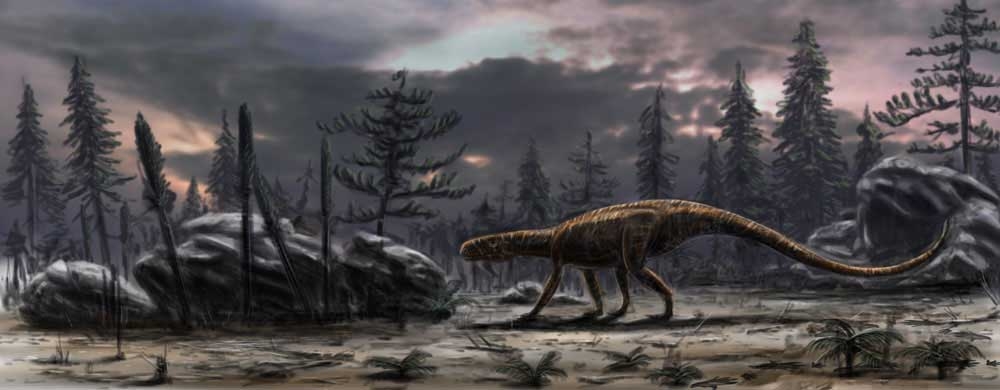
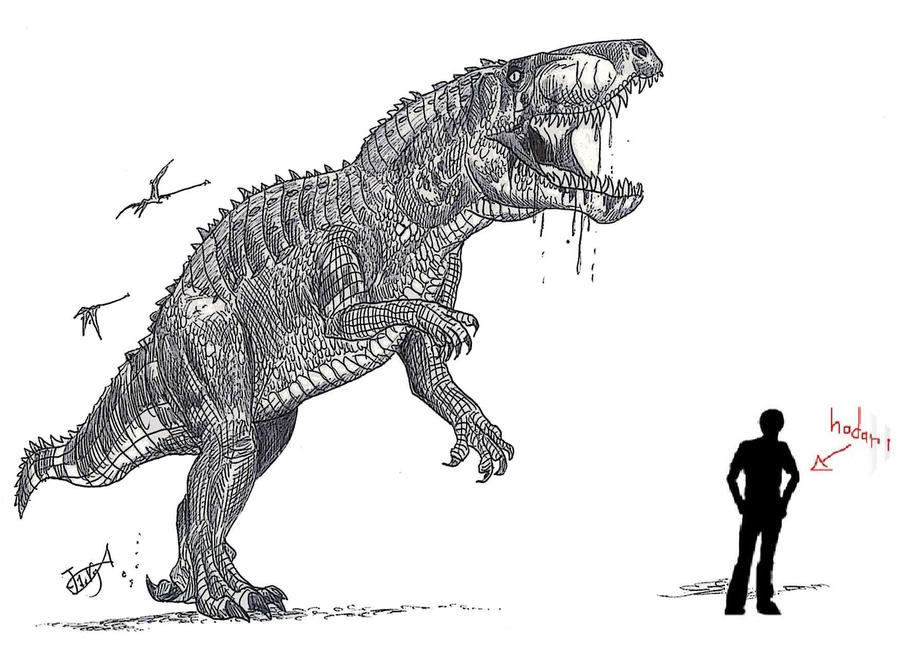
Qianosuchus Qianosuchus is an extinct genus of aquatic archosaur from the middle Triassic (Anisian) Guanling Formation of Pan County, China. It is represented by two nearly complete skeletons and a crushed skull. Qianosuchus mixtus (Li et al. 2006) Middle Triassic ~230 mya)~3+m in length, was derived from a sister to Vjushkovia and was a sister to Yarasuchus and Ticinosuchus. Distinct from Yarasuchus, Qianosuchus had shorter cervicals, a broader scapula and deeper chevrons. Distinct from Vjushkovia, Qianosuchus had a relatively smaller skull, longer neck, shorter torso, deeper tail and more slender limbs. The rostrum was longer. The naris was located further posteriorly. The notch in the premaxilla/maxilla suture was deeper. The dorsal scapula was double the width of the ventral portion. The pubis was as long as the ichium. The pedes were more gracile.
Tags: Вымершие рептилии, Триас, архозавроморфы, архозавры, диапсиды, круротарзы, попозавройды, равизухии |


.jpg224fe0c2-1f3a-4ef1-92af-3dda974cabceLarger.jpg)











| Previous Day | 2012/03/04 [Archive] |
Next Day |